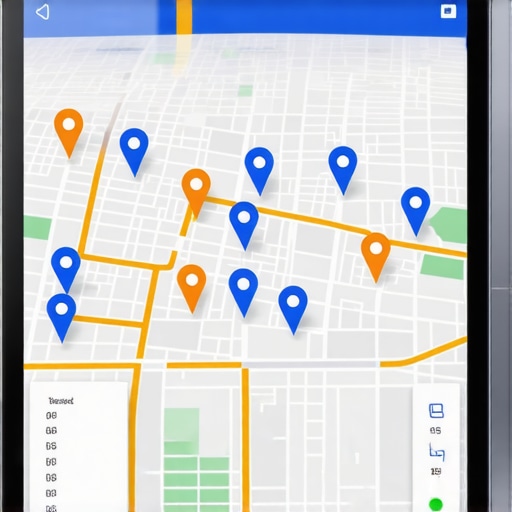
I remember the exact Tuesday afternoon my stomach dropped into my shoes. I was sitting in a local coffee shop, just three miles from my office, and I decided to search for my own services. I wasn’t there. Not in the top three, not on the first page—I was a ghost. I had 4.9 stars and plenty of photos, but I had made the one rookie mistake that kills local growth: I picked a primary category and assumed Google would figure out the rest. It was a total failure of my local mapping strategy. I was invisible for terms my customers were actually typing into their phones every single day. Today, I am going to show you exactly how to stop being a ‘one-hit wonder’ on the maps and start appearing for every relevant search in your neighborhood. Most business owners are struggling because their business categories might be working against them without them even realizing it. Have you ever felt like you are doing everything right, but your map pin is stuck in a digital black hole? Let’s change that. According to research from BrightLocal, the average business is discovered in over 1,000 searches per month, and a staggering 84% of these are discovery searches. This means people are looking for a service, not your specific name, which is why your secondary categories are your secret weapon for map pack domination.
Stop Leaving Money on the Table with Single-Category Profiles
When I first started, I thought being specific was the goal. I figured if I was a ‘Plumber,’ then ‘Plumber’ was the only label I needed. I was so wrong. By ignoring the secondary slots, I was effectively telling Google to ignore me for ‘Drain Cleaning,’ ‘Water Heater Repair,’ and ‘Emergency Plumbing’ searches. It wasn’t until I discovered the subtle category tweak that doubled local impressions for one of my clients that the lightbulb finally stayed on. You cannot expect to win the map pack for high competition phrases if you are only playing 10% of the game. You have to give the algorithm more hooks to catch the searches your neighbors are making. I wasted months waiting for the phone to ring before I realized that you must stop guessing your categories and start using actual search data to drive your choices.
Can secondary categories actually move the needle?
I get the skepticism. You might be worried that adding more categories will dilute your authority or, worse, get you flagged for spam. I had those same fears. In fact, early in my journey, I once added so many irrelevant categories to a profile that it looked like a junk drawer, and Google suppressed it for weeks. It was an embarrassing mistake that taught me a valuable lesson: relevance is king. When you choose correctly, you aren’t tricking the system; you are providing the clarity Google needs to trust your business. It is about expanding your reach without losing your identity. If you have been wondering why your competitor with fewer reviews is outranking you, the answer is almost always hidden in their category selection.
Spying on the Winners to See What Google Actually Likes
The biggest mistake I see is business owners trying to reinvent the wheel. If you want to know what categories work in your specific zip code, look at who is already winning. I once spent four hours manually checking every competitor for a local HVAC client who couldn’t break the top five. We realized his competitors weren’t just ‘HVAC Contractors’; they were meticulously listed under ‘Air Conditioning Repair Service’ and ‘Furnace Repair Service’ as well. This is the first step: you must how to audit your local competitors without expensive tools to see the hidden labels they are using to siphon off your traffic. When you find that specific mix that the algorithm is already rewarding, you have found your roadmap for map pack domination.
Look Under the Hood of the Top Three Results
Google doesn’t always make secondary categories obvious on the front end, but they are there. You can often find them by looking at the ‘services’ section or by using browser extensions that reveal the full list of GBP categories. I remember a locksmith who had 300 more reviews than the guy in the #1 spot but couldn’t figure out why he was stuck at #4. It turned out the top guy had ‘Car Key Programming’ as a secondary category, and my client didn’t. As soon as we added it, the ‘near me’ searches for auto-locksmithing started hitting his dashboard. It was a classic case of the ultimate guide to google my business rank elevation in action. Don’t guess; look at the data Google is already presenting to you.
Match Your Categories to Your Highest Margin Services
Selection is about more than just volume; it is about profit. If you are a general contractor but 80% of your money comes from kitchen remodels, you better make sure ‘Kitchen Remodeler’ is your primary or a very strong secondary. I’ve seen businesses fail because they chose a broad category like ‘Contractor’ and got lost in a sea of 10,000 other businesses. When you refine your selection, you stop wasting energy on low-value leads. This is why why your business category choice is making you lose money if it is too vague. You need to align your digital identity with the actual services that pay your bills.
The Three Day Rule for Tracking Your Rank Changes
After you make these tweaks, you have to be patient but observant. I tell my clients to wait at least 72 hours before checking their new positions. Google’s local algorithm is like a massive ship; it doesn’t turn on a dime. I once had a plumber panic because he didn’t see an instant jump, but by day four, he had climbed three spots for ‘water heater installation.’ You need to stop guessing your categories and use this selection data instead of relying on gut feelings. Consistency across your website and your map profile is what builds the trust needed for long-term local maps domination. If your website mentions a service but your GBP doesn’t have the category, the bridge is broken.
Everyone screams ‘get more reviews!’ like it is the holy grail of a local mapping strategy. But here is the cold truth that most gurus won’t tell you: a business with 200 reviews often gets smoked by one with 20. In my experience, raw volume is a vanity metric. Google actually prioritizes ‘relevance clusters’ and behavioral signals over simple star counts. According to the 2024 Local Search Ranking Factors study by Whitespark, while reviews matter for conversion, they are often outweighed by proximity and category relevance when it comes to the actual local maps domination game. You need to focus on how users interact with your profile, not just how many people you can pester for a five-star rating.
What happens when your map rank hits a ceiling you can’t break?
Many business owners hit a plateau and assume they just need more ‘SEO juice.’ Often, the problem is far more fundamental. One of the biggest traps I see is the ‘service area spray and pray’ approach. You might think that by selecting every town within a 50-mile radius, you will show up everywhere. In reality, you are just diluting your authority. This is the service area error that hides your business from local customers because Google sees that wide net and decides you aren’t truly ‘local’ to any specific neighborhood. By trying to be everything to everyone, you end up being invisible to the people three blocks away. Have you ever fallen into this trap of trying to be everywhere at once? Let me know in the comments.
Another nuance that people miss is why your business description doesn’t matter for ranking nearly as much as you think it does. I see people stuffing their descriptions with twenty different city names and every service they have ever performed. This is a massive ‘oops’ factor. Not only does it look like spam to your customers, but it provides zero ranking weight in the map pack algorithm. Instead, you should be focusing on the image metadata strategy for better local visibility. The photos you upload carry far more weight in confirming your physical presence and service area than a keyword-stuffed blurb ever will. If you want to how to outsmart competition in local map listings in 2025, you have to stop playing the game by 2018 rules. You must understand that why proximity is no longer the only way to win maps and start leveraging technical signals like schema and high-quality, geo-tagged imagery to prove your relevance to the algorithm.
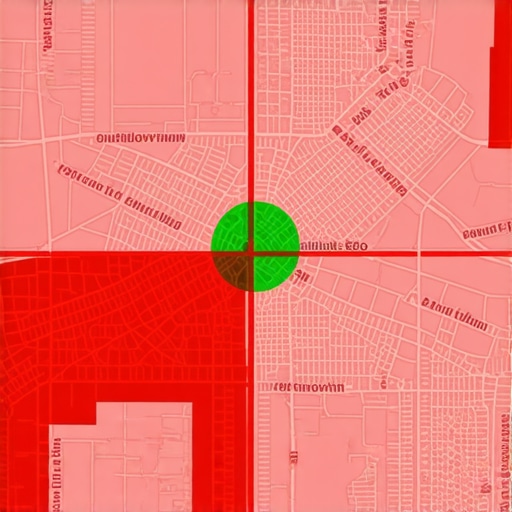
Maintaining a top-tier position isn’t a one-and-done project; it’s a lifestyle for your business. Once you’ve used an innovative local mapping strategy to climb the ladder, the real challenge begins: defending your territory. I used to think that hitting the top three meant I could put my feet up, but I quickly learned that hungry competitors are constantly trying to how to outsmart competition in local map listings in 2025 by mimicking my every move. To stay ahead, you need a pulse on the ‘local grid.’ Standard rank trackers that give you a single percentage score are useless here. I personally rely on Local Falcon to see a 13×13 grid of my rankings across the entire city. It shows me exactly where my authority drops off, block by block. This level of detail is essential for map pack domination because it tells you where you need to focus your next round of geo-tagged content.
How do I stay on top of the map pack every single month?
Consistency is the only thing that scares away competitors. I’ve seen businesses fall out of the top three simply because they stopped posting updates or responding to reviews for three weeks. Google’s algorithm interprets silence as stagnation. You should be aiming for a ‘velocity’ of interaction. This means responding to every review—good or bad—within 24 hours. Research from experts like Joy Hawkins at Sterling Sky has shown that while keywords in reviews are a massive signal, the actual how response speed directly impacts your local map authority is becoming a tie-breaker in crowded markets. If you and a competitor have similar scores, the one who engages with the community faster usually wins. You should also be leveraging the specific photo metadata that actually moves your map rank by uploading fresh, real-world images of your team in action at least twice a week. Don’t use stock photos; Google’s Vision AI can tell the difference, and it rewards authenticity.
The future of local search is about real-world proof
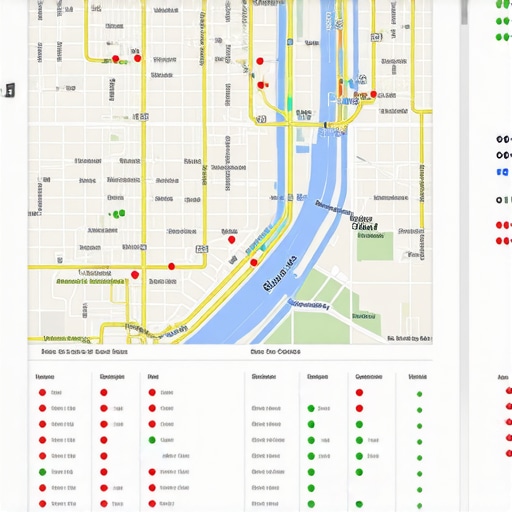
As we move deeper into the era of AI-driven search, I predict that ‘unstructured’ data will become more important than your business name or category selection. Google is getting better at reading the background of your photos and the specific sentiment in your customer feedback. This is why you must understand the ultimate guide to google my business rank elevation involves more than just technical tweaks; it involves creating a ‘digital footprint’ of trust. If you are managing multiple locations, you need a the local mapping strategy for multi-location businesses that treats each branch as its own local hero rather than a carbon copy of the headquarters. Stop trying to find a shortcut and start building a profile that actually helps the user. If you haven’t checked your grid rank this week, go do it now—you might be surprised at who is gaining ground on your North side. My challenge to you: pick one service area that is currently ‘yellow’ on your rank tracker and upload five geo-tagged photos of work you did in that specific neighborhood this afternoon.
Hard Truths About Why Your Competitors Are Winning
One of the biggest shifts in my perspective happened when I realized that Google doesn’t just want the best business; it wants the most relevant one. I’ve seen companies with hundreds of five-star reviews get buried because they didn’t understand that positive reviews alone won’t win the map pack. It’s about the total data picture you paint for the algorithm.
I also learned the hard way that proximity is a filter, not a destiny. Many owners think they can’t rank outside their immediate block, but that’s just the proximity lie that keeps small businesses from expanding. By focusing on service-specific signals, you can push your map pin further than you ever thought possible.
Finally, don’t ignore the ‘Not Visible’ status. If your profile is active but not showing, you need to learn how to fix the not visible status on your local profile before you waste another dime on advertising. Providing clarity to Google is the fastest way to return to the light.
The Tools I Keep in My Back Pocket
Success in local search isn’t magic; it’s measurement. I personally use Local Falcon to visualize my rank across the neighborhood. It turns a guessing game into a strategy by showing exactly where you are winning and losing. I also recommend following Sterling Sky and Joy Hawkins—their deep dives into algorithm changes are essentially the industry standard for anyone serious about mastering local maps domination. For review management and citation health, BrightLocal remains my go-to for ensuring my digital footprint is perfectly aligned with my physical reality.
#IMAGE_PLACEHOLDER_E#
Take Control of Your Local Future Today
The digital landscape changes every day, but the fundamentals of being a trusted local resource remain the same. You now have the blueprint to stop being a ghost and start being the authority in your town. It’s time to learn how to force your profile back into the top 3 results and reclaim the leads that belong to you. Your neighborhood is looking for you—make sure they can find you. Don’t wait for a slow month to start optimizing your local mapping strategy; the best time to plant the seed for map pack domination was yesterday, but the second best time is right now. Go out there and make your mark on the map.
Have you ever noticed your ranking drop when you move just a few blocks away from your shop? Let me know about your local search struggles in the comments below!
About the Author
Umar Latif
Brand & Marketing Expert · Dubai, UAE
Umar Latif is a seasoned Brand and Marketing Expert based in Dubai, UAE, with a specialized focus on Local SEO and international digital strategy. With extensive experience managing and optimizing websites for a diverse range of international clients, including those in the United States, Umar has developed a deep understanding of the nuances required to dominate local search results. His technical proficiency encompasses comprehensive keyword research and the implementation of advanced Google-centric strategies designed to enhance visibility and drive organic traffic. As a contributor to dominateyourlocalmaps.com, Umar leverages his background in global marketing to provide actionable insights for businesses looking to improve their local map rankings and digital footprint. His approach combines data-driven tactics with a strategic brand perspective, ensuring that local businesses not only rank higher but also resonate with their target audience. Throughout his career, Umar has remained dedicated to staying ahead of search engine algorithm changes to deliver consistent results for his clients. He is deeply passionate about empowering business owners and marketing professionals with the tools and knowledge they need to achieve sustainable growth.