
I still remember the Tuesday afternoon I almost threw my laptop out the window because my business simply didn’t exist on Google Maps, even though I was sitting right inside my office. I had spent weeks obsessing over my profile, yet when I searched for my services, my competitors—some with half my experience—were hogging the spotlight. It was a gut punch. I realized then that I had fallen into a trap that traps thousands of local owners: I was trying to be everything to everyone, and in doing so, I became nothing to Google. I had selected every category that even vaguely applied to me, thinking more was better. I was wrong. Dead wrong. Today, I want to show you how to stop that self-sabotage so you can finally elevate your business rank and actually get noticed by the neighbors who need you.
Stop Letting Your Category Choices Hide Your Business
It sounds counterintuitive, doesn’t it? You’d think that telling Google you do ten different things would help you show up more often. But the reality is that your business categories might be fighting each other for dominance. When I first started out, I listed myself as a consultant, a marketing agency, and a web designer all at once. Google got confused. It didn’t know which ‘bucket’ to put me in, so it just didn’t put me in any. You have to be surgical. If you are a plumber, don’t just pick every trade under the sun; you need to understand the specific mistakes others make with service categories to avoid the same fate. According to research from BrightLocal, primary categories remain one of the top three most important ranking factors for the local pack. If that primary choice is off, everything else you do is just noise.
Is picking more categories actually worth the hype?
I get the skepticism. You don’t want to miss out on a potential lead just because you didn’t check a box. But here’s the secret I learned the hard way: relevance beats volume every single time. When I finally stripped away the fluff and focused on my core identity, I saw the subtle category tweak that doubled local impressions almost overnight. It wasn’t about being hidden; it was about being clear. Have you ever changed your category and seen your traffic vanish into thin air, or perhaps you’ve never touched those settings at all? It is time to stop guessing your categories and start using actual data to drive your decisions. I made the mistake of following the crowd early on, but once you understand how the map pack actually sorts businesses, you’ll see why being a specialist is your biggest competitive advantage in the local market.To start your local maps domination, you need to treat your primary category like a high-stakes auction bid—you only get one chance to lead with your strongest hand. Think of Google as a librarian with five seconds to shelve your book. If you give them a vague genre, they’ll put you in the back. If you say ‘Emergency Plumber’ instead of just ‘Plumber,’ you’re handing them the exact coordinate for a high-intent searcher. I once worked with a locksmith who insisted on being a ‘Security Consultant.’ He wasn’t getting calls because when people are locked out at 2 AM, they aren’t looking for a ‘consultant’—they need a locksmith. Once we flipped that switch and utilized the selection data that actually matters, his phone started ringing within 72 hours. 
Match Your Website Data to Your Map Profile
Google isn’t just looking at your dashboard; it’s a detective looking for consistency. If your website says you serve three counties but your profile says you cover the whole state, you’ve created a ‘trust gap.’ You have to sync your website schema with your map profile so the data points are identical. This isn’t just about your address; it’s about your service hours, your phone number formatting, and even the way you describe your core offerings.
Fix the Pins That Lead Nowhere
I’ve seen businesses lose 20% of their walk-in traffic simply because their digital pin was in the middle of a parking lot instead of at the front door. You need to fix incorrect map pins immediately to ensure the customer journey starts on the right foot. Precision is a ranking signal.
Win Your Neighborhood by Shrinking Your Focus
Most owners think a bigger service area equals more customers. It’s actually the opposite. If you set a 50-mile radius, Google dilutes your authority because it doesn’t think you’re ‘local’ enough to any specific spot. You need to properly set your service areas to reflect where you actually do business. This prevents your google my business rank from bleeding out into areas you can’t actually service.
Speak Google’s Language Through Visuals
Every photo you upload is a data packet. Don’t just dump raw files from your phone and hope for the best. You need to understand the specific photo metadata that signals your location to Google. When I started tagging my job-site photos with neighborhood coordinates, my visibility in those specific blocks surged. You don’t need a fancy camera, but you do need to optimize photos for local search by showing the real work you do in real locations. It’s about building a digital paper trail of your local presence.Most “gurus” will tell you to chase review quantity like a maniac. But here is the truth that most people get wrong about local maps domination: having a high number of reviews is only half the battle. In fact, having 500 reviews might actually be hurting your visibility if your review velocity has stalled. Google’s algorithm is increasingly prioritizing freshness and semantic relevance over raw totals. If you earned 400 reviews three years ago but have only received five in the last six months, Google views your business as potentially less active than a newcomer who is consistently getting two reviews a week. This is exactly why your competitor with fewer reviews is outranking you—they are feeding the machine fresh data that proves they are currently popular in the neighborhood.
Stop Chasing Total Review Counts
I have seen countless business owners spend thousands of dollars on automated campaigns to boost their numbers, only to find their google my business rank remains stagnant. This is the “Oops” factor that most agencies won’t tell you about: the quality and frequency of mentions within those reviews are what actually move the needle. When customers mention specific services or local landmarks, it strengthens your relevance. If you are just getting generic five-star ratings with no text, you are missing out on the primary way Google understands your niche.
How do you beat the proximity filter when you aren’t the closest shop?
This is the ultimate question for any advanced local mapping strategy. You are three miles away, but the guy across the street from the searcher is winning by default. While many believe proximity is an unbreakable law, a landmark study by Whitespark confirms that “prominence” and “relevance” can frequently override a searcher’s distance. You can beat the proximity filter by building hyper-local authority through neighborhood-specific backlinks and local news mentions. If Google sees you as the definitive expert for a service in a wider region, it will expand your “reach radius” beyond your physical block. 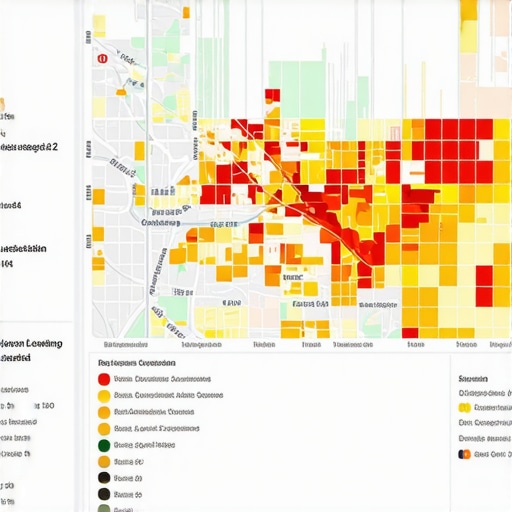
The Deadly Virtual Office Mistake
I need to give you a stern warning about a trap that is currently wiping out hundreds of listings: the use of virtual offices or coworking spaces to create “fake” proximity. This used to work, but Google’s AI is now incredibly sophisticated at identifying these addresses. Falling for the danger of using virtual offices can lead to a permanent suspension that is nearly impossible to reverse. I’ve had business owners call me in tears because their decade-old profile was vanished overnight for this exact reason. Have you ever fallen into this trap or seen a competitor get away with it? Let me know in the comments. Instead of trying to cheat the map, focus on fixing your visibility issues. Often, you’re not ranking because you’re stuck in the ‘view more’ button trap, which is usually caused by a lack of local brand citations. Stop wasting time on citations that are getting ignored and focus on high-authority, local mentions. Finally, when a negative review does hit, don’t panic. Using the exact way to response to 1-star reviews can actually boost your credibility with both Google and potential customers. Authenticity is the only way to dominate maps in the long run.
The Tech Stack I Actually Use to Watch My Competition
I don’t just ‘hope’ I am ranking anymore. That is a recipe for a heart attack when the algorithm shifts. Instead, I rely on visual heatmaps—specifically tools like Local Falcon or BrightLocal’s local search grid. If you are still looking at a single ‘average rank’ number in a dashboard, you are flying blind. You need to see exactly where your google my business rank drops off from a ‘1’ to a ‘5’ as you move two blocks away. This allows you to force your profile back into the top 3 results by identifying exactly which neighborhoods need more local ‘signals.’ I personally use these grids every Monday morning. If I see a cluster of red dots where there used to be green, I know a competitor is moving into my turf, and I can react before the phone stops ringing. 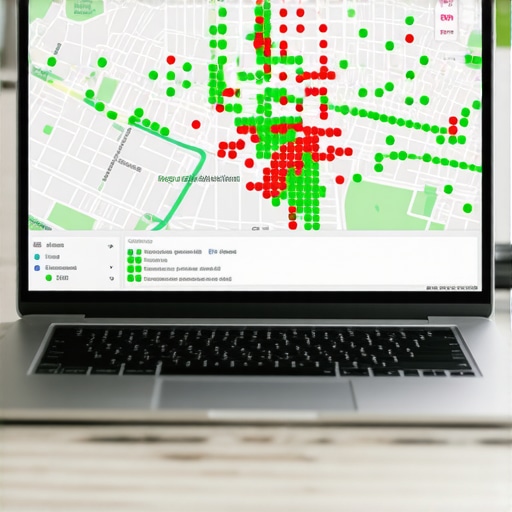
How do I keep my map rank steady for the long haul?
Maintenance isn’t about doing everything at once; it is about the ‘drip.’ I’ve found that the biggest mistake owners make is a ‘set it and forget it’ attitude after they hit the top spot. To truly dominate maps, you need a system for the review frequency secret that keeps your profile appearing fresh. I use a simple automation that requests a review via text immediately after a job is marked complete, but—and this is the key—I go in and manually respond to the best ones with specific service keywords. It’s a 10-minute daily habit that keeps the algorithm fed. According to Joy Hawkins, a renowned local SEO expert and founder of Sterling Sky, Google’s internal ‘Vicinity’ update made it clear that relevance can sometimes trump proximity, but only if you are consistently proving that relevance through active profile management. If you let your profile go dormant for a month, you are basically inviting a hungrier competitor to take your seat.
The Future of Maps belongs to Visual and AI Signals
Looking ahead, I predict that local maps domination will move away from text and almost entirely toward ‘verified reality.’ Google is already getting better at using AI to scan the background of your customer photos to verify you are where you say you are. We are even seeing evidence that the impact of wifi SSID data is being used to confirm a business’s physical presence and foot traffic patterns. In 2025 and beyond, your local mapping strategy will need to include ‘Visual Trust.’ This means high-quality, user-generated content is no longer optional. If you want to win the map pack for high competition phrases, you must stop thinking like a marketer and start thinking like a local authority. Stop over-complicating it and start with the basics that actually move the needle. My best advice? Go check your website speed right now, because the hidden link between website speed and map pack success is often the ‘invisible’ wall holding you back from that number one spot. Auditing your site for mobile performance today is the single fastest way to see a jump in your map visibility by tomorrow morning.
Hard Lessons from the Local Search Trenches
After years of obsessing over local maps domination, I’ve realized that the algorithm isn’t your enemy—it’s just a very literal-minded robot. One major lightbulb moment for me was discovering why your profile edits keep getting rejected by Google; usually, it’s because you haven’t provided enough external proof for the change. Another hard truth? Most people think descriptions are for SEO, but I found the truth about keyword stuffing your business description is that it won’t help you rank—it just annoys your customers. Finally, remember that your google my business rank depends on the signals you send every day, not just the ones you set up once and forgot.
#IMAGE_PLACEHOLDER_E#
My Go-To Resources for Map Authority
I don’t achieve local maps domination alone. I rely on a few key tools and strategies to keep things moving. First, I always tell people to stop wasting cash on local citations that Google ignores and focus only on the top-tier directories that actually pass authority. For visuals, I swear by the image optimization trick that increases local CTR to make sure my clients’ photos aren’t just pretty, but functional. I also highly recommend keeping a copy of Whitespark’s annual ranking factor report nearby—it’s the closest thing we have to a rulebook for a successful local mapping strategy.
Your Path to Local Ownership Starts Now
The journey to dominate maps isn’t a sprint; it’s a series of small, intentional adjustments that build trust over time. You now have the blueprint to stop the self-sabotage and start showing up where your neighbors are looking. If you stay consistent with your updates and focus on real customer value, you will eventually secure your spot in the map pack permanently. Don’t let the technical jargon intimidate you—just start with one change today. Which part of your Google profile has been the biggest headache to manage lately? Let me know in the comments below!
About the Author
Umar Latif
Brand & Marketing Expert · Dubai, UAE
Umar Latif is a seasoned Brand and Marketing Expert based in Dubai, UAE, with a specialized focus on Local SEO and international digital strategy. With extensive experience managing and optimizing websites for a diverse range of international clients, including those in the United States, Umar has developed a deep understanding of the nuances required to dominate local search results. His technical proficiency encompasses comprehensive keyword research and the implementation of advanced Google-centric strategies designed to enhance visibility and drive organic traffic. As a contributor to dominateyourlocalmaps.com, Umar leverages his background in global marketing to provide actionable insights for businesses looking to improve their local map rankings and digital footprint. His approach combines data-driven tactics with a strategic brand perspective, ensuring that local businesses not only rank higher but also resonate with their target audience. Throughout his career, Umar has remained dedicated to staying ahead of search engine algorithm changes to deliver consistent results for his clients. He is deeply passionate about empowering business owners and marketing professionals with the tools and knowledge they need to achieve sustainable growth.