
I remember sitting in my home office three years ago, staring at a map of my city that looked like a toddler had gone wild with a highlighter. I had just finished setting up my service areas in my Google Business Profile, and I was feeling pretty smug. I checked every suburb, every tiny village, and every zip code within a sixty-mile radius. I figured that if I told Google I worked everywhere, I would show up everywhere. I was wrong. I didn’t just fail to rank in the neighboring towns; I practically vanished from my own neighborhood. It was a visceral lesson in how the algorithm actually thinks versus how we want it to think. Today, we are going to stop the guessing game and fix the settings that are currently making your business invisible to the people who are actually trying to hire you.
The day I realized my “reach everyone” strategy was a lie
In my early days of trying to dominate maps, I made the classic rookie mistake of thinking more was better. I thought that by adding forty different towns to my profile, I was casting a wider net. Instead, I was just making my “relevance” signal so weak that Google couldn’t figure out where I actually belonged. This is a common trap that leads to rank dilution, where your authority is spread so thin it becomes non-existent. I spent months wondering why my hvac business only shows up in one specific zip code when I had clearly told the system I served the entire county. According to research from Sterling Sky, a leader in local SEO, proximity and physical location are so heavily weighted that trying to “cheat” the system with broad service areas often has the opposite effect of what you’d expect. [image]
Is it really worth shrinking my service zone?
You might be feeling that same skepticism I did. If you don’t list a town, how will you ever rank there? It feels like you are leaving money on the table. But the reality is that a focused profile is a powerful profile. When I finally swallowed my pride and deleted 75% of my service areas, my rankings in my core city shot up almost overnight. By following a local mapping strategy, I learned that Google rewards clarity over quantity. I found a hidden setting that blocks your profile from neighboring towns if your service area is too wide, and fixing it was like flipping a switch. Have you ever checked your rankings only to find you are a ghost just five miles away from your office? We’re going to look at mastering local maps domination by actually narrowing your focus to expand your reach. It sounds like a paradox, but once you see how to increase your map radius without confusing the algorithm, your phone will start ringing again.To get your google my business rank moving, you have to treat your service area settings like a laser, not a floodlight. The first thing I did after my own map meltdown was a brutal ‘service area audit.’ I looked at where my actual revenue was coming from and realized I was wasting ranking power on towns I hadn’t visited in years. Most business owners list towns because they want customers there, not because they have authority there. When you list a town 40 miles away, you aren’t telling Google you are a great choice for that town; you’re telling the algorithm you don’t have a specific home base. This leads to the audit mistake that makes your map listing effectively invisible to those closest to you.
Ditch the long list to save your ranking
Think of your profile like a battery. If you connect it to one lightbulb, it glows brilliantly. If you try to power an entire neighborhood, every light goes dark. I once helped a local roofer who was listed in 35 different zip codes but wasn’t even in the top 20 for his own street. We slashed his service area down to his primary city and the two most profitable neighboring suburbs. The result? He hit the top 3 in his home city within ten days. This is the core of local maps domination: you must prove you are the master of a small pond before the algorithm lets you swim in the ocean. 
How to pick your primary battles
When you are refining your service area, look at your historical data. If you haven’t had three jobs in a town in the last six months, remove it from your profile immediately. You can always use the city page method to capture those outlying areas without diluting your main profile’s strength. I’ve seen businesses get hit with the real reason your profile was suspended after an edit simply because they tried to add too many disparate areas at once, triggering a fraud alert. Google wants to see a tight, logical service radius that matches your physical footprint.
The simple link between your website and your map
Your website needs to back up what your profile claims. If your Google Business Profile says you serve ‘Springfield,’ but your website only mentions ‘Shelbyville,’ Google gets confused. Confusion is the enemy of a high google my business rank. I made it a rule to sync my ‘Areas Served’ section on my site with my profile settings exactly. If they don’t match, your local mapping strategy is built on a foundation of sand. You might also find that why most business owners pick the wrong categories is often tied to trying to over-extend their reach into services they don’t actually perform in every listed town.Let’s dig deeper into the actual signals that move the needle. Everyone tells you to just ‘get more reviews,’ but in my experience, the authority of the reviewer matters more than the number of stars. If a ‘Local Guide’ with dozens of previous reviews writes a detailed post about your service, it carries significantly more weight than a burner account created yesterday. This is a crucial pivot for anyone serious about mastering local maps domination. You aren’t just collecting points; you are building trust with an algorithm that is increasingly skeptical of automated feedback. According to the latest research by Whitespark, one of the most significant factors in 2025 isn’t just reviews, but ‘relevance’—how well your business category matches the user’s intent. If you aren’t careful, you’ll find why your business is ranking for the wrong local keywords simply because you haven’t fine-tuned your sub-categories to match actual search behavior.
Stop obsessing over review counts alone
If you want to dominate maps, you need to understand that proximity is a ‘soft’ wall, not a hard one. Many experts will tell you that you can’t rank more than five miles from your office, but that is a myth. Your local mapping strategy should focus on ‘behavioral signals’ that extend your reach. Google looks at how many people search for your brand specifically and then click the call button or request directions. This is the interaction data that proves you are a top local choice. If your google my business rank has plateaued, it is likely because you have stopped generating these ‘active’ user signals and have relied too much on static on-page SEO. 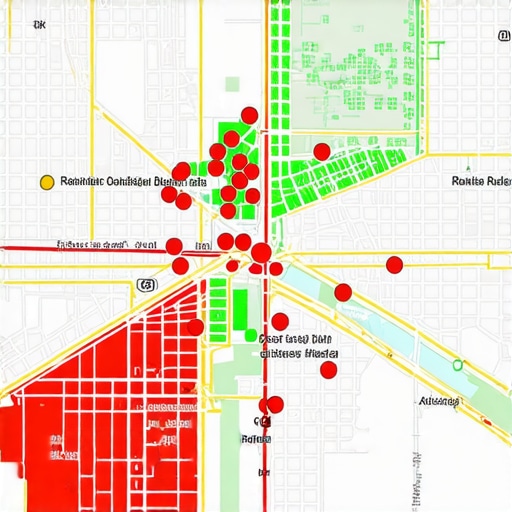
The ‘hidden’ signals Google uses to track your real-world activity
One major ‘trap’ I see is the ‘set it and forget it’ mentality with business descriptions. I have seen owners get flagged because they tried to game the system with hidden keywords in their name or description. The truth about keyword stuffing your business description is that it does not help you rank higher, and it actually kills your conversion rate because it looks spammy to high-intent customers. Instead, focus on map pack domination by proving you are a local authority through consistent, geo-relevant updates. If you haven’t updated your photos in months, you’re telling the algorithm you’re stale.
What happens if my business doesn’t have a physical storefront?
This is a sophisticated hurdle for many service-based businesses. Many entrepreneurs worry that why your home based business is missing from local search is purely due to the lack of a commercial address. The reality is that the proximity truth why your office location isnt the only reason youre not ranking allows for significant flexibility. Google tracks where your service vehicles are via mobile signals and where your reviews are geographically originated. If you are consistently getting reviews from one specific neighborhood, your authority there grows naturally. You can how to outsmart competition in local map listings in 2025 by simply being more active in the areas you actually serve rather than where you are parked. Have you ever fallen into the trap of trying to appear in a city where you don’t actually have a presence? Let me know in the comments below.Once the initial excitement of seeing your name in the top three wears off, the real work begins. I’ve seen too many businesses climb to the summit of local maps domination only to tumble down because they treated it like a trophy rather than a living garden. If you aren’t actively tending to your profile, the algorithm will eventually decide someone else is more relevant. Maintenance isn’t about reinventing the wheel; it’s about signaling to Google every single week that you are still the most active, reliable choice in your area.
The long game of staying at the top
In my own journey to dominate maps, I realized that the power of regular profile updates on search frequency cannot be overstated. I make it a point to upload three new photos every Tuesday—not just any photos, but ones that use the specific photo metadata that actually moves your map rank. This constant pulse of data tells the system your business is thriving. I also learned to stop ignoring the ‘Q&A’ section. If you aren’t answering questions, your competitors or random users will, and they won’t always give the right information.
How do I maintain my map rank without burning out?
The secret is automation and a strict routine. I don’t wait for things to break; I audit my listing once a month using a checklist to ensure my local mapping strategy is still aligned with my service goals. I look at my category performance because why most business owners pick the wrong categories often comes down to seasonal shifts they failed to track. If you want map pack domination that lasts for years, you need to keep your digital house in order. 
Tools that actually save your sanity
I am often asked what software I use to manage this. While I love a good spreadsheet, tools like BrightLocal or the GMB Everywhere extension are non-negotiable for me. GMB Everywhere, in particular, allows me to ‘spy’ on the audit data of anyone outranking me in seconds. It’s how I discovered that how to sync your website schema with your map profile was the missing link for my multi-location clients. As Joy Hawkins from Sterling Sky, a renowned expert in the field, frequently emphasizes in her technical documentation, Google’s algorithm is increasingly focusing on ‘real-world’ signals that are hard to fakes. This means your google my business rank will soon depend more on user behavioral patterns—like how long someone stays on your profile—than just your keyword density. Looking toward the future, I predict we will see an even heavier shift toward AI-summarized reviews. This makes mastering local maps domination even more about the quality of the words your customers use in their feedback. If you are preparing for 7 google business profile tips for 2026 to outperform massive competitors, start by focusing on these high-quality interactions now. My advanced tip for you today: Go and download the GMB Everywhere extension right now and check if your primary category matches the top-ranking competitor in your city; you might be surprised by the ‘hidden’ sub-categories they are using to beat you.
The Brutal Truth About Sustaining Your Local Maps Dominance
If there is one thing I’ve learned from years of trial and error, it’s that your google my business rank is never static. I once thought that reaching the top meant the work was over, but I quickly realized that your competitors are watching your every move. The real secret to long-term map pack domination isn’t a secret at all—it’s the daily commitment to being the most helpful business in your zip code. I’ve seen businesses with perfect SEO lose out to shops that simply answered their customers faster or posted more relevant updates. You have to how to audit your map rankings from a customers real location to see the truth of what people are actually experiencing on the ground.
My biggest lightbulb moment was realizing that Google prioritizes ‘real-world’ reliability. This means if your hours are wrong once, or you ignore a question in the Q&A, you lose more authority than a keyword-rich description could ever provide. Always prioritize the user experience over trying to ‘game’ the algorithm.
Resources That Actually Deserve a Spot on Your Bookmark Bar
I don’t believe in using fifty different tools to manage one profile. To execute a successful local mapping strategy, you only need a few high-impact resources. I personally rely on BrightLocal for tracking my progress across multiple blocks and identifying citation gaps. I also use the GMB Everywhere extension religiously; it is the fastest way to analyze the sub-categories of the businesses outranking you. For keeping up with the constant shifts in local search behavior, I always return to the technical deep-dives provided by Joy Hawkins and the team at Sterling Sky. These aren’t just tools; they are the eyes and ears of my operation. If you aren’t using a the profile audit checklist for turning search impressions into real calls, you are essentially flying blind.
Take the Reins of Your Local Growth
The roadmap to local maps domination is right in front of you. It starts with a simple choice: are you going to keep guessing, or are you going to use the data to your advantage? Your community is searching for what you offer every single hour. By cleaning up your service areas, focusing on high-authority reviews, and staying active with geo-relevant updates, you aren’t just chasing a google my business rank—you are building a bridge to your future customers. Don’t wait for the perfect moment; your neighborhood is ready to find you. Have you checked which sub-categories your top competitor is using lately? Let me know in the comments below!
About the Author
Umar Latif
Brand & Marketing Expert · Dubai, UAE
Umar Latif is a seasoned Brand and Marketing Expert based in Dubai, UAE, with a specialized focus on Local SEO and international digital strategy. With extensive experience managing and optimizing websites for a diverse range of international clients, including those in the United States, Umar has developed a deep understanding of the nuances required to dominate local search results. His technical proficiency encompasses comprehensive keyword research and the implementation of advanced Google-centric strategies designed to enhance visibility and drive organic traffic. As a contributor to dominateyourlocalmaps.com, Umar leverages his background in global marketing to provide actionable insights for businesses looking to improve their local map rankings and digital footprint. His approach combines data-driven tactics with a strategic brand perspective, ensuring that local businesses not only rank higher but also resonate with their target audience. Throughout his career, Umar has remained dedicated to staying ahead of search engine algorithm changes to deliver consistent results for his clients. He is deeply passionate about empowering business owners and marketing professionals with the tools and knowledge they need to achieve sustainable growth.