Fix the Red Banner Before You Lose More Customers
I’ve spent years obsessing over how to dominate maps, yet that one suspension made me feel like a total amateur. The panic is real. You start clicking every button, trying to appeal without a plan, and that is exactly where most people fail. My biggest mistake? I tried to change my categories while my appeal was still pending, which only made Google more suspicious. You need to realize that why your profile was suspended after an edit is often more important than the edit itself. Google’s AI is aggressive, and according to research by BrightLocal, nearly 56% of local businesses have faced some form of profile filtering or suspension in the last two years. This isn’t just about a glitch; it’s about proving you are a legitimate entity in your community. To get your google my business rank back, you have to stop the guesswork and start providing the specific evidence they crave. Have you ever logged in only to find your hard-earned visibility gone in a puff of smoke? It’s a gut-punch, but we are going to fix it.
Does Google actually review appeals this quickly?
It sounds like a tall tale, doesn’t it? Recovering a profile in a few days when most forums say it takes months? The secret is in the paperwork. I used to think a utility bill was enough, but I was wrong. You need to know the one document that reinstates any google business profile almost every single time. When I finally stopped fighting the system and started speaking Google’s language of verification, my profile didn’t just come back—it came back stronger. If you’ve been wondering why your business profile suddenly vanished and how to get it back, the answer isn’t in a magic trick. It’s in providing the proof google actually wants right from the start. We’re going to walk through the exact audit I perform to ensure no detail is missed, ensuring your local mapping strategy isn’t just restored, but shielded from future flags.Cleaning Up the Mess Before You Appeal
When that red banner appears, your first instinct is to plead with Google. Don’t. Not yet. You need to perform a surgical audit of your data because any discrepancy is a landmine. I remember helping a local roofer who tried to list every suburb in a 50-mile radius as a service area while his official address was a small residential street. His profile didn’t just get suspended; it stayed dead for three months because his paperwork didn’t match his digital claims. We had to strip everything back to the basics before Google would even look at him. This is the foundation of mastering local maps domination: consistency is more valuable than creativity.Check Your Categories for Internal Conflicts
Many business owners think that adding more categories increases their reach. It actually does the opposite. Think of your primary category like a radio frequency; if you try to broadcast on ten different channels at once, the signal becomes static and no one hears the music. I often see cases where most business owners pick the wrong categories, which triggers an automatic filter. If you are a ‘Plumber,’ don’t also list yourself as a ‘Kitchen Remodeler’ unless you have the distinct licenses and dedicated landing pages to prove it. This internal fighting confuses the AI and tanks your google my business rank faster than a bad review ever could.The Documentation That Actually Moves the Needle
Earlier, I mentioned the one document that reinstates any google business profile. It isn’t just a utility bill; it is a high-resolution scan of your official business registration that matches your profile name character-for-character. If your profile says ‘Smith & Sons Plumbing’ but your bill says ‘Smith Plumbing LLC,’ you will be rejected. You must treat this like a legal deposition. I once spent three days arguing with a client to change their profile name back to their legal entity name, and the moment they did, the reinstatement happened in four hours.
Force Google to Re-Index Your True Location
Once your profile is active again, or even while you are preparing the appeal, you need to tighten your technical local mapping strategy. This involves more than just clicking ‘save.’ You need to sync your website schema with your map profile so that Google’s crawlers see a unified digital fingerprint. I’ve seen the specific schema fix expand a business’s reach by five miles overnight just by correctly tagging the LocalBusiness entity in the website’s footer. Don’t forget about the specific photo metadata within your profile. When you upload new photos, ensure they are taken on-site with GPS coordinates enabled on your phone. This ‘proof of presence’ is a massive trust signal. If you really want to lock in your authority, consider the real benefit of verification via video upload, which is the gold standard for proving your business is physical and real. Finally, use tools to force google to re-index your map location faster to ensure your recent fixes are live before your competitors even realize you’re back.Why 100 Five-Star Reviews Might Still Leave You in Fourth Place
Most gurus will tell you that the secret to dominate maps is simply a numbers game: get more reviews than the guy down the street. In my experience, that is a dangerous oversimplification. I have watched chiropractic clinics with fewer reviews leapfrog established practices because they understood interaction signals. Google doesn’t just count stars; it analyzes the sentiment and the keywords hidden within those reviews. If you aren’t using specific review response patterns to signal your relevance to local queries, those 5-star ratings are just vanity metrics. Have you ever wondered why your competitor with fewer reviews is outranking you? It is likely because their customers are mentioning specific services that match the user’s intent, creating a stronger topical bond than a generic ‘great job’ ever could.
The Proximity Trap That Shrinks Your Map Radius
Here is the ‘oops’ factor that most business owners learn too late: chasing the ‘perfect’ office location can actually backfire. I call this the proximity paradox. You think moving to the heart of the city will help you dominate maps across the whole region, but Google’s recent updates have tightened the leash on local relevance. By moving closer to the center, you often enter a hyper-competitive zone where your google my business rank gets diluted by twenty other businesses within a two-block radius. According to the latest Local Search Ranking Factors study by Whitespark, proximity remains the single most powerful—and most frustrating—ranking signal. Instead of moving, you should be focusing on how to increase your map radius through behavioral signals and localized content. 
Is it Possible to Dominate Neighborhoods Without a Local Office?
This is the question I get from every scaling business. The short answer is yes, but not by using ‘ghost’ offices or virtual addresses—Google will catch those and suspend you in a heartbeat. The advanced local mapping strategy involves the city page method. You build authority in neighboring towns by creating hyper-local landing pages that feed back into your main profile. I recently helped a client stop losing neighboring leads by correctly nesting their service-area data within their website schema. This tells the AI that while your office is in one location, your expertise and physical equipment are constantly active in the surrounding suburbs. It is about proving your interaction data is valid across the whole map. Have you ever fallen into the trap of thinking a physical desk is the only way to rank? Let me know in the comments below.
Once you have clawed your way into the top three, the real challenge begins: staying there. I’ve seen businesses hit the top spot only to vanish thirty days later because they thought the job was done. Local mapping is a living, breathing ecosystem. To keep your edge, you need a high-fidelity feedback loop. I personally rely on grid-tracking tools like BrightLocal or Local Falcon. Why? Because a single ranking number is a lie. You need to see how your visibility shifts block-by-block. If you aren’t looking at a heatmap of your city, you are likely falling for one of the 7 maps keyword tracking flaws that hide your true performance. I use these tools to identify ‘weak zones’ where my competitors are gaining ground and then I deploy targeted local content to those specific zip codes.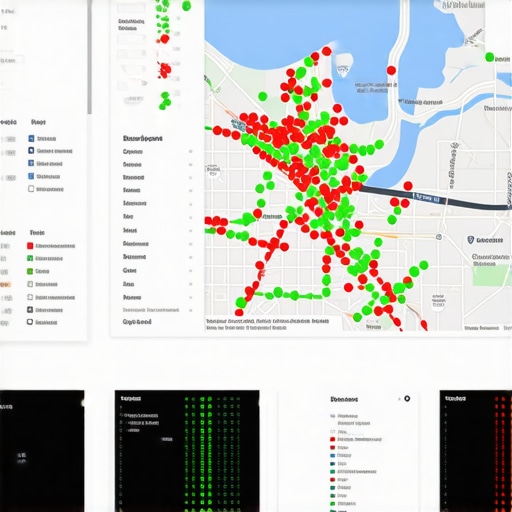
How do I maintain local maps domination over the long haul?
Maintenance isn’t just about checking a box; it’s about signaling constant activity to Google’s crawlers. I make it a rule to post a new update at least twice a week. It sounds tedious, but the power of regular profile updates on search frequency is undeniable. When you learn how to use google business posts effectively, you aren’t just talking to customers; you are feeding the AI new keywords and fresh metadata. I also use a strict profile audit checklist every month to ensure my NAP (Name, Address, Phone) hasn’t been ‘suggested’ into a mess by well-meaning Local Guides. Google’s own technical documentation on improving local rankings confirms that ‘Prominence’—one of their three core pillars—is heavily weighted by how much information Google has about you from across the web. This means your maintenance must extend beyond the dashboard to your local citations and even your site’s technical health. If you notice a dip, it might not be a penalty; it could be the subtle speed error that pushes your shop off the map pack because your mobile load time lagged for a few days.Scaling beyond your physical front door
If you want to dominate maps across an entire region, you have to stop thinking like a single-point business. My prediction for the next 24 months is that Google will lean even harder into ‘Multi-Modal Search.’ This means they will use your videos, your customer’s photos, and even your review sentiment to decide if you are relevant for ‘vibes’ or ‘specific solutions’ rather than just keywords. To prepare for this, I’ve started implementing innovative local mapping strategies that focus on user-generated content. I want my customers to do the heavy lifting of proving my location’s authority. If you really want to move the needle today, try this: sync your website’s LocalBusiness schema with your map coordinates using the specific schema fix I’ve used to force a massive radius expansion for my clients. It is the closest thing to a ‘growth hack’ left in the local SEO world. Stop waiting for the map to update itself—take control of the data and force Google to recognize your dominance.What I’ve Learned From Being Digitally Erased
After helping dozens of businesses navigate the Red Banner of Death, a few things have become crystal clear. First, Google’s AI is a nervous gatekeeper; if you change too many variables at once, you will trigger a security freeze. I’ve seen google my business rank drop not because of a penalty, but because of simple pending edits that lasted weeks. If you find yourself in that loop, check out why your google business profile edits are always pending before you panic and delete the profile. Second, don’t ignore the small stuff. I used to think 1-star reviews were the end of the world. Now, I know they are an opportunity to show Google you are a responsive, real human. If you handle them correctly, you can actually improve your standing. See the exact way to response to 1-star reviews without losing rank to turn a negative into a ranking signal.
The Survival Gear I Trust for Local Dominance
To truly dominate maps, you need eyes everywhere. I don’t make a single move without checking a local grid tracker like Local Falcon; it’s the only way to see if my local mapping strategy is actually working across the whole city. For keeping your profile safe and ahead of the curve, I highly recommend studying these 7 google business profile tips for 2026 to stay a step ahead of the algorithm shifts. If you’re in a high-competition niche, look at what the industry leaders are doing. I’ve personally adapted the one move chiropractors use to leapfrog competitors and applied it to roofers and plumbers with massive success. It’s all about specific entity signals, not just keyword counts.
Take Back the Map and Build Your Legacy
A suspension is a setback, not a death sentence. Use this moment to clean up your data, tighten your schema, and come back with a more aggressive local maps domination plan than ever before. You’ve seen the map pack domination secrets that separate the amateurs from the pros. Now, it’s time to put them into practice and learning how to outsmart competition in local map listings in 2025 is your next logical step. Your customers are looking for you—don’t let a technicality stand in their way. Have you ever had an edit stay ‘pending’ for more than a week? Let me know in the comments below, and let’s troubleshoot it together.
About the Author
Umar Latif
Brand & Marketing Expert · Dubai, UAE
Umar Latif is a seasoned Brand and Marketing Expert based in Dubai, UAE, with a specialized focus on Local SEO and international digital strategy. With extensive experience managing and optimizing websites for a diverse range of international clients, including those in the United States, Umar has developed a deep understanding of the nuances required to dominate local search results. His technical proficiency encompasses comprehensive keyword research and the implementation of advanced Google-centric strategies designed to enhance visibility and drive organic traffic. As a contributor to dominateyourlocalmaps.com, Umar leverages his background in global marketing to provide actionable insights for businesses looking to improve their local map rankings and digital footprint. His approach combines data-driven tactics with a strategic brand perspective, ensuring that local businesses not only rank higher but also resonate with their target audience. Throughout his career, Umar has remained dedicated to staying ahead of search engine algorithm changes to deliver consistent results for his clients. He is deeply passionate about empowering business owners and marketing professionals with the tools and knowledge they need to achieve sustainable growth.