
I remember sitting in a cramped office at a local hardware store, watching the owner’s face fall as he searched for his own shop on his phone. He wasn’t there. Instead, three massive corporate giants—stores with headquarters three states away—were hogging the entire Map Pack. It felt personal. I had promised him a better google my business rank, yet we were being outmuscled by sheer corporate weight. It was a visceral realization: if we tried to beat them by following their big brand rules, we would lose every single time. We had to stop acting like a smaller version of them and start acting like the only real neighbor in the search results. Today, I’m going to show you exactly how to flip the script and win back your territory from the giants who think they own the neighborhood. [image placeholder]
Why Huge Corporations are Surprisingly Easy to Topple
When you look at a national chain, you see a marketing budget that could buy a small island. But when Google looks at them, it often sees a template. They have thousands of locations managed by stressed-out interns or automated software that doesn’t know the difference between your specific street corner and one five hundred miles away. This is where mastering local maps domination becomes your secret weapon. They can’t pivot. They can’t mention the local high school football game or the specific shortcut everyone takes to get to the shop. I learned this the hard way after a massive failure where I tried keyword stuffing your business name to match a chain’s prominence. It didn’t work; it got the profile flagged and nearly killed the business. The real win comes from being more relevant, more grounded, and much more agile.
Is beating a billion-dollar brand even realistic for a one-man shop?
Many of my neighbors ask me this with a look of pure skepticism. The answer is a resounding yes, and it’s backed by more than just my gut feeling. According to research by Moz, proximity and localness signals—like specific neighborhood mentions and real user engagement—can actually override the massive brand authority that chains possess. Have you ever felt like you’re invisible to customers just two blocks away while a giant retailer steals all the clicks? If so, you aren’t alone, and you should definitely check out our contact page if you want to chat about how to fix that invisibility.
The Neighborhood Edge That Chains Can’t Buy
The beauty of being a local business is that you can move fast. While a corporate office is still approving a social media post from three months ago, you can be uploading customer photos that show real people in your real store from this morning. Google loves fresh, authentic data. Chains are notoriously bad at this because their photos are often stock images or sanitized corporate shots that feel cold. By flooding your profile with authentic, geo-tagged content and real responses, you signal to the algorithm that you are the most active and relevant solution for a local searcher. We’re moving beyond just listing your business; we’re going to dominate maps by proving you’re the heartbeat of the community.To get that heartbeat pulsing in the eyes of the algorithm, you need to provide data signals that corporate offices simply cannot manufacture. A corporate intern in a skyscraper can’t take a photo of the new mural on Main Street, but you can. Think of Google as a local librarian; they don’t just look at the title of your book, they listen to the chatter in the neighborhood to see who’s actually relevant. If you want to learn how to outrank national chains in your specific neighborhood, you have to feed that librarian the right stories.
Get Your Neighbors to Do the Heavy Lifting
Most people think more reviews equal better rankings, but that is a dangerous half-truth. I once worked with a local plumber who was losing every emergency call to a franchise three towns over. He had 150 reviews, but he was still invisible because his reviews were generic. We shifted his strategy to focus on the specific review keywords that trigger map visibility. We started asking customers to mention the specific neighborhood and the service—like ‘best leaky pipe repair in Riverside’—instead of just ‘great job.’ Within six weeks, he was the first name people saw. It wasn’t about volume; it was about the localized language that the big guys can’t fake.
Use the Secret Review Response Loop
When you get a review, don’t just say ‘thanks.’ Use the specific way to respond to positive reviews for a rank boost by mirroring the customer’s language. If they mentioned your shop on 5th Avenue, you mention it too. This creates a feedback loop of local relevance that tells Google you are the definitive authority for that exact patch of pavement.
Stop Guessing Where Your Customers Are
One of the biggest mistakes I see is a business trying to be everything to everyone. Your service area isn’t the entire state; it’s the streets you can actually reach in twenty minutes. I’ve seen how service areas impact your rankings far more than you think, often acting as a filter that hides you if you set them too wide. If Google thinks you’re claiming too much territory, it might stop showing you to the person standing right outside your door. [image placeholder] 
Fix the Category Confusion Right Now
National chains often default to broad categories like ‘Restaurant’ or ‘Retailer.’ You have the power to be precise. You should stop guessing your categories and use this selection data instead to find the niche that your competitors missed. If you are a ‘Boutique Coffee Roaster’ instead of just a ‘Cafe,’ you bypass the generic noise and capture the high-intent searchers.
Feed Google the Visual Proof It Craves
Corporate galleries are full of polished, sterile stock photos. You can win by being raw and real. There is the one thing google looks for in your storefront photos that most owners overlook: permanent signage and local landmarks. When you upload a photo of your front door with the local park visible in the background, you are providing a physical handshake to the algorithm. This is how you boost your local visibility today without spending a dime on ads. While the big brands are waiting for legal to approve a new banner, you can have ten geo-tagged photos of your team at work uploaded before lunch.Let’s dig deeper into the actual mechanics of innovative local mapping strategies for top google rankings. Most ‘experts’ will tell you that if you aren’t the closest business to the searcher, you’ve already lost. I’m here to tell you that’s a myth. The proximity lie suggests that distance is the only thing Google tracks, but if that were true, the gas station on the corner would always outrank the better one two miles away. In reality, relevance and prominence can stretch your ranking radius far beyond your physical doorstep. According to the Whitespark Local Search Ranking Factors, while proximity remains a top signal, on-page signals and link authority carry enough weight to overcome a competitor who is physically closer but digitally weaker. 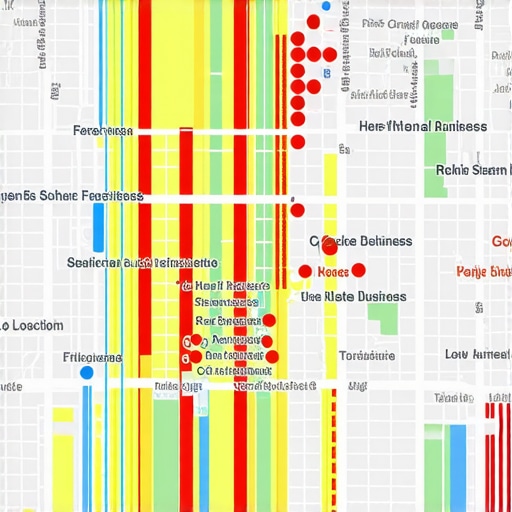
Don’t let the proximity filter shrink your world
Many business owners suffer from the hidden proximity glitch that shrinks your map radius because they haven’t established enough local authority. The common belief is that you are locked into a tiny circle around your shop, but you can actually beat the proximity filter and expand your reach by diversifying your local backlinks. If you only have mentions from one neighborhood, Google assumes you only serve that neighborhood. By acquiring mentions from adjacent areas, you essentially tell the algorithm that your influence extends further than your mailbox.
Why does your map rank change when you move ten feet?
This is one of the most frustrating nuances of mastering local maps domination. You might be #1 when standing in your lobby, but #15 when you’re at the park down the street. This happens because your map rank is different for every person who searches based on their real-time GPS data. To fight this, you need to stop focusing on a single ranking point and start looking at your average visibility across the entire city.
The danger of chasing the wrong signals
Here is a hard truth that often hurts: why your business description doesn’t matter for ranking is a concept many refuse to accept. Owners spend hours keyword-stuffing their descriptions, yet Google ignores that field for ranking purposes. It’s for conversion, not for the algorithm. An even bigger ‘oops’ factor is trying to trick the system with fake addresses. The danger of using virtual offices for local seo cannot be overstated; Google’s AI is incredibly good at identifying shared office spaces that lack a permanent physical presence. If you get caught, your entire google my business rank will evaporate overnight. Have you ever fallen into the trap of thinking a P.O. box or a virtual office would help you rank in a new city? Let me know in the comments below. We need to focus on map pack domination through legitimate, high-authority signals rather than shortcuts that lead to suspensions.Maintaining a high google my business rank isn’t a “set it and forget it” task. I’ve seen businesses hit the top spot, celebrate with a steak dinner, and then vanish two weeks later because they stopped feeding the beast. If you want to learn how to secure your spot in the map pack permanently, you need a workflow that feels like brushing your teeth—boring but non-negotiable. I personally rely on the audit step that finds why your business is hidden every single month. It’s not about finding new tricks; it’s about making sure your existing foundation hasn’t cracked under the weight of a new Google update or a surge in competitor activity.
The Toolkit That Keeps Me Sane and Visible
I don’t waste money on twenty different SEO platforms. I use one solid grid-tracking tool because it shows me exactly where my ranking bubble is shrinking. If I see a dip in the North side of town, I don’t panic; I look at the citation audit checklist for struggling storefronts to see if a competitor moved in or if my data got messy. This is how you transition from just guessing to mastering local maps domination. I’ve often found that why your profile edits keep getting rejected by google usually boils down to a conflict in this data that these tools highlight before you even click save. #IMAGE_PLACE_HOLDER_D#
What does it take to stay on top month after month?
It comes down to the review frequency secret for long-term map dominance. Google doesn’t just care that you have 500 reviews; it cares that you got one yesterday. Velocity is the heartbeat of relevance. When you hit a sudden map ranking plateau without buying links, it’s usually because your freshness signal has flatlined.
Where the Map Pack is heading in 2026
In the near future, I predict we will see Local Services Ads and organic Map Packs merge even further, driven by hyper-specific AI analysis. According to experts at Sterling Sky, the nuances of how users interact with your profile—like how long they linger on your photos—are becoming just as important as your backlink count. Google’s AI is already starting to summarize local reviews to answer complex queries. This means innovative local mapping strategies for top google rankings will soon require much more natural language proof within your profile. If you want to stay ahead, try this advanced move today: Go into your profile and respond to an old review from three months ago. Use a specific neighborhood landmark name in your reply. You might be surprised at how that small signal of life can nudge your google my business rank back into the green.
The Hardest Lesson I Learned About Dominating the Map Pack
Over the years, I’ve realized that google my business rank isn’t just about technical settings; it’s about persistence and narrative. One major lightbulb moment was discovering that why your business description doesn’t matter for ranking—I spent months tweaking text that Google barely looked at for visibility. [image placeholder] Another hard truth? Velocity beats volume. Ten reviews spread across a month are worth more than fifty reviews in a single afternoon. Most importantly, I learned that the proximity lie is real; you can stretch your reach if your brand authority is strong enough. It’s not about being the closest; it’s about being the most trusted and consistently active.
The Few Tools That Actually Move the Needle
I don’t believe in bloated software suites that drain your budget. To achieve mastering local maps domination, I rely on a few high-value resources that offer real-world clarity. I highly recommend checking out Whitespark for their deep-dive research into citation data and Sterling Sky for their transparent algorithm tests. For daily tracking, use a grid-based visualization tool to see exactly where your ranking bubble is shrinking. If you’re feeling overwhelmed by the technical side, the audit step that finds why your business is hidden is the best place to start your recovery. If you ever feel like you’re in over your head, the one question to ask before hiring a maps expert will save you from expensive mistakes and empty promises.
Your Neighborhood Is Waiting for You to Lead
The giants have the money, but you have the local connection. By implementing a consistent local mapping strategy, you aren’t just fighting for a spot on a screen; you’re making it easier for your neighbors to find a real person who cares about their community. Don’t let the technical jargon scare you—start with one new photo, one helpful response, and one honest customer story. You have the power to dominate maps in your own backyard if you just stay the course and remain authentic. If you need a partner to help navigate these digital streets, feel free to reach out via our contact page. Have you ever noticed your ranking drop when you’re just a few blocks away from your shop? Let me know your experience in the comments below!
About the Author
Umar Latif
Brand & Marketing Expert · Dubai, UAE
Umar Latif is a seasoned Brand and Marketing Expert based in Dubai, UAE, with a specialized focus on Local SEO and international digital strategy. With extensive experience managing and optimizing websites for a diverse range of international clients, including those in the United States, Umar has developed a deep understanding of the nuances required to dominate local search results. His technical proficiency encompasses comprehensive keyword research and the implementation of advanced Google-centric strategies designed to enhance visibility and drive organic traffic. As a contributor to dominateyourlocalmaps.com, Umar leverages his background in global marketing to provide actionable insights for businesses looking to improve their local map rankings and digital footprint. His approach combines data-driven tactics with a strategic brand perspective, ensuring that local businesses not only rank higher but also resonate with their target audience. Throughout his career, Umar has remained dedicated to staying ahead of search engine algorithm changes to deliver consistent results for his clients. He is deeply passionate about empowering business owners and marketing professionals with the tools and knowledge they need to achieve sustainable growth.