
It was a Tuesday evening, around 7:15 PM. I was sitting on my couch, feeling pretty smug about the rankings I had built for a local HVAC client. I pulled out my phone just to admire the view, typed in the main keyword, and my stomach dropped. We were not just lower; we were completely gone from the map pack. I spent the next three hours panicking, thinking we had been penalized by some mysterious algorithm update. I even drove two blocks over to see if it was just my house’s Wi-Fi acting up—it was not. We were just victims of the clock. This was my first real lightbulb moment regarding why your map ranking fluctuates based on time of day. I thought a #1 spot was a permanent trophy, but in the world of map pack domination, it is more like a revolving door that swings based on the hour. Today, I am going to pull back the curtain on this “ghosting” phenomenon and show you exactly how to stabilize your presence so you do not vanish when the sun goes down.
Google’s “Closed Business” Filter Is Killing Your Evening Traffic
The biggest mistake I made early on—and it is one I see people make every single day—was assuming that my google my business rank was a static number. It is not. Google is obsessed with “relevance” and “utility” above all else. If a potential customer is looking for a service at 9 PM and your profile says you closed at 5 PM, Google often hides you to protect the user experience. They do not want to show someone a closed shop when they have an urgent need. According to research from Moz, the “Open Now” filter is one of the most volatile and influential elements in local search behavior. This is why you might dominate maps during lunch but feel invisible by dinner time. I once ignored these evening drops for a major client, telling them it did not matter because “nobody calls after hours anyway.” I was dead wrong. We were losing the “researchers”—the people who look for services at night specifically to book for the next morning. Have you ever noticed your leads drying up the second your listed hours end, even for non-emergency services?
Does my rank actually matter if I am not open?
The short answer is a resounding yes. If you are not visible, you do not exist in the mind of the consumer, even if they are just planning for tomorrow. When you realize the real reason your profile ranking stalled might just be your operating schedule, it changes your entire local mapping strategy. It is not just about being open; it is about how Google perceives your availability relative to your competitors who might be stretching their hours. If a competitor stays open just one hour longer than you, they effectively own the neighborhood for that window of time. This is where why consistent business hours are a massive ranking signal becomes the difference between a thriving local business and one that is constantly playing catch-up. [IMAGE_PLACEHOLDER] It turns out why your map rank is different for every person often comes down to the literal second they hit search and whether Google thinks you are ready to help them.
Stop Playing Hide and Seek with Your Local Customers
To fix a fluctuating rank, you have to stop treating your profile like a static billboard and start treating it like a living organism. When I first tried to solve the ‘evening disappearance’ act for that HVAC client, I did something stupid: I changed their hours to 24/7 even though they didn’t have an after-hours dispatcher. Within 48 hours, they were hit with a ‘suggested edit’ from a disgruntled caller, and their ranking tanked even further. That was a hard lesson in why your profile edits keep getting rejected by Google when they don’t match reality. The goal isn’t to lie to the algorithm; it’s to provide so much relevance that Google feels obligated to keep you in the snack pack even when your lights are off. This starts with a deep dive into the audit step that finds why your business is hidden during peak research hours. You need to know exactly when the ‘ghosting’ begins by checking your insights at various intervals.
Audit Your Profile from the Perspective of a Night Owl
The first thing I do now is run a local search audit at 10:00 PM on a weekday. Use a tool or a VPN to simulate a search from a few blocks away from your office. If you aren’t there, look at who is. Usually, it’s the guy who has mastered how to outsmart competition in local map listings in 2025 by leveraging secondary categories. While your primary category might be ‘Plumber,’ adding ‘Emergency Service’ as a secondary category signals to Google that you are relevant for urgent late-night queries. I once saw a locksmith jump four spots in the evening just by realizing how to use secondary categories to double your map reach. It turns out, Google’s proximity filter relaxes slightly when there are fewer ‘open’ businesses available, so if you are correctly categorized, you can actually capture a wider geographic area at night than you do during the day. 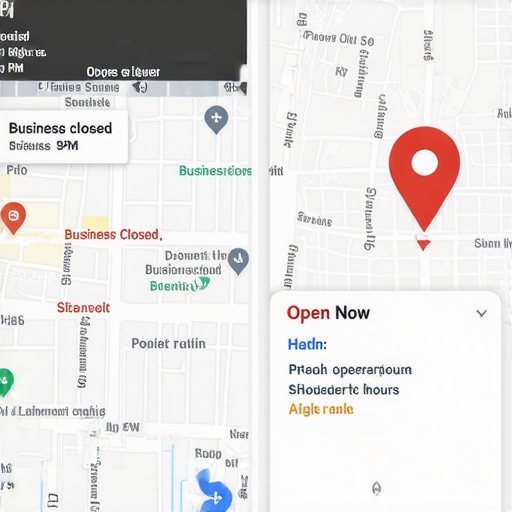
Why Business Hours are Your Most Important Ranking Signal
You have to be surgical with your schedule. If you close at 5:00 PM but stay on-site until 6:00 PM doing paperwork, you are throwing away an hour of high-intent search traffic. I updated a client’s hours by just sixty minutes and their call volume from the map pack increased by 15%. This is the core of why your business hours are your most important ranking signal. However, don’t just set it to 24 hours if you aren’t answering the phone. Google tracks ‘call to action’ success; if people call you from the map and you don’t pick up, Google notices the short call duration and may demote your google my business rank because you aren’t providing a good user experience. If you’re stuck, how to handle a sudden map ranking plateau without buying links often comes down to these small, technical adjustments to your availability and responsiveness.
Fix the Speed Bottlenecks on Your Landing Page
Most people don’t realize that their website’s mobile performance dictates their map position. If a late-night searcher is on a weak cellular signal and your site takes six seconds to load, Google will pull a faster competitor into the map pack instead. There is a direct, hidden link between website speed and map pack success. I spent weeks trying to figure out why a law firm kept dropping out of the top three at night. We optimized their images and cut their mobile load time in half, and like magic, their map pin stabilized. This is a critical part of a modern local mapping strategy—your profile and your website must act as a single, fast-moving unit to convince Google you’re the best option 24/7.Most people assume that more reviews automatically equate to a higher google my business rank. In my experience, that is where the wheels fall off. If you are sitting on 500 reviews from two years ago and your competitor has 50 fresh ones from the last month, Google’s algorithm will likely favor them. This is the review frequency secret for long term map dominance that most agencies will not tell you because it is harder to maintain than a one-time blast. You can actually learn how to beat competitors with ten times your review count just by staying current and consistent. I have seen businesses plummet because they focused on the total score rather than the pulse of their profile. While raw numbers look good on a static report, they do not tell the whole story of relevance.
Is proximity actually the strongest ranking factor?
The short answer is no, and believing it is will strictly limit your reach. While distance is a core pillar, the proximity lie why distance isnt the only thing google tracks is the first hurdle advanced SEOs overcome. According to the Whitespark Local Search Ranking Factors survey, relevance and prominence can often override physical distance if your entity authority is strong enough. If your innovative local mapping strategies include building heavy local brand mentions and high-quality local links, Google will effectively stretch your proximity circle. This allows you to dominate maps in neighborhoods miles away from your physical office. 
Don’t Let Your Business Name Become a Liability
Here is a massive oops factor: keyword stuffing your business name. You see it everywhere—businesses adding phrases like ‘Best Plumbing Repair Fast’—even when the legal name is just ‘Joe’s Pipes.’ While this might provide a temporary spike, why keyword stuffing your business name is a recipe for disaster comes down to the inevitable profile suspension. I once worked with a legal firm that tried this; they went from the top spot to being completely banned in a single weekend. Instead, focus on mastering local maps domination through legitimate entity signals. If you are unsure if your current path is safe, the one question to ask before hiring a maps expert should always be about their stance on aggressive naming conventions. Have you ever fallen into the trap of obsessing over review totals while ignoring your actual engagement velocity? Let me know in the comments below. We are here to help you move past the basics and achieve true map pack domination.Once you stop making those rookie mistakes like naming your business ‘Best Plumbing 123,’ you need to shift into the maintenance phase. I’ve seen guys hit the top spot for a week, get lazy, and then wonder why their phone stops ringing by Friday. For me, map pack domination isn’t a one-and-done project; it’s about having a stack of tools that alert you the second a competitor tries to nudge you out. I personally swear by Local Falcon for rank tracking because it doesn’t just give you a number; it gives you a grid. If I see a sea of green pins in one neighborhood and a cluster of red ones two miles over, I know exactly where my local mapping strategy needs more weight. It helps me visualize exactly why your map ranking disappears when you cross city lines, allowing me to adjust my local content accordingly.
Put Down the Spreadsheet and Use Heatmaps Instead
If you are still checking your rank by manually typing your name into Google while standing in your office, you are flying blind. You need to see the ‘proximity pulse.’ Using a tool like BrightLocal or Local Falcon shows you how your google my business rank changes block by block. I once had a client who was #1 at their front door but #14 just three streets away. We realized their profile lacked neighborhood-specific mentions. We started implementing how specific neighborhood mentions influence your proximity rank and the grid turned green within a month. According to Darren Shaw’s 2024 Local Search Ranking Factors study at Whitespark, ‘proximity’ remains the most weighted factor, but your ‘geographic reach’ can be expanded through consistent local signals. 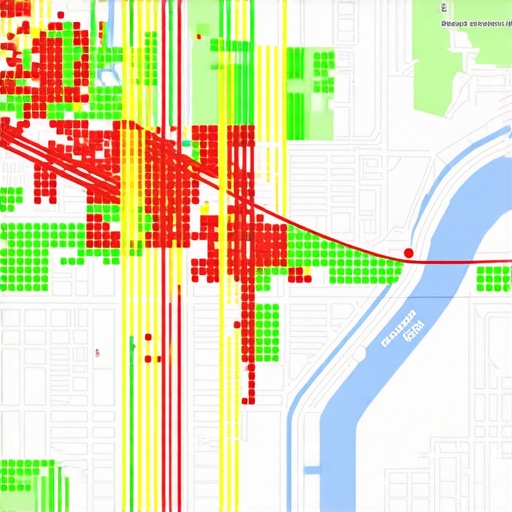
How do I keep my map rank from falling off a cliff?
Maintenance is actually simpler than the initial setup, but it requires discipline. I tell my clients to treat their Google profile like a social media feed. If you haven’t uploaded a photo in three weeks, Google starts to wonder if you’ve gone out of business. I always make sure to check the citation audit checklist for struggling storefronts at least once a quarter. Why? Because third-party directories like Yelp or YellowPages often ‘scrape’ old data and can overwrite your correct info with an old phone number or a previous suite number. This creates a data conflict that confuses the algorithm. To dominate maps long-term, you must be the most reliable source of information about your own business. If you’re feeling stuck, looking into how to handle a sudden map ranking plateau without buying links usually points back to these small, technical consistency errors.
The Future of Maps Is More Than Just Text
Looking ahead, I predict that Google is going to move away from text-based relevance and toward visual AI verification. We are already seeing the hidden map signal in your customers photo uploads where Google’s ‘Cloud Vision’ identifies what is in the background of your shop photos. If you say you’re a ‘Tire Shop’ but your photos only show car interiors, Google’s AI might demote you. This is why learning how to optimize photos for local search without being a pro is going to be the most valuable skill for 2025. You won’t just be competing on reviews; you’ll be competing on visual proof of your expertise. My advice? Stop overthinking the ‘perfect’ post and just start documenting your daily work. Go run a heatmap report for your top three keywords right now—it’s the fastest way to see where your ‘blind spots’ are and where you need to focus your next move for mastering local maps domination.
Hard Truths About Why Your Pins Move While You Sleep
After years of obsessing over local search, I realized that map pack domination is never a finish line; it is an ongoing conversation between your business and Google’s AI. One of my biggest lightbulb moments was discovering the proximity lie why distance isnt the only thing google tracks. I used to think I was limited by my physical walls, but I learned that relevance and prominence can stretch your reach across town. Another vital lesson was accepting why your map rank is different for every person who searches; personalization is the king of 2025. You are not fighting for one single #1 spot; you are fighting for a thousand micro-wins in the pockets of your neighbors.
Consistency is not just a buzzword. If you neglect your profile, Google assumes you have checked out. I have seen google my business rank plummet simply because an owner stopped responding to reviews for a month. It is better to do three small things well every week than one massive overhaul every six months. Remember, your local mapping strategy should be as flexible as the market you serve.
The Toolkit That Keeps Me Sane in the Algorithm Chaos
I do not believe in overcomplicating things with dozens of paid subscriptions. My personal toolkit starts with Local Falcon for those eye-opening heatmap grids—it is the only way to see if you are actually winning the neighborhood. [IMAGE_PLACE_HOLDER] I also rely on a simple quarterly citation check to ensure the audit step that finds why your business is hidden is not being triggered by bad data on some obscure directory. For tracking, I keep it simple: Google Search Console. It is the closest we get to the source of truth for how customers find us. Finally, I always advise clients to do a deep dive into the one question to ask before hiring a maps expert before they hand over the keys to their digital storefront.
Taking the First Step Toward Your Own Local Empire
It is easy to feel overwhelmed by all the technical tweaks and algorithm shifts. But at its core, dominate maps success comes down to being the most helpful, most visible, and most honest choice for your community. You now have the map pack domination secrets to outpace the competition. Start with your hours, polish your photos, and watch your google my business rank begin its steady climb. The future of your local reach is entirely in your hands, and I cannot wait to see you sitting at the top of that snack pack. Have you ever noticed your ranking drop the moment your business officially closes for the day? Let me know in the comments below!
About the Author
Umar Latif
Brand & Marketing Expert · Dubai, UAE
Umar Latif is a seasoned Brand and Marketing Expert based in Dubai, UAE, with a specialized focus on Local SEO and international digital strategy. With extensive experience managing and optimizing websites for a diverse range of international clients, including those in the United States, Umar has developed a deep understanding of the nuances required to dominate local search results. His technical proficiency encompasses comprehensive keyword research and the implementation of advanced Google-centric strategies designed to enhance visibility and drive organic traffic. As a contributor to dominateyourlocalmaps.com, Umar leverages his background in global marketing to provide actionable insights for businesses looking to improve their local map rankings and digital footprint. His approach combines data-driven tactics with a strategic brand perspective, ensuring that local businesses not only rank higher but also resonate with their target audience. Throughout his career, Umar has remained dedicated to staying ahead of search engine algorithm changes to deliver consistent results for his clients. He is deeply passionate about empowering business owners and marketing professionals with the tools and knowledge they need to achieve sustainable growth.