I remember sitting in my home office at 2 AM, fueled by cold coffee and a growing sense of desperation, staring at a Google search result that just didn’t make sense. My local service business—with a professional site and dozens of happy clients—was buried on page four, while a competitor who barely answered his phone was sitting pretty in the top spot. It felt like a personal insult from the algorithm. I spent weeks trying to dominate maps with fancy keywords, but nothing moved the needle. Then I found the culprit: a mess of old phone numbers and misspelled street names scattered across the web. I realized then that my local mapping strategy was built on a foundation of sand. Today, I am going to show you exactly how to bridge that gap between your citations and the visibility you deserve so you can finally achieve map pack domination.
Google Can’t Trust You If Your Data Is All Over the Place
In those early days, I made the classic rookie mistake of thinking more was always better. I went on a spree, submitting my business to every obscure directory I could find, thinking I was being proactive. It backfired spectacularly. I created a nightmare of duplicate listings and conflicting info that confused search engines and tanked my google my business rank. According to the 2024 Local Search Ranking Factors study by Whitespark, citation signals remain a foundational pillar for local search rankings because they provide the “independent verification” Google craves. If your address says “Suite 100” on Yelp and “Unit 100” on your website, Google starts to doubt your legitimacy. And in the world of local maps domination, doubt is the kiss of death. I had to learn how to fix messy citations without blowing my entire marketing budget, and the result was a complete turnaround in my local presence. Have you ever felt like your business was invisible to people standing right outside your front door?
Are citations even worth the effort anymore?
You might be wondering if this is just tedious busy work that doesn’t matter in the age of AI. I get it. With all the talk about user engagement and social signals, tracking down an old listing on a random directory feels like 2010. But here is the reality: your citations are the digital paper trail that proves your business is a real, physical entity. When I finally cleaned up my act and focused on the specific citation sources that still matter, my phone actually started ringing again. We are going to dive into the specific ways you can audit your own presence and ensure Google sees you as the most reliable option in town.
Find the Invisible Errors Hiding Your Business
Think of your digital presence like a transmission system; if even one small gear is out of alignment, the whole machine grinds to a halt. The first step in your local mapping strategy is a manual audit that goes deeper than just checking Google. I start by searching for my business phone number without the business name. This is the audit step that finds why your business is hidden because it uncovers old listings from previous owners or your own past addresses that you completely forgot existed. I once found a listing for my consulting firm that was still tied to a coffee shop I used to frequent five years ago—Google was literally trying to send my clients to a barista. You need to identify these ‘ghost’ entries before you can even think about map pack domination. 
Stop the Data Bleeding Before You Spend a Dime
Once you have your list of discrepancies, you have to prioritize. Don’t try to fix every random directory on page ten of search results all at once. Focus on the ‘Big Three’ aggregators—Data Axle, Neustar Localeze, and Foursquare—because these are the sources that feed data to smaller sites. When I was learning how to fix messy citations without spending a fortune, I realized that correcting the source of the data is much more effective than chasing individual leaks. If you don’t fix the root, the bad data just keeps growing back like a weed. This consistency is exactly what stabilizes your google my business rank over the long term. You are essentially building a wall of truth around your business location.
Focus on the Directories That Actually Move the Needle
Not all citations are created equal. You could have a thousand listings on low-quality sites, but one solid mention on a hyper-local chamber of commerce site or a niche-specific directory will do more for your local maps domination than all of them combined. Use the specific citation sources that still matter for local SEO to guide your efforts. I remember a specific project where we ignored the generic ‘yellow page’ clones and focused solely on neighborhood-specific blogs and industry-specific registries. Within thirty days, the client moved from the dreaded ‘not visible’ status to the top three because Google finally saw local relevance. It is about quality and proximity, not just volume. You have to how to spot and fix ghost citations that confuse search engines to ensure your NAP (Name, Address, Phone) data is an unbreakable signal. If you are struggling, go back to the citation audit checklist for struggling storefronts and tick off the basics before moving to advanced tactics. Consistency is the only way to dominate maps in a competitive market.Most ‘experts’ will tell you that the secret to map pack domination is simply having the highest number of reviews. It sounds logical, but in my experience, raw numbers are a vanity metric. I’ve seen businesses with 500 five-star ratings get crushed by a small shop with only 40. Why? Because Google prioritizes review velocity and keyword-rich testimonials over sheer volume. If you aren’t seeing results, you need to learn how to beat competitors with ten times your review count by encouraging customers to mention specific services in their feedback. If your reviews don’t contain context, they are just empty data points. Have you ever fallen into this trap of chasing numbers while your ranking stayed flat? Let me know in the comments. Another critical nuance in a sophisticated local mapping strategy is the invisible tether between your website’s performance and your map pin. It is a common myth that your profile and your site are separate entities. They aren’t. I have audited dozens of accounts where the profile was perfect, but the business remained buried because of a slow-loading homepage. If you have wondered why your website speed is secretly tanking your map rank, it is because Google uses your site as a proxy for the user experience you provide. If your site is sluggish, Google won’t risk recommending you in the top three. 
The Proximity Trap That Catches Everyone Off Guard
I see business owners moving to ‘prestige’ virtual offices in downtown centers all the time, thinking it is a shortcut to local maps domination. This is a massive mistake. Google’s AI has become incredibly efficient at detecting non-physical locations and mail drops. You must understand the danger of using virtual offices for local SEO before you sign that lease; it is a one-way ticket to a permanent suspension. According to the 2024 BrightLocal Local Search Rankings survey, ‘Physical Address in City of Search’ remains one of the top three foundational ranking factors for a healthy google my business rank. If you try to fake your location, you are building on a house of cards. Furthermore, you might not think twice about your schedule, but why your business hours are your most important ranking signal becomes clear when you realize Google filters out ‘closed’ businesses for ‘near me’ searches.
Why does my business vanish when I drive two blocks away?
This is the ‘proximity filter’ in action. Most owners assume that if they rank #1 at their office, they rank #1 across the entire city. That is the proximity lie that has led to a lot of wasted marketing spend. In reality, your ‘share of voice’ shrinks the further a searcher moves from your physical pin. To fight this and achieve true local maps domination, you have to stop focusing on generic keywords and start looking at how to outrank large chains in local map results by building hyper-local relevance. This means using neighborhood-specific content and geo-tagged images to prove to Google that your authority extends beyond your front door. It is not about being the biggest player in the city; it is about being the most relevant option for that specific square mile.
The Tools That Keep Me From Losing My Mind
I used to think I could manage my local mapping strategy with just a spreadsheet and sheer willpower. I was wrong. To truly dominate maps, you need to see what Google sees, and that means getting your hands on some real data. I personally swear by local grid trackers like PlePer or BrightLocal. These tools show you exactly where your rank drops off—it’s like having X-ray vision for your city. Instead of guessing, I can see that I am number one in the north side but invisible in the south, allowing me to adjust my neighborhood-specific content accordingly. Another lifesaver is WhiteSpark for finding those hidden citation opportunities that your competitors haven’t touched yet. Mike Blumenthal, a titan in the local search world, often discusses how ‘Google is your new homepage,’ and these tools ensure that your homepage looks flawless to the algorithm. By leveraging these insights, you can move from reactive guessing to a proactive plan for innovative local mapping strategies for top google rankings. 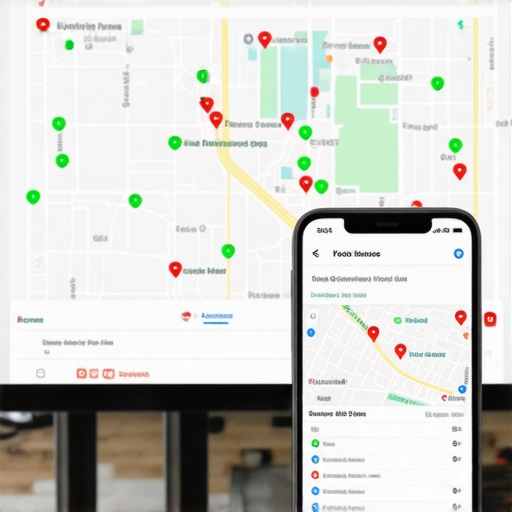
Don’t Let Your Hard-Earned Ranking Slide Into Obscurity
Maintaining your position is often harder than getting there in the first place. You can’t just set it and forget it. I make it a habit to check the hidden data in your map insights that most owners ignore at least once a week. I’m looking for trends in how people find me—is it through discovery searches or direct brand searches? If discovery starts to dip, I know I need to ramp up my local activity. This isn’t just about technical SEO; it’s about staying active in the eyes of the machine. I’ve found that a simple weekly post on my profile can act as a heartbeat signal, telling Google that the lights are on and someone is home. This consistency is the secret sauce for anyone looking to achieve map pack domination without the constant stress of checking rankings every hour.
How do I maintain my map rank without working on it 24/7?
The key is automation where it counts and personalization where it matters. I automate the monitoring of my NAP consistency, but I never automate my customer interactions. You should be looking at the review frequency secret for long-term map dominance. Google doesn’t want to see 50 reviews in one day and then silence for three months; they want a steady, natural drip of feedback. I set up a simple system where my team asks every happy client for a specific mention of the service we provided. This keeps the ‘velocity’ of our profile high, which is a major signal for a healthy google my business rank. If you can master this rhythm, you won’t have to worry about sudden drops.
What the Future Holds for Local Searchers
Looking ahead, I predict that Google’s Search Generative Experience (SGE) is going to make structured data and local relevance even more critical. We are moving toward a world where the AI won’t just show a list of businesses; it will explain *why* it is recommending you based on your reviews, your site content, and your local authority. To stay ahead, you need to learn how to secure your spot in the map pack permanently by becoming the most ‘talked about’ entity in your niche. The businesses that survive the AI shift will be the ones that have a deep, verifiable digital footprint across their entire service area. Start today by looking at your Google Insights and identifying the one zip code where you are underperforming. Go out and get one local mention or one geo-tagged photo from that specific area this week. It’s time to stop watching from the sidelines and start claiming your territory.
The Hardest Lesson I Learned About Forcing Local Growth
When I first started, I thought I could outsmart the algorithm by sheer force of volume. I was wrong. The biggest takeaway from my years in the trenches is that a successful local mapping strategy is more about consistency than intensity. You cannot simply blast out a thousand citations and expect to stay at the top; you have to nurture your presence like a garden. I realized that a single mention in a local neighborhood newsletter was worth more than fifty generic directory links because it proved actual geographic relevance to the search engines.
Another hard truth? Your google my business rank is fragile. One bad update to your website or a sudden surge of unverified data can send you spiraling into the second or third page of results. I learned the hard way that you must fix the not visible status on your local profile immediately rather than waiting for it to resolve itself. Speed of response to data errors is just as important as speed of response to customers. Passive management is the fastest way to lose your spot.
#IMAGE_PLACE_HOLDER_E#
Tools That Actually Move the Needle for Me
I don’t believe in using every shiny new tool that hits the market. Instead, I rely on a core stack that provides undeniable value for long-term map pack domination. For tracking my progress across different city blocks, I use grid tools that show exactly where my visibility ends and where my competitors take over. It’s also vital to understand why your google profile is getting more clicks than your website, as this specific data dictates where you should spend your marketing energy. Before you hire any outside help, make sure you know the one question to ask before hiring a maps expert so you don’t waste your budget on empty promises or automated scripts that cause more harm than good.
Taking Your First Step Toward the Top Three
Achieving local maps domination isn’t a race; it’s a series of intentional moves that build authority over time. Don’t let the technical jargon or the constant algorithm shifts intimidate you. Start with the basics of cleaning up your data, focus on authentic customer feedback, and let the results fuel your next steps. You have the tools and the knowledge now to secure your spot in the map pack permanently. Your business deserves to be seen by the people in your community who are searching for exactly what you offer. Have you ever noticed your map ranking drop suddenly after making a small change to your site? Let me know in the comments below!
About the Author
Umar Latif
Brand & Marketing Expert · Dubai, UAE
Umar Latif is a seasoned Brand and Marketing Expert based in Dubai, UAE, with a specialized focus on Local SEO and international digital strategy. With extensive experience managing and optimizing websites for a diverse range of international clients, including those in the United States, Umar has developed a deep understanding of the nuances required to dominate local search results. His technical proficiency encompasses comprehensive keyword research and the implementation of advanced Google-centric strategies designed to enhance visibility and drive organic traffic. As a contributor to dominateyourlocalmaps.com, Umar leverages his background in global marketing to provide actionable insights for businesses looking to improve their local map rankings and digital footprint. His approach combines data-driven tactics with a strategic brand perspective, ensuring that local businesses not only rank higher but also resonate with their target audience. Throughout his career, Umar has remained dedicated to staying ahead of search engine algorithm changes to deliver consistent results for his clients. He is deeply passionate about empowering business owners and marketing professionals with the tools and knowledge they need to achieve sustainable growth.