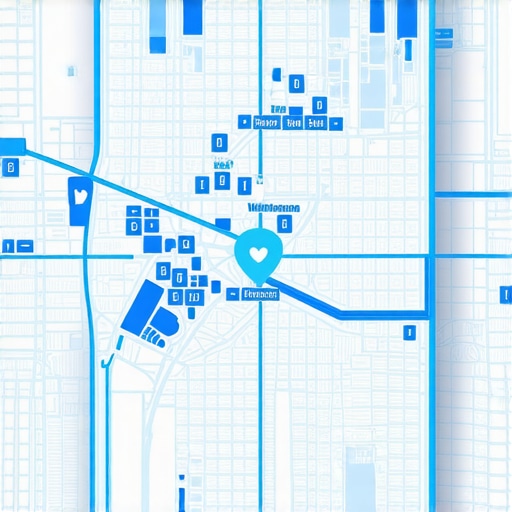
I remember the sinking feeling of realizing I’d essentially deleted my business from Google. I had spent hours in the backend of my profile, checking off every tiny town and suburb within a fifty-mile radius because I didn’t want to miss a single lead. I thought I was being smart. In reality, I was diluting my authority until I was invisible. This is a trap most service-based business owners fall into—the ‘more is better’ fallacy. We’re going to fix that today, and I’ll show you how to shrink your target to actually grow your reach. [image_placeholder_1]
Stop Spreading Yourself Too Thin on the Map
If you’ve ever wondered why your business is ranking for the wrong local keywords or why you aren’t showing up two blocks away, it’s likely your service area settings. Google’s algorithm is obsessed with relevance and proximity. When you tell the system you serve twenty different cities, but your actual home base is tucked in the corner of one, you create a massive ‘trust gap.’ You aren’t giving Google a clear signal of where you truly belong.
Does checking more boxes actually hurt my rank?
It absolutely does. I learned this the hard way when I tried to increase my map radius without opening a new office by simply clicking more zip codes. It backfired. Instead of dominating the region, my rank plummeted in my own neighborhood. Think of your ranking power like a bucket of paint; if you try to paint the whole street, you’ll run out before the first house is even finished. You need to focus that ‘paint’ where it matters most. According to industry data from Search Engine Journal, proximity remains one of the heaviest-weighted factors in the local pack, and trying to ‘fudge’ this by over-extending your service area often triggers a filter that suppresses your listing. You might even be struggling with the hidden setting that blocks your profile from neighboring towns. Have you ever felt like you’re fighting a losing battle against the map just to show up in the town next door? By the time we’re done, you’ll understand the proximity truth and how to strategically select areas that build authority rather than drain it. Let’s get into the nitty-gritty of why your current list of service areas is probably a mess.
Strip Away the Service Area Junk
The first thing you need to do is open your dashboard and look at that list of service areas with brutal honesty. Most business owners treat this list like a wish list, but Google treats it like a boundary of relevance. If you aren’t physically traveling to a town three times a week, delete it. You’re likely falling victim to the audit mistake that makes your map listing effectively invisible. By thinning out the herd, you stop confusing the algorithm. I once worked with a local roofer who had checked 45 different service areas because he ‘could’ drive there if the job was big enough. He was getting calls from three hours away, but zero from his own zip code. We cut those 45 areas down to just 5. For two weeks, his phone stopped ringing entirely and I was sweating bullets. By week three, he surged to the top of the local pack for his home city. His total lead volume dropped, but his profitable leads—the ones five minutes from his house—tripled.
Focus on Your Actual Drive Time
Google’s 2025 algorithm uses real-world signals. If your listing says you serve a town 40 miles away, but your phone never pings from that location, Google knows. You’re fighting the proximity truth. To achieve real map pack domination, you have to build a local mapping strategy that mirrors where you actually do business. Focus on a 10 to 15-mile radius and win that first. 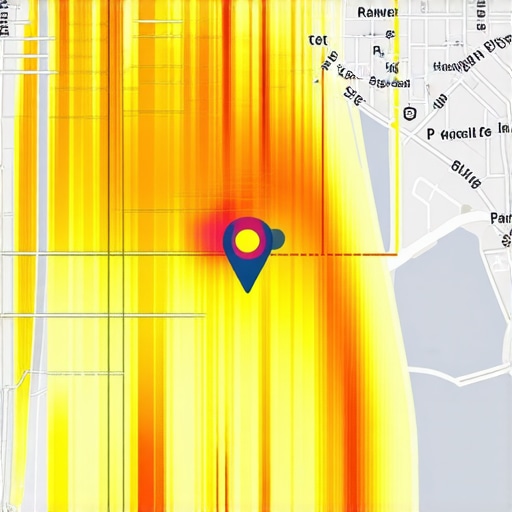
The Strategy for Map Pack Domination
Once you’ve trimmed the fat, you need to reinforce your authority in the areas that remain. This isn’t just about a setting in a dashboard; it’s about proving your presence. You can start by following the ultimate guide to google my business rank elevation. The goal is to make your business the obvious choice for a very specific radius before you even think about expanding. Trying to how to increase your map radius without opening a new office requires building local trust, not just checking boxes.
Win the Next Town Over Without a Physical Lease
If you genuinely serve a neighboring town but aren’t ranking there, clicking a checkbox in the backend won’t save you. You need to use the city page method. This involves creating hyper-local content on your website that proves to Google you are active in that specific area. This is how you dominate maps without opening a second office. I’ve seen this turn ‘invisible’ contractors into the go-to experts in wealthy suburbs just by shifting their content focus from general services to neighborhood-specific projects. It is a key part of local maps domination.
Sync Your Site with the Map
Your website and your map profile must speak the same language. If your map profile says you serve ‘Westwood’ but your website only mentions ‘The Greater Metro Area,’ you’re creating friction. You must how to sync your website schema with your map profile to ensure your google my business rank stays high. Use specific local schema that anchors your digital presence to the same geographical coordinates as your physical office. This closes the trust gap and forces Google to recognize your territory.
Stop Chasing Review Counts and Start Chasing Quality
Everyone tells you that reviews are a numbers game. They say if you just hit 100 or 500 reviews, you’ll magically achieve map pack domination. In my experience, that’s a total myth. I’ve seen businesses with a fraction of the reviews of their competitors sit comfortably at the number one spot for years. The truth is that Google’s algorithm has become incredibly sophisticated at detecting the substance of your engagement. If your reviews are generic ‘Great job!’ comments, they aren’t moving the needle. You need to understand why your competitor with fewer reviews is outranking you: it’s because their customers are using specific service keywords and geographical markers in their feedback. This is a core pillar of a modern local mapping strategy.
Why does the guy with ten reviews beat my hundred-review profile?
It comes down to a concept called ‘Review Relevance.’ According to the 2024 Local Search Ranking Factors study by BrightLocal, keywords in reviews remain one of the most significant justifications for why a business appears in the local pack. When a client mentions your specific service and the town name, it validates your local maps domination effort more than a thousand empty five-star ratings ever could. To capitalize on this, you need to learn how specific review response patterns actually boost map engagement. Instead of a robotic ‘Thank you,’ mention the specific project you completed and the neighborhood it was in. This isn’t just for the customer; it’s a signal for the bots.
The Automation Trap That Kills Your Profile
One of the biggest ‘oops’ moments I see with seasoned business owners is the move toward total automation. We’re all busy, so we hire a cheap agency or buy software to handle our responses and posts. This is a massive mistake. Google’s AI is now adept at identifying low-effort, repetitive patterns. If every response you post looks identical, you are falling into the trap of review automation why more stars dont always mean more map leads. This behavior can actually suppress your google my business rank because it signals a lack of real, human interaction. Real local maps domination requires a human touch that proves you are active and present in your community.
Your Profile Insights Are Probably Lying to You
Don’t get too comfortable looking at those ‘impressions’ in your dashboard. High visibility doesn’t always equal high intent. You could be showing up for the wrong terms entirely if you haven’t refined your local mapping strategy. To fix this, you should use the profile audit checklist for turning search impressions into real calls. The goal is to move beyond just ‘showing up’ and start ‘converting.’ This involves looking at the interaction data that proves you are a top local choice, such as how many people actually click the ‘Request a Quote’ or ‘Call’ button versus just scrolling past. If you want to dominate maps, you have to prioritize these high-intent actions. Have you ever fallen into the trap of thinking more reviews meant more money, only to see your lead volume stall? Let me know in the comments. We’re just scratching the surface of innovative local mapping strategies for top google rankings, and the real winners are those who focus on the nuances of user behavior rather than just checking boxes.
Keep Your Profile from Going Stale
Once you’ve achieved that initial surge in your google my business rank, the real challenge begins: staying there. The map pack is not a ‘set it and forget it’ environment. I’ve seen businesses climb to the top only to vanish three months later because they stopped feeding the beast. Google favors active entities. By regularly refreshing your profile, you signal to the algorithm that your business is still the most relevant choice for the community. This isn’t just about posting for the sake of posting; it’s about maintaining the local mapping strategy that got you there in the first place.
How do I maintain map pack domination over the long haul?
Consistency is your best friend. I personally spend about twenty minutes every Monday morning auditing my local health. I don’t just look at the dashboard; I use a local grid tracker to see how my visibility changes block by block. As Joy Hawkins from Sterling Sky has frequently pointed out, even minor changes to your primary category or a sudden lack of user interaction can reset your ranking history for weeks. You need to be checking your ranking from where your customers actually stand, not just from your office desk. If you see a ‘red’ spot on your grid, that is where you need to focus your next local post or customer review request.
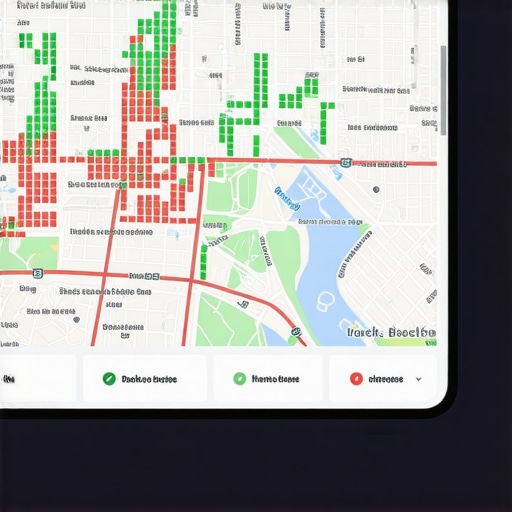
To make this easier, I rely on a handful of specific lead-gen utilities that automate the data gathering without automating the human touch. Tools like Local Falcon or BrightLocal are non-negotiable for anyone serious about local maps domination. They provide the ‘ground truth’ that Google’s standard insights often obscure. When you see exactly where your radius drops off, you can deploy the city page method with surgical precision rather than guessing which neighborhood to target next.
Be Ready for the 2026 AI Shift
Looking ahead, I predict that map pack domination will shift heavily toward ‘Zero-Click’ optimization and AI-driven snapshots. Google is already testing Search Generative Experience (SGE) in local results, which means your profile needs to be even more data-rich. You can’t afford to ignore these advanced tips for the coming years if you want to stay ahead of the curve. Your local mapping strategy must evolve to include hyper-specific attributes and high-resolution, geo-tagged imagery that AI can easily parse and recommend. If you want to dominate maps in this new era, you have to be the business that provides the most ‘digestible’ proof of service to the algorithm. Start today by performing a manual audit from a mobile device five miles away from your shop—you might be surprised at what you find (or don’t find).
My 45-City Radius Failed and Here is Why
One of the hardest pills I had to swallow was realizing that being everywhere meant being nowhere. I spent thousands on agencies that promised local maps domination by spamming citations, but my google my business rank only stabilized when I stopped acting like a national brand and started acting like a neighbor. You don’t need a massive budget; you need massive focus. I learned that spreading your reach too thin dilutes the relevance signals Google needs to see.
Another lightbulb moment was discovering the hidden reason dental practices lose local leads to lower-rated offices—it often comes down to who actually answers questions and engages with the community features. If you are a service pro, your local mapping strategy should be about utility and responsiveness, not just ego or review volume. It’s about being the most helpful option in a five-mile radius before you worry about the rest of the county.
Tools I Use to Win the Local Game Without Breaking the Bank
You do not need a $500-a-month software suite to dominate maps. Start with a simple local grid tracker like Local Falcon or BrightLocal to see where your visibility actually drops off—this is the ‘ground truth’ that dashboard impressions won’t tell you. Then, dive into map pack domination secrets that rely on leveraging the free features Google already provides, like high-resolution, geo-tagged photos and frequent updates.
If you find yourself dealing with negative feedback, do not panic and do not ignore it. Learn the exact way to response to 1-star reviews without losing rank. This is a skill that saves your reputation and your map position simultaneously by turning a negative interaction into a signal of professional activity and customer care. I personally trust these manual methods over any automated response tool.
It is Time to Own Your Neighborhood
The map pack is not a permanent trophy; it is a living marketplace that rewards the most active and relevant local entities. By applying these local maps domination tactics, you are building a moat around your business that competitors cannot simply buy their way through with generic ads. You have seen how to outsmart competition in local map listings in 2025, so now the ball is in your court. Success comes to those who prioritize quality interactions over quantity. Start with your home zip code, refine your profile, and move outward only when you have truly won the block. Have you ever noticed your ranking drop the moment you drive just a few miles away from your office? Let me know your experience in the comments below!
About the Author
Umar Latif
Brand & Marketing Expert · Dubai, UAE
Umar Latif is a seasoned Brand and Marketing Expert based in Dubai, UAE, with a specialized focus on Local SEO and international digital strategy. With extensive experience managing and optimizing websites for a diverse range of international clients, including those in the United States, Umar has developed a deep understanding of the nuances required to dominate local search results. His technical proficiency encompasses comprehensive keyword research and the implementation of advanced Google-centric strategies designed to enhance visibility and drive organic traffic. As a contributor to dominateyourlocalmaps.com, Umar leverages his background in global marketing to provide actionable insights for businesses looking to improve their local map rankings and digital footprint. His approach combines data-driven tactics with a strategic brand perspective, ensuring that local businesses not only rank higher but also resonate with their target audience. Throughout his career, Umar has remained dedicated to staying ahead of search engine algorithm changes to deliver consistent results for his clients. He is deeply passionate about empowering business owners and marketing professionals with the tools and knowledge they need to achieve sustainable growth.