I was sitting in a local coffee shop last summer, watching the owner frantically refresh his phone while grumbling about the algorithm. He had amazing reviews and a great location, but he had completely vanished from the local results. I offered to take a look, and as soon as I clicked his website link from his business profile, I realized the problem. I had enough time to walk to the counter, order a double espresso, and get back to my seat before his homepage finished loading. It was a brutal wake-up call for him and a massive lightbulb moment for me: if your site feels like it is running through molasses, Google is not going to risk its reputation by putting you in the top three. Today, I am going to show you exactly how to trim the fat off your site so you can finally claim your spot in the sun.
Your Slow Website is Shoving You Off the Map
Years ago, I made the classic mistake of thinking my map pack domination secrets only lived inside the Google Business Profile dashboard. I ignored my website backend for months, focusing only on citations and reviews. My rankings hit a brick wall. It was not until I fixed the subtle speed error that pushes your shop off the map pack—which in my case was just a bloated, unoptimized hero image—that my pins started showing up in neighboring towns again. This is not just about user experience in a vague sense; it is about the technical signals that prove your business is reliable. When your site loads fast, Google gains confidence in sending people your way.
Does a few seconds of loading time really matter for local search?
You might think someone looking for a plumber or a lawyer is patient, but the data says otherwise. According to research from Google, the probability of bounce increases by 32% as page load time goes from 1 second to 3 seconds. When users bounce back to the search results immediately because your site is taking too long, Google interprets that as a failed result. If this happens repeatedly, your google my business rank will tank faster than a lead balloon. Have you noticed your competitors with fewer reviews somehow outranking you lately? [image] It is time we stop letting a slow server steal your customers.
Stop letting massive photos kill your conversion rates
I once worked with a roofing contractor in Florida who couldn’t understand why his phone stopped ringing despite having dozens of fresh five-star reviews. When I pulled up his site on my phone using a standard 4G connection, I spent forty seconds staring at a blank white screen. He had uploaded high-resolution 4K photos of every single roof his team had finished that month. To him, it was a gallery of pride; to Google, it was an anchor dragging his site to the bottom of the ocean. Your first step in any map pack domination secrets strategy is to compress every single image. Switch to WebP format instead of JPEG or PNG. This simple change can reduce file sizes by up to 80% without losing visible quality. This is precisely where the image optimization trick that increases local ctr becomes your best friend: fast images load instantly, keeping users on the page and signaling to Google that your site is healthy. 
Sync your digital footprint so Google stops guessing
Google is essentially a giant machine that tries to connect dots. If your website says you are at ‘123 Main St’ but your business profile says ‘123 Main Street, Suite A,’ you are creating friction. You need to use Local Business Schema markup to tell the search engine exactly who and where you are in a language it speaks fluently. Think of Schema as a digital passport for your business. When I implemented how to sync your website schema with your map profile for a local law firm, we didn’t just see a boost in their home town; we saw the specific schema fix that forced a massive map radius expansion. By explicitly linking their website’s structured data to their CID (unique business ID), Google gained the confidence to show them to users three towns over because the data was undeniable.
Move your site to a server that can actually handle the heat
If you are paying five dollars a month for ‘unlimited’ shared hosting, you are likely sharing a server with thousands of other sites. This creates a bottleneck known as high Time to First Byte (TTFB). It is like having a world-class restaurant but a waiter who takes twenty minutes just to bring the water. Google notices that delay. I’ve seen businesses struggle with the subtle speed error that pushes your shop off the map pack for years, only to have their rankings explode the week they moved to a dedicated VPS or a high-performance cloud host. A fast server ensures that when a potential customer clicks your ‘Get Directions’ or ‘Call Now’ button from the map, the transition is seamless. In the world of local search, speed is not just a luxury—it is the foundation of your authority.
Now, I know what you’re thinking: if I have a fast site and a hundred reviews, I’m invincible. That’s the first myth I need to bust for you. Most business owners obsess over the total number of stars, but raw quantity is a vanity metric that can actually distract you from a winning local mapping strategy. If you have 500 reviews but haven’t received a new one in three months, Google sees your business as a dying entity. I’ve seen profiles with only 50 active, recent reviews outshine legacy businesses because of review velocity. This is exactly why your competitor with fewer reviews is outranking you. They are proving they are relevant today, not three years ago.
Don’t kill your momentum with these common suspension traps
One of the biggest mistakes I see—and honestly, I’ve had to talk a few clients off a ledge because of this—is keyword stuffing the business name. It’s tempting to change your name from ‘Central Plumbing’ to ‘Central Plumbing Best Plumber in Chicago.’ In the short term, you might see a spike. But Google’s AI has become incredibly aggressive at flagging these discrepancies against your legal registration and real-world signage. This is the real reason your profile was suspended after an edit. You aren’t just losing your rank; you’re losing your entire digital asset. I always tell people to focus on the 3 crucial gaps your last local seo audit probably missed, which usually involves missing attributes or poor category selection rather than trying to game the system with a fake name.
Why does the guy with ten reviews still beat you?
The answer often lies in semantic relevance and behavioral signals. According to the Whitespark Local Search Ranking Factors study, behavioral signals like clicks-to-call and direction requests are becoming heavier weights in the algorithm. If someone searches for ’emergency roof repair’ and your reviews specifically mention those keywords, you’ll likely jump ahead of someone with 100 generic ‘great job’ reviews. This is where the trap of review automation becomes clear; if every review looks the same and lacks specific service keywords, you’re missing the specific signals Google needs to see to maintain a high google my business rank. 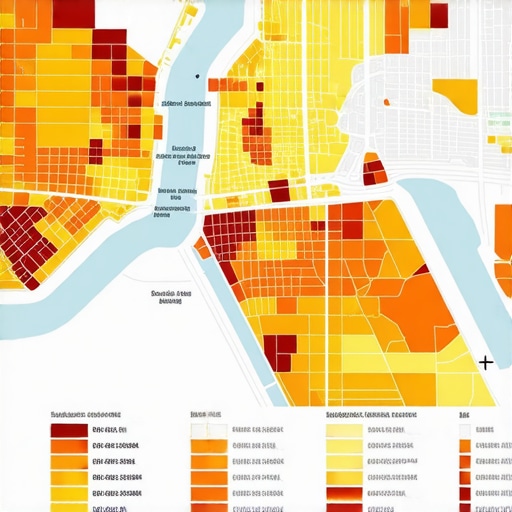
Furthermore, if you are posting content that nobody interacts with, you are wasting your time. I frequently analyze why your google business profile posts get zero traction, and it usually boils down to businesses treating their profile like a static billboard rather than a social platform. Google wants to see that users are actually clicking your ‘Learn More’ buttons or viewing your photos. Have you ever fallen into this trap? Let me know in the comments. We need to stop looking at the map as a static list and start treating it as a live, breathing representation of your business’s popularity in the real world. This is the only way to truly dominate maps in a way that lasts through every algorithm update.
Maintaining a top spot on the map isn’t a trophy you win once; it is a position you defend every single day. I have seen countless businesses execute a perfect initial setup, hit the top three, and then vanish six months later because they treated their profile like a static billboard. To prevent this, you need to shift from a ‘set it and forget it’ mindset to a proactive maintenance cycle. I personally rely on grid-tracking tools like Local Falcon or BrightLocal. Why? Because checking your rank from your own office desk is a lie. Google knows your IP address and will always show you at the top because you are physically there. You need to see how you appear to a customer standing three miles away at a stoplight. This is the only way to truly learn how to audit your map rankings from a customers real location without the bias of your own Wi-Fi.
Look at your business through a grid, not a single point
Most owners are satisfied if they see their name when they search for themselves. But a real local mapping strategy requires you to see the ‘cliff’—that specific street or neighborhood where your visibility suddenly drops off. When I find a dead zone in a client’s grid, we don’t just hope for the best; we target that area with localized content and customer stories from that specific zip code. This creates the interaction data that proves you are a top local choice to Google’s proximity-sensitive algorithms. 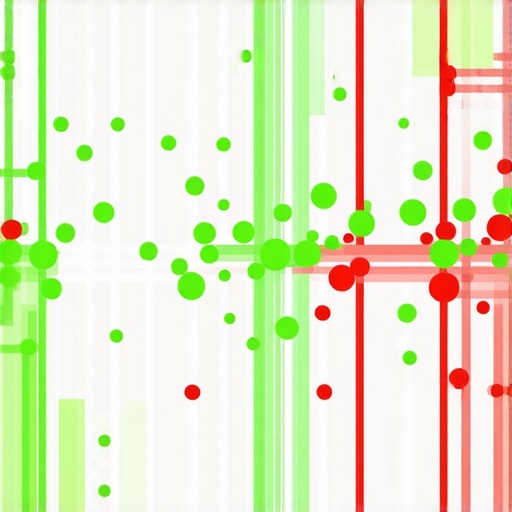
How do I keep my local mapping strategy alive month after month?
The secret to longevity is ‘Review Velocity.’ It is better to get two reviews every week than to get fifty in one day and then go silent for three months. Google’s algorithm prioritizes recency because it wants to ensure the business is still operational and providing good service. I recommend setting a calendar alert to check your ‘Insights’ tab every Tuesday. Look for trends in how people find you. If you see a dip in ‘Request Directions’ clicks, it’s a signal that your photos might be getting stale or your competitors have updated their profiles with better visual hooks. You must constantly refine your approach by mastering local maps domination through consistent, small tweaks rather than massive, infrequent overhauls.
The future of maps belongs to the helpful and the active
Looking ahead, I predict that Google will rely even more heavily on AI to parse the sentiment and specific ‘problem-solving’ language inside your review replies. According to Joy Hawkins, a leading expert at Sterling Sky, Google is increasingly sophisticated at identifying ‘ghost’ businesses that don’t actually serve the areas they claim. In the near future, your google my business rank will likely be tied to real-world movement data—how many people actually drive to your location after seeing the listing. This means your profile needs to do more than just exist; it needs to be an irresistible invitation. To dominate maps in 2025 and beyond, you should start using the Q&A section to answer the top five questions your front desk gets every day. This creates a library of ‘helpful’ content that Google can’t ignore. My challenge to you: go into your profile right now and find one unanswered question or one review from last month that didn’t get a personal response. Fix it today, and you’ll already be ahead of 90% of your competition.
The Hard Lessons I Learned While Chasing the Map Pack
I used to think a local mapping strategy was about tricking Google. It is not. It is about proving your business exists and thrives in the physical world. One massive lightbulb moment for me was realizing that your google my business rank is often a reflection of your real-world reputation, not just digital buttons. I spent months obsessing over keywords when I should have been looking at 7 maps keyword tracking flaws that hide your true store performance. Once I fixed how I measured success, the actual ranking growth became easy to manage. I also learned that patience is a weapon; the businesses that stay in the top three are the ones that do the boring work of responding to every review and updating their photos every single month without fail.
The Toolkit I Use to Keep My Clients on Top
If you want to dominate maps, you need a reliable workflow that does not rely on guesswork. I personally swear by a deep-dive audit every quarter. Most people miss the tiny technical gaps, which is why I always suggest using the profile audit checklist for turning search impressions into real calls. It ensures you are not just getting seen, but actually getting hired. I also recommend exploring 5 free tools that actually generate leads from your google business profile. These help you monitor the competition and track your progress without breaking the bank. #IMAGE_PLACEHOLDER_E#
Beyond tools, you need to stay ahead of the curve. The algorithm is shifting toward user intent, so keeping up with how to outsmart competition in local map listings in 2025 will give you the edge before your neighbors even know the rules have changed.
Take Your Place at the Top of the Local Neighborhood
The future of local maps domination belongs to the business owners who treat their digital profile with the same care as their physical storefront. Do not let the technical jargon scare you away from taking action. Whether you start with a simple speed fix or a complete google my business rank elevation, the key is to start today. You already have the map pack domination secrets; now you just need to apply them consistently to see your phone start ringing. Success in local search is a marathon, but the view from the top of the pack is worth every step.
What is the one thing you are going to change on your profile this afternoon? Let me know in the comments below!
About the Author
Umar Latif
Brand & Marketing Expert · Dubai, UAE
Umar Latif is a seasoned Brand and Marketing Expert based in Dubai, UAE, with a specialized focus on Local SEO and international digital strategy. With extensive experience managing and optimizing websites for a diverse range of international clients, including those in the United States, Umar has developed a deep understanding of the nuances required to dominate local search results. His technical proficiency encompasses comprehensive keyword research and the implementation of advanced Google-centric strategies designed to enhance visibility and drive organic traffic. As a contributor to dominateyourlocalmaps.com, Umar leverages his background in global marketing to provide actionable insights for businesses looking to improve their local map rankings and digital footprint. His approach combines data-driven tactics with a strategic brand perspective, ensuring that local businesses not only rank higher but also resonate with their target audience. Throughout his career, Umar has remained dedicated to staying ahead of search engine algorithm changes to deliver consistent results for his clients. He is deeply passionate about empowering business owners and marketing professionals with the tools and knowledge they need to achieve sustainable growth.