I spent years thinking that if I just got more reviews, I’d magically appear at the top. I was obsessed with map pack domination secrets and checking my phone every ten minutes to see if I’d moved up a spot. One afternoon, I was auditing a local bakery that couldn’t even rank for its own name. I realized I had completely ignored their website’s contact page. It had an old address, a broken map embed, and a phone number that didn’t match their profile. It was a mess. Today, I’m going to show you how that one page is the silent engine behind your local maps domination.
The Day I Realized My Website Was Holding My Map Ranking Back
I’ll be honest: early in my career, I thought the website was just a digital brochure. I didn’t think Google’s map algorithm really cared about my Contact Us tab as long as my Google Business Profile was verified. That was a huge mistake. I’ve seen rankings skyrocket just by cleaning up a single page. If you’ve ever wondered why your local competitors outrank you in your own zip code, the answer often lies in the data Google finds when it crawls your site. It’s looking for consistency, and when it doesn’t find it, it hides you.
Is a contact page actually worth the hype for local rankings?
You might think it’s just a place for a simple form, but to a search engine, it’s a verification certificate. According to the 2023 Local Search Ranking Factors by Whitespark, on-page signals—including your Name, Address, and Phone number (NAP) consistency—are among the most critical drivers for appearing in the local pack. If your website says Suite 100 but your map profile says Unit A, Google gets confused. And a confused Google never ranks you #1. It’s that simple. [IMAGE_PLACEHOLDER]
Your Website Is the Digital Anchor for Google’s Map Data
Every time I perform the audit step that finds why your business is hidden, I head straight to the footer and the contact page. I once spent three hours trying to fix a ranking drop for a plumber, only to find he had a typo in his zip code on his contact page. It felt silly, but that tiny error was enough to make Google doubt his location. Have you ever checked to see if every single digit on your website matches your Google profile exactly? Let’s dive into why this happens. You need a citation audit checklist for struggling storefronts to ensure your site isn’t fighting against your map profile. If your data is split, your authority is split too.
Audit Every Single Digit on Your Page
The first thing you need to do is treat your business data like a fingerprint. Google’s bots are looking for an exact match. Think of your Google Business Profile as the master key and your website as the lock. If they don’t align perfectly, the door stays shut. I once worked with a local locksmith who couldn’t figure out why he wasn’t appearing in the snack pack despite having 4.8 stars. We did a citation audit checklist for struggling storefronts and found he was using a tracking number on his site but his main business line on his profile. Google saw two different entities. Once we synced them, he jumped four spots in a week. Avoid the call tracking mistake that messes up your local citation consistency by ensuring your primary number is prominent.
Sync Your Profile to Stop Confusing the Algorithm
Consistency isn’t just about the phone number; it’s about the syntax of your address. If you use ‘Street’ on your website but ‘St.’ on your Google profile, you are creating friction. While Google is smart, it rewards certainty. I recommend copying the exact text from your Google Business Profile dashboard and pasting it directly into your website footer and contact page. This simple alignment is a core part of local maps domination. It’s like giving two different people the same GPS coordinates; they both arrive at the same destination without guessing. If you are struggling with why your local competitors outrank you in your own zip code, this lack of data harmony is often the culprit.

How to Put Your Business on the Digital Map Properly
Don’t just list your address; prove it. Embedding a Google Map directly onto your contact page is like putting a giant ‘I Am Here’ sign on your roof. However, don’t just embed a generic map of your city. You need to embed the specific pin from your verified business profile. This creates a direct API link between your site and the map servers. I’ve seen this help businesses get your store featured in the local maps snack pack faster than almost any other on-page tweak. It serves as a secondary verification signal that you are a legitimate, physical entity.
The Schema Markup That Humans Cant See But Google Loves
If you want to go pro, you need Local Business Schema. Think of Schema as a secret language used to talk directly to search engines. It’s code that tells Google, ‘This text is an address, and this text is a phone number.’ Without it, Google has to guess. When you use innovative local mapping strategies for top google rankings, Schema is non-negotiable. I remember a small cafe that was invisible in searches until we added structured data to their contact page. Suddenly, their google my business rank elevation became a reality because Google finally trusted the data it was crawling.
Speed Is Your Secret Map Ranking Weapon
If your contact page takes five seconds to load on a phone, your map ranking will suffer. Google knows that most local searches happen on the go. If a user clicks your website from the map and it lags, they bounce back. This high bounce rate signals to Google that your business might not be the best result. Fixing the hidden link between website speed and map pack success is often more effective than getting five new reviews. Focus on the mobile site fix that improves your local map presence by compressing images and removing heavy scripts from your contact page. A lean, fast page keeps users engaged and signals to the algorithm that you are a high-quality local destination.
Let’s dig deeper into the mechanics of local maps domination. Everyone tells you to go out and grab as many five-star reviews as possible, but here is a contrarian truth: reviews have a point of diminishing returns. I have watched businesses with 45 authentic, keyword-rich reviews outrank competitors who have 400 generic ones. The algorithm is becoming hyper-aware of ‘review velocity’ and ‘reviewer authority.’ If you get twenty reviews in two days after months of silence, Google flags that as suspicious. It’s not just about the quantity; it’s about the organic rhythm of your customer feedback.
Reviews aren’t the magic bullet you think they are
Common wisdom suggests that more is always better, but why having 500 reviews might actually be hurting your visibility is a conversation more owners need to have. Sterling Sky, a leader in local SEO research, has consistently demonstrated that while reviews impact conversion, they aren’t the primary driver of proximity rankings. In fact, if your reviews don’t mention specific services or neighborhoods, they lose their ‘local weight.’ Have you ever fallen into this trap of chasing numbers instead of quality? Let me know in the comments.
Avoid the temptation of keyword stuffing your business name
The biggest ‘oops’ factor I see with businesses desperate for map pack domination secrets is changing their legal business name on their profile to include a city or service. Yes, it might give you a temporary boost, but why keyword stuffing your business name is a recipe for disaster becomes clear the moment a competitor reports you. Google’s suspension hammer is heavy and swift. Once your profile is taken down, recovering that authority is a nightmare that can take months of manual appeals. 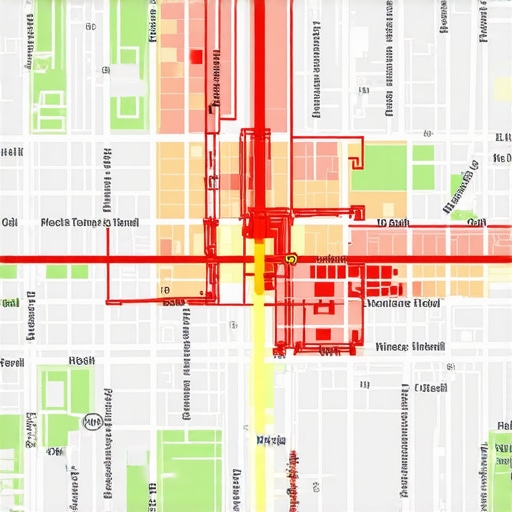
Does your ranking literally vanish when you leave the office?
This is the most frustrating nuance for any business owner. You rank #1 while sitting at your desk, but your spouse checks from the grocery store two miles away and you’re nowhere to be found. This happens because of the proximity lie why distance isnt the only thing google tracks. Google creates a ‘centroid’ around your physical location, and your authority weakens the further the searcher moves away. To combat this, you need to stop focusing on your office and start how to outsmart competition in local map listings in 2025 by building relevance in those outer-ring neighborhoods through localized landing pages and geo-tagged project photos. If you don’t prove you serve the whole city, Google will keep you ‘caged’ in your immediate zip code.
The hidden signal in how people interact with your map pin
Most people ignore their ‘Insights’ tab, but that data tells the real story of your google my business rank elevation. Google tracks ‘pogo-sticking’—if someone clicks your map profile and immediately hits ‘back’ to choose a competitor, your rank will drop. This is why innovative local mapping strategies for top google rankings now prioritize ‘dwell time’ on the profile itself. You want users to scroll through your photos, read your Q&As, and look at your posts. The longer they stay on your profile, the more ‘relevant’ you appear to the algorithm. It is no longer just about being found; it is about being the most engaging answer to the user’s problem.
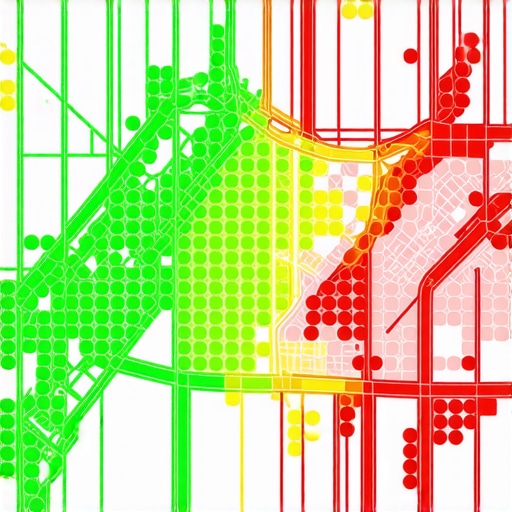
I used to think that once I hit the #1 spot, I could just walk away and let the leads roll in. I was wrong. The map pack is a living leaderboard, and if you aren’t looking, a hungry competitor will gladly take your place. To keep my sanity, I stopped manual checking and started using a tool called BrightLocal. Specifically, their ‘Local Search Grid’ is what I live by. It shows you exactly where your authority drops off block-by-block. This is how you achieve true mastering local maps domination—by seeing the ‘red zones’ where you’re invisible and attacking them with localized content. If you are only checking your rank from your office, you’re missing 90% of the picture.
Track Your Local Grid to Find Your Hidden Weak Spots
When I’m working with a client who has plateaued, I don’t look at their average rank; I look at their reach. Using a tool like GMB Spy or the local search grid allows you to see how your rank decays as you move away from your front door. If you see your ranking drop from #1 to #10 just three blocks away, you know you have a proximity issue, not a profile issue. This is where how to outsmart competition in local map listings in 2025 becomes a game of inches. You start realizing that you need to mention that specific park or that local landmark on your site to bridge the gap and prove your local relevance to the algorithm’s geographic filters.
How do I maintain my ranking without working forty hours a week on it?
Maintenance is about rhythm, not intensity. I set a calendar reminder every Tuesday to do three things: respond to new reviews, post one ‘behind the scenes’ photo, and check my ‘Special Hours.’ One thing people overlook is their active hours. According to official Google Business Profile guidelines, your ‘open’ status is a primary filter for searchers. If you change your hours frequently without a plan, you might notice why your map rank drops every time you edit your business hours. Google prioritizes businesses it knows are currently available to help a customer. Consistency here is a massive, underrated signal that builds trust with both the user and the bot.
Prepare for the AI Era of Local Search
Looking ahead, the game is shifting toward ‘Neural Matching’ and AI-driven results. Google isn’t just looking for keywords anymore; it’s looking for context. This is why you must learn how to optimize for voice activated local searches. People don’t type ‘plumber 10021’ into a smart speaker; they ask, ‘Who can fix a leaky sink near me right now?’ Joy Hawkins, a renowned expert from Sterling Sky, has frequently pointed out that Google’s algorithm is becoming increasingly sensitive to real-world behavioral signals. If you are managing multiple storefronts, you have to be even more careful about the proper way to handle multiple business locations to avoid cannibalizing your own local authority. If your data overlaps too much, Google may filter one location out entirely.
My final piece of advice for those looking for map pack domination secrets is to stop treating your profile like a static ad. It’s a social platform. Use the Q&A section to answer common questions before they are even asked. Use Google Posts to announce seasonal changes. The more ‘alive’ your profile looks, the more Google will trust you as a relevant local authority. I challenge you today: pick one neighborhood where your ranking is ‘yellow’ on a search grid and write one short blog post on your site about a project you completed in that exact area. Link it to your map pin. You’ll be surprised at how fast that ‘yellow’ turns to ‘green.’
The Brutal Truth About Why My First Three Local Campaigns Failed
When I started, I thought I could outsmart the algorithm with sheer volume, but I quickly learned that Google values human interaction over artificial metrics. One big lightbulb moment was realizing that the hidden proximity signal that pushes competitors above you isn’t just about physical miles—it is about the density of user intent and localized relevance. I also had to accept that there is no such thing as a single rank; you must understand why your map rank is different for every person who searches based on their exact coordinates. Finally, I realized that if you treat your Google Business Profile like a static billboard instead of an active social feed, it becomes a ghost town that the algorithm eventually ignores. [IMAGE_PLACEHOLDER]
Tools That Keep My Head Above Water in the Map Pack
I never fly blind anymore because the map pack moves too fast for guesswork. My personal toolkit starts with a high-quality Local Search Grid tool, which is the only way to see the ‘holes’ in your visibility block-by-block. I also spend time each month to identify which local backlinks actually move your rank rather than just adding digital noise. For deep competitive research, I use the GMB Spy extension to uncover the secondary categories my rivals are using to steal my traffic. I trust these tools because they provide raw, actionable data that bypasses the ‘SEO magic’ fluff most agencies sell.
Your Business Profile Is a Living Breathing Machine
Do not let the technical jargon overwhelm you. At its core, mastering local maps domination is simply about proving to Google that you are the most reliable, active, and helpful option for a local neighbor in need. It takes consistent effort, but the momentum you build creates a competitive moat that rivals cannot easily cross. You now have the blueprint and the specific tactics to how to outsmart competition in local map listings in 2025. Go claim your spot at the top. Have you ever noticed your ranking completely disappear just by walking a few blocks away from your shop? Let me know your experience in the comments below!
About the Author
Umar Latif
Brand & Marketing Expert · Dubai, UAE
Umar Latif is a seasoned Brand and Marketing Expert based in Dubai, UAE, with a specialized focus on Local SEO and international digital strategy. With extensive experience managing and optimizing websites for a diverse range of international clients, including those in the United States, Umar has developed a deep understanding of the nuances required to dominate local search results. His technical proficiency encompasses comprehensive keyword research and the implementation of advanced Google-centric strategies designed to enhance visibility and drive organic traffic. As a contributor to dominateyourlocalmaps.com, Umar leverages his background in global marketing to provide actionable insights for businesses looking to improve their local map rankings and digital footprint. His approach combines data-driven tactics with a strategic brand perspective, ensuring that local businesses not only rank higher but also resonate with their target audience. Throughout his career, Umar has remained dedicated to staying ahead of search engine algorithm changes to deliver consistent results for his clients. He is deeply passionate about empowering business owners and marketing professionals with the tools and knowledge they need to achieve sustainable growth.