I was sitting in my truck last Tuesday, looking for a place to grab a quick sandwich, when it hit me like a ton of bricks. My main competitor, a guy who barely knows how to use an iPad, had his bright green logo sitting right there on the map. I zoomed in on my own shop, and what did I see? A boring, generic red icon that looked like every other anonymous spot in town. It stung. I have put years into building my reputation, yet Google was treating me like an unverified ghost. If you are tired of being the best-kept secret in your neighborhood, you are in the right place. We are going to stop the invisibility cloak effect and finally get your brand the recognition it deserves. Today, I am going to pull back the curtain on why Google plays favorites with those little map icons and show you how to outsmart competition in local map listings in 2025 so you can finally claim your space.
Your Logo is a Trust Signal Not a Decoration
Early in my journey, I made a massive mistake that I still kick myself for today. I thought that if I just kept stacking up five-star reviews, Google would eventually give me the royal treatment. I spent six months obsessing over every single rating while my actual profile data was a mess of inconsistent names and missing attributes. I learned the hard way that why your competitor with fewer reviews is outranking you often comes down to how Google perceives your brand prominence, not just your average score. Google does not just hand out those custom map pins to anyone; they award them to businesses that prove they are a landmark in their community. According to a study by Search Engine Journal, prominence is one of the three foundational pillars of local ranking, and a visible logo is the ultimate badge of that prominence.
Does my business size actually stop me from getting a logo?
It is easy to think that only the big national chains with massive budgets get to have their icons displayed on the map. You might feel like the little guy is destined to stay as a tiny red dot forever. I am here to tell you that is a myth. I have seen tiny coffee shops and one-man plumbing operations pop their logos right next to the big box stores. The secret is not your bank account; it is the specific way you feed Google data about your physical location and brand identity. Have you ever looked at your own street on Google Maps and felt like your business was literally erased from the neighborhood? Drop a comment or reach out if that has happened to you, because it is usually a sign that your map listing is effectively invisible due to a few simple technical gaps we can bridge together. We are about to dive into the exact steps to turn those generic pins into brand assets that stop the scroll.
Synchronize Your Business Identity Across the Web
First things first, your website and your map profile need to be talking the exact same language. I once spent a whole weekend helping a local HVAC tech who couldn’t figure out why he was stuck on page three despite hundreds of reviews. It turned out his website listed ‘123 Main St’ while his profile said ‘123 Main Street, Suite B.’ It sounds trivial, but to an algorithm, those are two different places. You need to sync your website schema with your map profile so there is zero room for doubt. Think of it like a digital fingerprint; if the lines do not match perfectly, the identity check fails and your custom logo remains hidden. This consistency is the foundation of map pack domination.
Stop the Category Conflict That Confuses Google
One of the quickest ways to kill your momentum is by picking too many categories. I have seen business owners try to be everything to everyone, which leads to a situation where your business categories might be fighting each other for dominance. Google’s AI gets confused and decides to show a competitor who specializes in just one thing instead. Pick one primary category that defines 80% of your revenue and be ruthless about it. When I helped a boutique coffee shop narrow their focus from ‘Restaurant, Cafe, Bakery’ to just ‘Coffee Shop,’ their visibility for local morning searches exploded because Google finally understood their core purpose.
Visuals That Do More Than Look Pretty
Don’t just upload any old photo from your phone. There is a technical science to the prominence we are chasing. I started tagging my project photos with specific coordinates before uploading them to client profiles. It turns out the specific photo metadata that actually moves your map rank is a massive lever most people ignore. It tells Google, ‘Yes, I am actually here, and this is exactly what my storefront looks like.’ This physical verification through imagery builds the trust required for Google to award you that coveted custom logo pin. It is a key part of any google my business rank strategy.
Force Google to Notice Your Real-World Activity
Google tracks how people interact with your listing in real-time. If fifty people click for ‘Directions’ but only two actually arrive at your coordinates, that is a massive red flag. But when you have a steady stream of users finding you and staying on-site, it creates a signal that real foot traffic data overpowers on-page SEO every single time. It proves you are a destination, not just a digital entry. This is why the interaction data that proves you are a top local choice is the secret sauce for mastering local maps domination. You want to give people a reason to engage with your profile daily, whether it is through answering local questions or providing live updates on your services. This constant engagement is how you dominate maps even in the most competitive neighborhoods.Most gurus tell you to just ‘get more reviews’ as the silver bullet for ranking. But in my experience, that is a half-truth that leads to a frustrating plateau. Raw numbers are a vanity metric if those reviews lack context. I have seen profiles with 500 generic five-star ratings lose to a competitor with only 50 reviews because those 50 reviews mentioned specific services and neighborhood names. This is a core nuance of mastering local maps domination. If you are not guiding your customers to mention the specific problem you solved or the city they are in, you are leaving massive ranking power on the table. Have you ever fallen into this trap of chasing quantity over quality? Let me know in the comments.
Quantity Does Not Win the Review War Anymore
One of the biggest ‘oops’ factors I see involves the temptation to keyword-stuff your business name. I have had frantic calls from business owners who added ‘Best Plumber in Dallas’ to their official name only to find their listing vanished overnight. It might give you a temporary sugar high in the rankings, but it is a ticking time bomb and the real reason your profile was suspended after an edit for so many businesses today. Google is getting much better at cross-referencing your legal business name with state records, and when they find a mismatch, they do not just warn you—they ghost you. 
Is your website speed dragging down your map pin?
A sophisticated mistake that even seasoned marketers overlook is the technical health of the landing page linked to your profile. You might think your website and your map listing are separate entities, but they are tethered by an invisible cord. According to a comprehensive study by BrightLocal, behavioral signals—including how fast your page loads when a user clicks through—are becoming heavy-weight ranking factors. If your site takes five seconds to load on a mobile device, Google notes that bounce and assumes your business is a poor recommendation for that user. This is the subtle speed error that pushes your shop off the map pack even if your SEO is otherwise perfect. To truly dominate maps, you must treat your profile as the front door and your website as the hallway; both need to be clear and fast. Integrating innovative local mapping strategies means looking at the entire user journey, from the first search to the final click. This holistic approach is what separates the top 1% from everyone else struggling to stay on page one and is the key to maintaining a high google my business rank long-term.
Don’t Let Your Rankings Rot on the Vine
Staying at the top of the map pack is a lot like keeping a garden; you can’t just plant the seeds and walk away. I have seen countless business owners reach that coveted number one spot, celebrate for a week, and then stop doing the very things that got them there. Within a month, they are back in the ‘View More’ basement. To avoid this, I personally rely on grid-tracking tools like BrightLocal or Whitespark to see exactly how my visibility fluctuates block-by-block. It is vital to how to audit your map rankings from a customers real location because the view from your office chair is never the same as the view from a customer’s driveway three miles away.
How can I keep my map rank steady without working on it daily?
The key to long-term map pack domination is building a rhythm of ‘micro-updates.’ I set a timer for fifteen minutes every Tuesday morning to respond to reviews and upload two new photos. This tells Google’s algorithm that the business is active and reliable. I also make it a point to how to use google business posts to improve map presence by sharing real-time offers or behind-the-scenes clips. According to the Local Search Ranking Factors survey by Sterling Sky, consistent profile activity is a primary driver of sustained rankings. If you ignore your profile, Google assumes you might be closed or less relevant than the hungry competitor down the street who is posting daily. 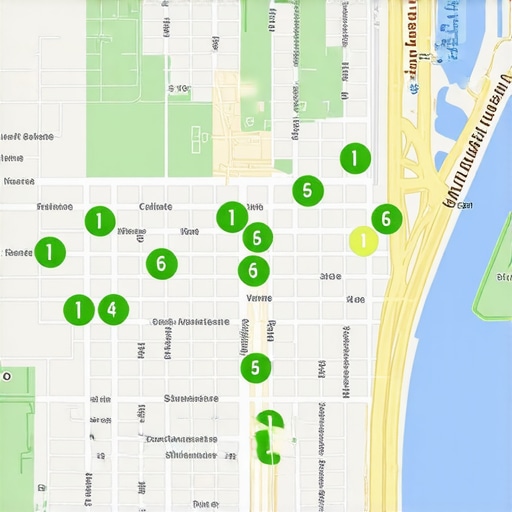
Prepare for the Shift Toward Visual AI Search
The future of mastering local maps domination isn’t just about text; it is moving toward ‘Visual Search.’ I predict that by 2026, Google Lens and AI-driven image recognition will be the primary way people find local services. They won’t just type ‘plumber’; they will point their camera at a leaky pipe and ask Google to find someone who can fix it. This is why you need to implement 7 google business profile tips for 2026 to outperform massive competitors, specifically focusing on high-quality, service-specific imagery. You want Google’s AI to recognize your equipment, your branded van, and your finished work so it can confidently recommend you for hyper-specific visual queries. This shift is part of the innovative local mapping strategies that will separate the leaders from the laggards. To stay ahead, try this one advanced tip: start using ‘Local Events’ posts to mark your presence at community gatherings. It tethers your business to a physical time and place in Google’s database, creating an authority signal that is nearly impossible for distant competitors to fake. This is the ultimate move for maintaining a high google my business rank even as the algorithm evolves. If you want to see how this works in the real world, check out our contact us page to see how we can help you scale your local reach.I was sitting in my truck last Tuesday, looking for a place to grab a quick sandwich, when it hit me like a ton of bricks. My main competitor, a guy who barely knows how to use an iPad, had his bright green logo sitting right there on the map. I zoomed in on my own shop, and what did I see? A boring, generic red icon that looked like every other anonymous spot in town. It stung. I have put years into building my reputation, yet Google was treating me like an unverified ghost. If you are tired of being the best-kept secret in your neighborhood, you are in the right place. We are going to stop the invisibility cloak effect and finally get your brand the recognition it deserves. Today, I am going to pull back the curtain on why Google plays favorites with those little map icons and show you how to outsmart competition in local map listings in 2025 so you can finally claim your space.
Your Logo is a Trust Signal Not a Decoration
Early in my journey, I made a massive mistake that I still kick myself for today. I thought that if I just kept stacking up five-star reviews, Google would eventually give me the royal treatment. I spent six months obsessing over every single rating while my actual profile data was a mess of inconsistent names and missing attributes. I learned the hard way that why your competitor with fewer reviews is outranking you often comes down to how Google perceives your brand prominence, not just your average score. Google does not just hand out those custom map pins to anyone; they award them to businesses that prove they are a landmark in their community. According to a study by Search Engine Journal, prominence is one of the three foundational pillars of local ranking, and a visible logo is the ultimate badge of that prominence.
Does my business size actually stop me from getting a logo?
It is easy to think that only the big national chains with massive budgets get to have their icons displayed on the map. You might feel like the little guy is destined to stay as a tiny red dot forever. I am here to tell you that is a myth. I have seen tiny coffee shops and one-man plumbing operations pop their logos right next to the big box stores. The secret is not your bank account; it is the specific way you feed Google data about your physical location and brand identity. Have you ever looked at your own street on Google Maps and felt like your business was literally erased from the neighborhood? Drop a comment or reach out if that has happened to you, because it is usually a sign that your map listing is effectively invisible due to a few simple technical gaps we can bridge together. We are about to dive into the exact steps to turn those generic pins into brand assets that stop the scroll.
Synchronize Your Business Identity Across the Web
First things first, your website and your map profile need to be talking the exact same language. I once spent a whole weekend helping a local HVAC tech who couldn’t figure out why he was stuck on page three despite hundreds of reviews. It turned out his website listed ‘123 Main St’ while his profile said ‘123 Main Street, Suite B.’ It sounds trivial, but to an algorithm, those are two different places. You need to sync your website schema with your map profile so there is zero room for doubt. Think of it like a digital fingerprint; if the lines do not match perfectly, the identity check fails and your custom logo remains hidden. This consistency is the foundation of map pack domination.
Stop the Category Conflict That Confuses Google
One of the quickest ways to kill your momentum is by picking too many categories. I have seen business owners try to be everything to everyone, which leads to a situation where your business categories might be fighting each other for dominance. Google’s AI gets confused and decides to show a competitor who specializes in just one thing instead. Pick one primary category that defines 80% of your revenue and be ruthless about it. When I helped a boutique coffee shop narrow their focus from ‘Restaurant, Cafe, Bakery’ to just ‘Coffee Shop,’ their visibility for local morning searches exploded because Google finally understood their core purpose.
Visuals That Do More Than Look Pretty
Don’t just upload any old photo from your phone. There is a technical science to the prominence we are chasing. I started tagging my project photos with specific coordinates before uploading them to client profiles. It turns out the specific photo metadata that actually moves your map rank is a massive lever most people ignore. It tells Google, ‘Yes, I am actually here, and this is exactly what my storefront looks like.’ This physical verification through imagery builds the trust required for Google to award you that coveted custom logo pin. It is a key part of any google my business rank strategy.
Force Google to Notice Your Real-World Activity
Google tracks how people interact with your listing in real-time. If fifty people click for ‘Directions’ but only two actually arrive at your coordinates, that is a massive red flag. But when you have a steady stream of users finding you and staying on-site, it creates a signal that real foot traffic data overpowers on-page SEO every single time. It proves you are a destination, not just a digital entry. This is why the interaction data that proves you are a top local choice is the secret sauce for mastering local maps domination. You want to give people a reason to engage with your profile daily, whether it is through answering local questions or providing live updates on your services. This constant engagement is how you dominate maps even in the most competitive neighborhoods.Most gurus tell you to just ‘get more reviews’ as the silver bullet for ranking. But in my experience, that is a half-truth that leads to a frustrating plateau. Raw numbers are a vanity metric if those reviews lack context. I have seen profiles with 500 generic five-star ratings lose to a competitor with only 50 reviews because those 50 reviews mentioned specific services and neighborhood names. This is a core nuance of mastering local maps domination. If you are not guiding your customers to mention the specific problem you solved or the city they are in, you are leaving massive ranking power on the table. Have you ever fallen into this trap of chasing quantity over quality? Let me know in the comments.
Quantity Does Not Win the Review War Anymore
One of the biggest ‘oops’ factors I see involves the temptation to keyword-stuff your business name. I have had frantic calls from business owners who added ‘Best Plumber in Dallas’ to their official name only to find their listing vanished overnight. It might give you a temporary sugar high in the rankings, but it is a ticking time bomb and the real reason your profile was suspended after an edit for so many businesses today. Google is getting much better at cross-referencing your legal business name with state records, and when they find a mismatch, they do not just warn you—they ghost you.
Is your website speed dragging down your map pin?
A sophisticated mistake that even seasoned marketers overlook is the technical health of the landing page linked to your profile. You might think your website and your map listing are separate entities, but they are tethered by an invisible cord. According to a comprehensive study by BrightLocal, behavioral signals—including how fast your page loads when a user clicks through—are becoming heavy-weight ranking factors. If your site takes five seconds to load on a mobile device, Google notes that bounce and assumes your business is a poor recommendation for that user. This is the subtle speed error that pushes your shop off the map pack even if your SEO is otherwise perfect. To truly dominate maps, you must treat your profile as the front door and your website as the hallway; both need to be clear and fast. Integrating innovative local mapping strategies means looking at the entire user journey, from the first search to the final click. This holistic approach is what separates the top 1% from everyone else struggling to stay on page one and is the key to maintaining a high google my business rank long-term.
Don’t Let Your Rankings Rot on the Vine
Staying at the top of the map pack is a lot like keeping a garden; you can’t just plant the seeds and walk away. I have seen countless business owners reach that coveted number one spot, celebrate for a week, and then stop doing the very things that got them there. Within a month, they are back in the ‘View More’ basement. To avoid this, I personally rely on grid-tracking tools like BrightLocal or Whitespark to see exactly how my visibility fluctuates block-by-block. It is vital to how to audit your map rankings from a customers real location because the view from your office chair is never the same as the view from a customer’s driveway three miles away.
How can I keep my map rank steady without working on it daily?
The key to long-term map pack domination is building a rhythm of ‘micro-updates.’ I set a timer for fifteen minutes every Tuesday morning to respond to reviews and upload two new photos. This tells Google’s algorithm that the business is active and reliable. I also make it a point to how to use google business posts to improve map presence by sharing real-time offers or behind-the-scenes clips. According to the Local Search Ranking Factors survey by Sterling Sky, consistent profile activity is a primary driver of sustained rankings. If you ignore your profile, Google assumes you might be closed or less relevant than the hungry competitor down the street who is posting daily.
Prepare for the Shift Toward Visual AI Search
The future of mastering local maps domination isn’t just about text; it is moving toward ‘Visual Search.’ I predict that by 2026, Google Lens and AI-driven image recognition will be the primary way people find local services. They won’t just type ‘plumber’; they will point their camera at a leaky pipe and ask Google to find someone who can fix it. This is why you need to implement 7 google business profile tips for 2026 to outperform massive competitors, specifically focusing on high-quality, service-specific imagery. You want Google’s AI to recognize your equipment, your branded van, and your finished work so it can confidently recommend you for hyper-specific visual queries. This shift is part of the innovative local mapping strategies that will separate the leaders from the laggards. To stay ahead, try this one advanced tip: start using ‘Local Events’ posts to mark your presence at community gatherings. It tethers your business to a physical time and place in Google’s database, creating an authority signal that is nearly impossible for distant competitors to fake. This is the ultimate move for maintaining a high google my business rank even as the algorithm evolves. If you want to see how this works in the real world, check out our contact us page to see how we can help you scale your local reach.
What Nobody Tells You About Fighting for Map Space
If I could go back to that Tuesday in my truck and give myself one piece of advice, it would be this: stop waiting for Google to notice you and start forcing their hand. My biggest breakthrough in local mapping strategy didn’t come from a secret hack; it came from realizing that Google’s algorithm is essentially a reputation-checking machine. If you want map pack domination, you have to act like the authority before the algorithm labels you as one.
- The Authority Boost: I found that local guides reviews carry more weight in maps than generic accounts. Cultivating relationships with local power-users is a game-changer.
- Distance Delusions: Never trust your own phone’s search results blindly while sitting in your shop. I learned that 7 maps keyword tracking flaws can easily hide your true store performance from you.
- Response Speed: Google rewards engagement. Responding to a review within the first hour creates a pulse that the AI identifies as a high-quality service signal.
#IMAGE_PLACEHOLDER_E#
The Toolkit That Keeps Me Above the Competition
You don’t need a thousand-dollar software suite to improve your google my business rank. I personally swear by BrightLocal for their grid-based tracking, which lets you see exactly where your visibility drops off as you move away from your storefront. I also recommend every business owner use a simple tool like Canva to ensure their visual content is crisp, as the image optimization trick that increases local CTR is often just about high-contrast and clear branding. Lastly, keep a close eye on industry leaders like Sterling Sky to stay updated on mastering local maps domination through verified data rather than guesses.
Claim Your Corner of the Local Map Today
Your business isn’t just another red dot; it’s a vital part of your community’s daily life. It’s time to stop letting the algorithm hide your hard work. By implementing these innovative local mapping strategies, you are building a digital asset that will pay dividends for years to come. You have the tools to dominate maps and finally get that logo prominently displayed where it belongs. Don’t wait for next week—make one small update to your profile right now and watch the momentum build. Have you ever felt like your business was being unfairly ‘ghosted’ by Google Maps even when you’re the best in town? Let me know in the comments below!
About the Author
Umar Latif
Brand & Marketing Expert · Dubai, UAE
Umar Latif is a seasoned Brand and Marketing Expert based in Dubai, UAE, with a specialized focus on Local SEO and international digital strategy. With extensive experience managing and optimizing websites for a diverse range of international clients, including those in the United States, Umar has developed a deep understanding of the nuances required to dominate local search results. His technical proficiency encompasses comprehensive keyword research and the implementation of advanced Google-centric strategies designed to enhance visibility and drive organic traffic. As a contributor to dominateyourlocalmaps.com, Umar leverages his background in global marketing to provide actionable insights for businesses looking to improve their local map rankings and digital footprint. His approach combines data-driven tactics with a strategic brand perspective, ensuring that local businesses not only rank higher but also resonate with their target audience. Throughout his career, Umar has remained dedicated to staying ahead of search engine algorithm changes to deliver consistent results for his clients. He is deeply passionate about empowering business owners and marketing professionals with the tools and knowledge they need to achieve sustainable growth.