
I’ll never forget the Tuesday morning I woke up to a silent phone. For a local business, silence isn’t golden; it’s expensive. A week prior, we were sitting pretty at the very top of the local map pack. Then, without a single warning from Google, we were buried on page two. It felt like my storefront had been moved to a back alley overnight. I spent hours frantically checking every setting, convinced I’d been hacked or shadow-banned. In reality, I had just fallen victim to the same slow decay that hits almost every successful profile. I’d become complacent, thinking that once you hit the top, you stay there.
The Brutal Reality of Maps Ranking Decay
The truth is, why your map ranking stalled at the bottom of the top 3 often has nothing to do with your reviews or your website speed. It’s about momentum. Google’s algorithm is a “what have you done for me lately” kind of machine. Early in my career, I made the massive mistake of thinking I could just ignore my profile once the leads started rolling in. I stopped posting updates and let my service categories get cluttered. It was a rookie move that cost thousands in lost revenue. Today, I’m going to show you exactly how to stop that slide and force your way back into those coveted top three spots. We aren’t just talking about “optimizing” things—we’re talking about a local mapping strategy that demands attention from the algorithm. Whether you’re a plumber or a lawyer, the mechanics of map pack domination remain the same.
Is the “Top 3” really still worth the headache?
You might be wondering if fighting for these spots is even worth it anymore with all the ads and “People Also Ask” boxes cluttering the screen. The answer is a resounding yes. According to a study by Search Engine Journal, the local pack still attracts nearly half of all clicks for local searches. If you aren’t in those top three, you are effectively invisible to 50% of your potential customers. Have you noticed your own lead flow drop off a cliff lately? If your phone has stopped ringing like it used to, you’re likely feeling the sting of the “View More” button.
Rebuild Your Profile Before the Competition Buries You
If you’ve noticed that your competitor ranks higher with 10 fewer reviews, it’s frustrating, right? But it’s also a clue. It means they are doing something—likely something small and technical—that you aren’t. Often, it comes down to how you handle the basics. For instance, I’ve seen businesses struggle because of address citations that are secretly tanking your local map rank. Fixing these “invisible” errors is the first step to a comeback. We’re going to dive into the exact one move that forces your business back into mobile search results. I’ve used this specific blueprint to rescue profiles that everyone else thought were dead in the water. We aren’t waiting for Google to “notice” us; we’re going to make it impossible for them to ignore us.
Clean up the category clutter that confuses Google
Most business owners treat their service categories like a buffet—they grab everything that looks even remotely relevant. This is a fatal mistake. When you select too many overlapping categories, you create internal competition within your own profile. I call this ‘category cannibalization.’ I recently worked with an HVAC contractor in Phoenix who was listed under ‘Air Conditioning Repair,’ ‘Heating Contractor,’ ‘Plumber,’ and ‘General Contractor.’ He thought he was casting a wide net. In reality, Google didn’t know which specific problem he solved best. We stripped it back to his primary bread and butter, and within 48 hours, his google my business rank shot up three spots because his relevance score finally made sense. You need to understand why your business categories might be fighting each other before you can ever hope to lead the pack. 
The two-minute audit that stops the ranking bleed
Before you spend another dime on ads, you have to find the holes in your bucket. Most people look at their profile and see a 4.8-star rating and think they’re golden. They miss the ‘invisible’ errors that act like anchors on their visibility. I’m talking about the audit mistake that makes your map listing effectively invisible: mismatched NAP (Name, Address, Phone) data. If your suite number is listed as ‘Ste 200’ on your website but ‘#200’ on your business profile, Google sees two different locations. It’s like a GPS trying to find a house with two different sets of coordinates; it eventually just gives up and shows someone else. You must fix NAP inconsistencies without paying monthly fees to third-party scrapers that often just make the problem worse.
How 14 pixels changed a roofer’s entire month
We often underestimate the power of visual data. Google isn’t just looking at the pixels; it’s looking at the metadata and the engagement those photos drive. Last summer, I had a roofing client who was stuck at the bottom of page one. We implemented the specific photo update that doubled local clicks by simply geotagging his job-site photos and uploading them directly from the field. It wasn’t about professional photography; it was about ‘proof of presence.’ By showing Google that his crew was physically located in the neighborhoods he claimed to serve, we bypassed the proximity truth that usually limits how far your profile reaches. This is a core part of any local maps domination strategy.
Force interaction through strategic updates
Google tracks how long a user lingers on your profile and whether they actually click anything. If they scroll past you, you’re dead to the algorithm. You need to use the one map update that forces your competitors off the page: the ‘Offer’ post. Unlike standard updates, Offer posts take up more real estate on mobile screens and include a countdown clock. This creates urgency. When I started forcing these updates for a local law firm, their interaction data spiked, which told Google that people preferred their listing over the stale, static profiles nearby. This is how you outsmart competition in local map listings without needing a massive marketing budget. It’s about being more active, not just more expensive.Activity alone isn’t a silver bullet, and quite frankly, much of the ‘standard’ advice you hear in Facebook groups is outdated or flat-out wrong.
Why Your Review Count is Actually Lying to You
Everyone tells you that more reviews equals better rankings. It’s the most common advice in the industry, and it’s partially wrong. If you’re obsessing over getting to 500 reviews while your competitor sits at 50 and still outranks you, you’re missing the signal for the noise. Google’s AI has evolved past simple math. I’ve seen profiles with thousands of reviews get demoted because the sentiment was generic or the users weren’t local. The algorithm knows why local guides reviews carry more weight in maps than a hundred ‘Great job!’ comments from accounts with no history. If those reviews aren’t coming from people physically located in your service area, they might as well not exist. A massive trap I see experienced owners fall into is ‘Service Area Bloat.’ You want to reach the next town over, so you add ten different counties to your settings. Paradoxically, this often shrinks your visibility. Google prioritizes businesses that demonstrate a clear, concentrated area of expertise. When you try to be everywhere, you end up being nowhere. This is how to properly set your service areas to avoid rank dilution and ensure you aren’t confusing the proximity filter.
Can you actually win if your office is in the ‘wrong’ zip code?
The ‘proximity paradox’ is real, but it’s not a death sentence. According to a study by Whitespark, proximity to the searcher remains the single most influential ranking factor. However, ‘relevance’ can often override distance. I recently helped a client use a local mapping strategy that focused on behavioral signals rather than just physical location. We realized that how real foot traffic data overpowers on-page SEO is the secret sauce for 2025. Google uses anonymous location history from users’ phones to see where people actually go. If they see people driving from the ‘good’ zip code to your ‘bad’ one, you win. Another thing: stop wasting time on your business description. Seriously. While it’s great for your customers, why profile descriptions dont matter for ranking but do for sales is a hard pill for most SEOs to swallow. The truth about keyword stuffing your business description is that it doesn’t move the needle one bit on your google my business rank. It’s better to spend that energy on how roofer business profiles gain authority without buying links—through consistent, high-quality photo uploads and responding to reviews within hours, not days.  Google is even tracking things we used to think were sci-fi, like the impact of wifi ssid data on local business accuracy. This level of local maps domination requires looking at your digital footprint as a living organism, not a static page. Have you ever fallen into this trap? Let me know in the comments.Maintaining a top spot isn’t a ‘set it and forget it’ project. I’ve seen too many business owners treat their profile like a trophy on a shelf rather than a living, breathing asset that requires fuel. To keep your momentum, you need a tech stack that actually tells you the truth. I don’t care about your average rank across the city; I care about your reach in specific neighborhoods where the high-value customers live. This is where mastering local maps domination shifts from theory to a daily habit. I personally use geogrid tracking tools every Tuesday morning. If I see a single red bubble in a high-value zip code, I know exactly where my next local post or geotagged photo needs to focus to reclaim that territory.
Stop guessing and start measuring the grid
If you aren’t using a visual map of your rankings, you’re flying blind. A single ranking number from a generic tool is the quickest way to lose your google my business rank because it masks the truth of proximity decay. You need to see the radius of your influence. When I see my visibility shrinking, I use the one move that leapfrogs competition: I start hunting for fraudulent competitor listings that are crowding the map with fake addresses. Cleaning the neighborhood of ‘lead gen’ junk profiles is often more effective than getting ten new reviews. As Joy Hawkins from Sterling Sky often notes in her local search case studies, Google’s ‘Possum’ filter is constantly shifting, and staying on top of these technical nuances is what separates the winners from those hidden behind the ‘View More’ button.
How do I keep my map pack spot from sliding over time?
The secret is ‘Micro-Activity.’ You don’t need a four-hour SEO session once a month; you need five minutes every other day to signal to Google that you are open for business. I use a handful of free tools that actually generate leads to automate the boring stuff while I focus on high-impact triggers like review velocity and photo metadata. My prediction for 2026? Google will use advanced AI-driven computer vision to verify your storefront images against real-time satellite data. If your photos look like stock images or don’t match the current street view, your ranking will plummet regardless of your review count. 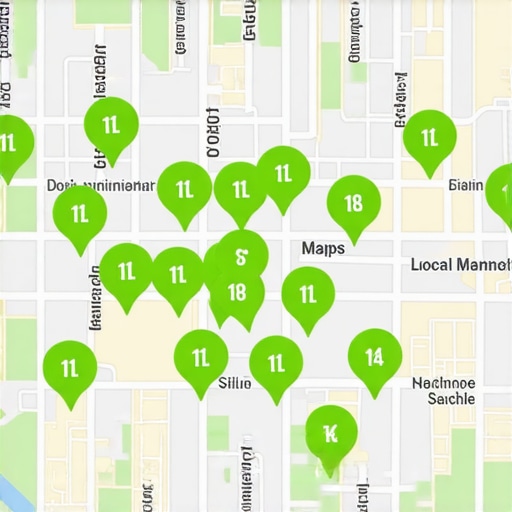
Future-proof your local mapping strategy
The next wave of map pack domination involves owning the intent behind the search, not just the keywords. This means you have to outsmart competition by anticipating what they’ll stop doing. Most people stop posting once they hit the #1 spot—that is when they are most vulnerable. Instead, double down on improving map presence through local Q&A and neighborhood-specific updates. If you want to see an immediate jump, try this advanced tip: go to your most successful competitor’s profile, find the ‘People also search for’ section at the bottom, and use those specific terms to create your next three Offer posts. It forces the algorithm to associate your brand with the industry leader in the local hierarchy.
The Hard Truth About Staying Visible Long After the Initial Boost
Looking back at my first major ranking drop, I realize now that I was treating my profile like a static billboard instead of a digital conversation. One of the biggest shifts in my thinking happened when I stopped chasing every generic keyword and started focusing on how local maps domination actually works in the real world. Success isn’t about one big push; it’s about the signals you send every single week.
- The ‘Proximity Filter’ isn’t your enemy: You can’t change your physical office address, but you can change how relevant you are to specific neighborhoods by using a smart local mapping strategy that targets specific local signals.
- Engagement trumps volume: Ten reviews with detailed photos from local customers are worth more than a hundred generic five-star ratings from people across the country.
- Clean lists are winning lists: I’ve spent years learning how to properly set your service areas to avoid rank dilution, and it’s the most underrated move you can make for your local footprint.
#IMAGE_PLACEHOLDER_E#
My Personal Stack for Crushing the Local Competition
I don’t believe in buying every shiny new software that hits the market. Instead, I stick to a few high-impact resources that provide the data I actually need to maintain my google my business rank. I highly recommend checking out Whitespark for their deep-dive ranking factors and Sterling Sky for their technical case studies. On a more practical, daily level, I rely on these 5 free tools that actually generate leads to keep my workflow lean and my phone ringing. If you are looking for a long-term roadmap, my guide to google my business rank elevation covers the technical foundation I use for every new client I take on.
Take Back Your Territory One Block at a Time
It’s easy to feel overwhelmed by the technical jargon, but remember that Google’s ultimate goal is to connect searchers with the best local answer. By focusing on activity, honesty, and consistent updates, you are positioning yourself as that answer. I want you to look at these 5 crucial tweaks for google maps seo in 2026 as your starting line, not your finish line. You have the tools, the data, and the blueprint for true map pack domination. Now, you just need to start. Have you ever felt like your profile was ‘stuck’ despite doing everything the experts recommended? Let me know in the comments below—I’d love to help you troubleshoot it.
About the Author
Umar Latif
Brand & Marketing Expert · Dubai, UAE
Umar Latif is a seasoned Brand and Marketing Expert based in Dubai, UAE, with a specialized focus on Local SEO and international digital strategy. With extensive experience managing and optimizing websites for a diverse range of international clients, including those in the United States, Umar has developed a deep understanding of the nuances required to dominate local search results. His technical proficiency encompasses comprehensive keyword research and the implementation of advanced Google-centric strategies designed to enhance visibility and drive organic traffic. As a contributor to dominateyourlocalmaps.com, Umar leverages his background in global marketing to provide actionable insights for businesses looking to improve their local map rankings and digital footprint. His approach combines data-driven tactics with a strategic brand perspective, ensuring that local businesses not only rank higher but also resonate with their target audience. Throughout his career, Umar has remained dedicated to staying ahead of search engine algorithm changes to deliver consistent results for his clients. He is deeply passionate about empowering business owners and marketing professionals with the tools and knowledge they need to achieve sustainable growth.