
I remember sitting in my home office, staring at a static Google Maps pin that refused to budge. I had done everything the experts told me to do. I had spent late nights obsessing over fixing NAP inconsistencies and buying every directory listing known to man. But my business was still buried on page three. It was frustrating. It felt like I was shouting into a void while the guy down the street—who did not even have a decent website—was cleaning up all the leads. Then, a neighbor asked if I would help sponsor the community fall festival. I did it mostly to be a good neighbor, but within two weeks, my phone started ringing with actual customers. That was the moment I realized that your google my business rank is not just about keywords; it is about community footprint. Today, I am going to show you how to stop chasing low-quality citations and start using local events to build massive profile authority. We are moving beyond the basic tweaks and into the real-world signals that force Google to take notice.
Stop Hiding Behind Your Keyboard and Get Into the Streets
Early in my journey, I made a massive mistake: I thought I could achieve local maps domination entirely from a spreadsheet. I was convinced that if I just tweaked my metadata one more time, the algorithm would reward me. I was wrong. I was completely ignoring the local part of local SEO. By staying digital-only, I was missing out on the specific signals that prove to Google you are a legitimate pillar of the community. When you engage with local events, you generate hyper-local backlinks, social mentions, and geo-tagged photos that a national competitor cannot replicate. Have you ever felt like you are doing everything right online but still getting beat by a shop that barely even uses social media? This is likely the reason why.
Do community events really move the needle on my rank?
It is easy to be skeptical. You might think that a local charity run or a chamber of commerce mixer is just a distraction from your actual work. However, Google’s patents frequently discuss the importance of entity proximity and real-world prominence. According to a landmark survey by Moz, local signals like community engagement and locally-relevant links are among the top factors for map pack domination secrets. When you sponsor an event, your brand name gets associated with a specific geographic location in a way that is incredibly hard for the algorithm to ignore. It is not just about the good vibes; it is about building an ironclad digital association between your business and your city. In the next section, I will break down the exact types of events that offer the highest return on your time.
Turn Your Town Into Your Personal Ranking Machine
To win the game of innovative local mapping strategies, you have to think like a local politician, not a tech geek. Think of Google as a neighborhood gossip; it does not believe what you say about yourself, it only believes what everyone else is saying about you. When you participate in local events, you are feeding that gossip high-quality information that validates your physical presence better than any keyword-stuffed meta tag ever could.
Sponsor Locally to Claim Your Turf
Most people throw money at a Facebook ad and wonder why their google my business rank is stagnant. Instead, find a local little league team or a charity 5k. Why? Because these organizations usually have high-authority local domains. When they list you as a sponsor, you are not just getting a ‘thank you’; you are getting a hyper-local backlink that is pure gold for local maps domination. I once worked with a plumber who spent $200 on a community garden sign. That single link from the city’s ‘Our Partners’ page did more for his visibility than $2,000 worth of low-quality citations ever could.
Leave a Trail of Digital Breadcrumbs Every Time You Leave the Office
Do not just show up; document everything. Google tracks where your mobile device goes, and it tracks where the photos you upload were taken. This is one of those 5-fast-signal-tweaks that actually improve your google my business rank. When you attend an event, take a photo with your phone, ensure location services are on, and upload it directly to your business profile from the event site.  This proves to the algorithm that your business is not just a PO Box; it is an active entity physically present in the service area. I remember a roofer I advised who started posting photos of his truck at local high school football games. Within a month, he started appearing in the map pack for searches in that specific school district—a feat he could not achieve with the city page method alone.
How to Pick Events That Actually Move the Needle
Not all events are created equal. You want to prioritize events that have an online presence. If the event has a website ending in .org, .edu, or .gov, you have hit the jackpot. These are the quiet moves that force your small business above national competitors. You are looking for ‘relevance proximity.’ If you are a landscaper, sponsoring a ‘Keep Our Parks Clean’ day is a thematic match that Google’s AI loves to see. It is like putting a giant neon sign over your office that says ‘I belong here.’ Use this strategy to dominate maps by building a web of local associations that no algorithm update can tear down. I once saw a small law firm leapfrog a massive national competitor simply by becoming the primary sponsor for a local ‘know your rights’ workshop hosted at a library. The key was how to identify which local map backlinks are actually moving your rank and doubling down on those specific connections.
Stop Obsessing Over Stars and Start Watching the Clock
Most people think that hitting a hundred five-star reviews is the finish line for map pack domination secrets. In reality, it is barely the entry fee. I have seen businesses with five hundred reviews get crushed by a competitor with forty because the smaller shop actually engages with their audience. The biggest myth in the industry is that review volume is the ultimate king. It is not. If your profile is a ghost town of unanswered questions and stale posts, Google sees it as a dying entity. Have you ever fallen into this trap? Let me know in the comments. I have found that how customer interaction speed directly influences your google my business rank is the real secret sauce that separates the winners from the also-rans.
Why do low-rated competitors keep stealing your leads?
It is a common frustration: you have a near-perfect rating, yet a shop with a 4.2 average is sitting pretty in the top spot. This happens because Google prioritizes ‘behavioral signals’ over static numbers. According to the 2023 Local Search Ranking Factors report by Whitespark, user engagement—like how many people click for directions or how fast you answer a message—is now a heavyweight ranking factor. If searchers click your profile but immediately hit the ‘back’ button because you lack helpful info, your google my business rank will suffer regardless of your star count. This is essentially the trap of review automation; more stars do not always mean more map leads if the human element is missing.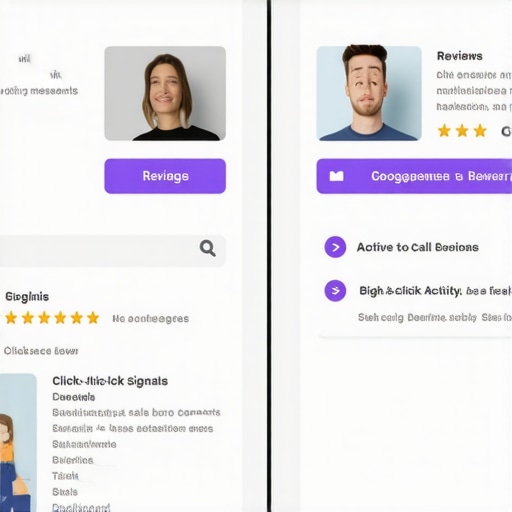
The Category Mistake That Makes You Invisible
One of the most dangerous ‘oops’ factors I see is category stuffing. Business owners think that checking every possible box will help them dominate maps. It actually does the opposite. When you pick too many unrelated categories, you dilute your primary signal. This is why most business owners pick the wrong categories and kill their local map rank before they even start. If you are a plumber, do not list yourself as a hardware store just because you sell a few faucets. Google’s AI looks for specific authority, and trying to be everything to everyone makes you nothing to the algorithm. If you have seen your google my business rank tanked after the latest proximity update, your first move should be auditing those secondary categories. Stick to what you actually do, and let the innovative local mapping strategies we discussed earlier, like local event tagging, do the heavy lifting of proving your relevance.
The Toolbox That Keeps Your Phone Ringing
Maintaining a top spot is where the real work begins. I’ve seen too many business owners hit the top three, pop a bottle of champagne, and then wonder why most businesses fail to hold a top spot in the map pack after three months. The algorithm is a hungry, data-driven beast; if you stop feeding it fresh, localized signals, it will quickly look for a more ‘active’ competitor to promote. I personally rely on a ‘grid-tracking’ method rather than checking single-point rankings. If you only check your google my business rank from your office chair, you are flying blind. You need to see how you perform three blocks away, and three miles away, across the entire city. This addresses one of the most common 7 maps keyword tracking flaws that hide your true store performance. I use tools like BrightLocal’s Local Search Grid or Whitespark because they visualize what I call ‘proximity bleed’—showing the exact geographic boundary where your authority drops off.
How do I keep my map pack dominance month after month?
The secret to long-term local maps domination isn’t a one-time hack; it is a relentless rhythm of verification. Every week, I spend twenty minutes auditing my top three competitors. Are they adding new service attributes? Have they started posting more videos? Joy Hawkins, the founder of Sterling Sky and a recognized authority in the space, has noted in her research that Google’s weight on ‘prominence’ is constantly shifting based on real-world user behavior. You have to learn how to audit your map rankings from a customers real location to understand the ‘mobile-first’ reality of your market. If a customer is searching while walking down the street, their results look vastly different than yours do on a desktop. 
Why Your Best Efforts Fail Without a Watchdog
I predict that by 2026, the era of static SEO is over. Google is moving toward ‘real-time entity verification.’ We are already seeing this with ‘Local Services Ads’ and ‘Google Guaranteed’ badges, but it is moving into the organic map pack as well. This means the algorithm will prioritize businesses that show live, verified movement—think delivery trucks sharing location data or customers actively using the ‘check-in’ feature on Google Maps. It sounds like science fiction, but the patents for this technology are already being implemented. If you are not prepared to treat your business profile like a live, interactive community hub, you will be replaced by someone who is. For many, the technical overhead of this constant monitoring is why why hiring a google business profile consultant saves more money than diy management. The cost of losing a top-three spot—and the leads that come with it—is always significantly higher than the cost of proactive maintenance. My challenge to you today: go into your dashboard and check your ‘Secondary Categories.’ If one doesn’t fit perfectly, delete it. That one small move often provides the clarity the algorithm needs to push you higher.
The Hardest Lesson I Learned About Forcing Google to See Me
For years, I believed that if I just checked enough technical boxes, the algorithm would eventually bow to my expertise. The truth is much more grounded. I realized that Google cares far more about how your city reacts to your physical presence than how many keywords you can jam into a description. If you are not visible in the physical world, your digital shadow will always remain thin and easily ignored. This is one of those missing trust signals that keeps even the most technically perfect businesses stuck on page two. My lightbulb moment happened when I stopped treating my profile like a static billboard and started treating it like a community hub. Real-world activity creates a digital frequency that the algorithm simply cannot tune out. When you focus on specific moves to force map pack domination, you quickly learn that your local reputation is the ultimate ranking factor.
The Survival Kit for Climbing the Local Pack
I do not believe in chasing every new shiny object, but I do believe in having the right tools to monitor your progress accurately. I personally rely on BrightLocal for its grid tracking capabilities, as it reveals the ‘proximity bleed’ where your authority begins to drop off. I also recommend keeping the Sterling Sky blog bookmarked; Joy Hawkins and her team are the gold standard for testing what actually moves the needle in real-time. If you are operating on a tight budget, I highly recommend checking out these 5 free tools that actually generate leads to help you audit your performance without a massive overhead. Lastly, stop ignoring your own data—your Profile Insights are the heartbeat of your local strategy, provided you know how to filter out the noise. This is often where standard optimization services often miss the signal.
#IMAGE_PLACEHOLDER_E#
Your Future in the Map Pack Starts Today
The map pack is not a permanent trophy that you win once and keep forever; it is a rented space where the rent is paid through consistent activity and community relevance. By embracing local maps domination, you are doing more than just capturing clicks—you are cementing your business as a legitimate pillar of your town. Don’t let the technical jargon intimidate you. Start with one local event, fix your primary category, and watch how the algorithm responds to your real-world footprint. Your google my business rank will follow your lead once you show Google that the community already knows who you are. Have you ever felt like your physical location was actually holding your rankings back? Let me know your experience in the comments below.
About the Author
Umar Latif
Brand & Marketing Expert · Dubai, UAE
Umar Latif is a seasoned Brand and Marketing Expert based in Dubai, UAE, with a specialized focus on Local SEO and international digital strategy. With extensive experience managing and optimizing websites for a diverse range of international clients, including those in the United States, Umar has developed a deep understanding of the nuances required to dominate local search results. His technical proficiency encompasses comprehensive keyword research and the implementation of advanced Google-centric strategies designed to enhance visibility and drive organic traffic. As a contributor to dominateyourlocalmaps.com, Umar leverages his background in global marketing to provide actionable insights for businesses looking to improve their local map rankings and digital footprint. His approach combines data-driven tactics with a strategic brand perspective, ensuring that local businesses not only rank higher but also resonate with their target audience. Throughout his career, Umar has remained dedicated to staying ahead of search engine algorithm changes to deliver consistent results for his clients. He is deeply passionate about empowering business owners and marketing professionals with the tools and knowledge they need to achieve sustainable growth.