
I stood there, staring at my phone screen while the coffee went cold in my hand. I’d just managed to claw my way into the local maps snack pack, a feat that usually calls for a celebration. But instead of pride, I felt a hot flush of embarrassment. My main profile photo—the one I’d paid a ‘pro’ to take—looked like a mosaic of beige and grey squares. It was so blurry you couldn’t even read the sign on the door. It made my business look like a front for something shady or, worse, like we’d been closed since 2008. I’d spent hours learning how to get your store featured in the local maps snack pack, only to fail at the finish line because of a technicality I didn’t understand.
Stop Letting Pixelated Photos Kill Your First Impression
For a long time, I thought that if I just uploaded the highest resolution file possible, Google would handle the rest. I was wrong. My 10MB masterpiece was the exact reason my profile looked like junk. Google’s servers saw that giant file, panicked, and crunched it down using an aggressive compression algorithm that stripped away every ounce of detail. It’s a common trap. We think quality equals file size, but in the world of how to optimize photos for local search without being a pro, less is often more. If your images are fuzzy, you aren’t just looking messy; you’re losing clicks. According to data from BrightLocal, about 60% of consumers say that high-quality images are a deciding factor when choosing a local business from search results. If yours are blurry, that 60% is scrolling right past you to the guy with the crisp smartphone photo. Have you ever looked at your own listing on a different device and realized it looked totally different—and much worse—than you expected?
Does a slightly blurry photo really cost me money?
You might think I’m being a bit dramatic. It’s just a photo, right? But think about the last time you looked for a plumber or a new bistro. If their photos looked like they were taken with a calculator, did you feel confident giving them your credit card? Probably not. I learned the hard way that the one thing google looks for in your storefront photos is clarity and relevance, not just ‘artistic’ flair. Beyond just the resolution, I also ignored the impact of vertical image ratios on google maps click-through rates. I was uploading tall, skinny photos that got cropped in all the wrong places, leaving me with a blurry close-up of a brick wall instead of my smiling staff. Today, I’m going to show you exactly how to fix the ‘fuzz’ and make sure your profile looks as professional as the services you provide.
Nail the Resolution Without Crashing the Server
To stop the ‘fuzz,’ you have to think like a Google bot, not a professional photographer. When you upload a 20MB file, Google’s AI has to perform a digital lobotomy on that image just to make it fit on a mobile screen. The secret is the ‘Goldilocks’ zone—high enough to look sharp, small enough to bypass the heavy-duty compression. Aim for a resolution of 720 x 720 pixels. I once worked with a local landscaper who insisted on uploading 50MB RAW files from his high-end DSLR. On his desktop, they looked majestic. On Google Maps? They looked like static on a broken television. Once we downsized his portfolio and focused on the simple photo trick that boosts your map engagement overnight, his visibility took a sharp turn upward. It wasn’t the camera that was the problem; it was the file size choking the algorithm. 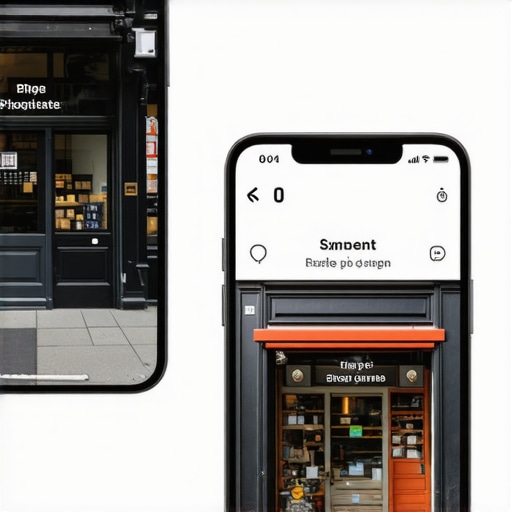
Stick to Squares or Prepare to Get Cropped
Google is obsessed with the square (1:1) aspect ratio. If you upload a wide landscape shot of your storefront, Google will often crop the sides to make it fit the search result thumbnail. This is how you end up with a profile photo that features a random gutter or a parked car instead of your signage. This is a core part of map pack domination secrets boost your local visibility today. I learned this the hard way when I uploaded a panoramic shot of a client’s interior. Google cropped it so aggressively that the only thing visible was the ‘Fire Exit’ sign. Now, I tell everyone to frame their shots with plenty of ‘padding’ around the main subject so the AI can’t ruin the composition.
Why More Pixels Often Means Less Detail
It sounds counterintuitive, but overloading your profile with massive files actually signals to Google that your page might be slow to load. Since the hidden link between website speed and map pack success is well-documented, keep your photo file sizes between 10KB and 5MB. If you go over that, you’re basically asking for a ranking penalty. You’re aiming for JPEG or PNG formats—anything else is just asking for a technical headache. By staying within these bounds, you’re mastering local maps domination proven strategies for 2025 success without needing a degree in computer science.
Put the Metadata to Work for Your Rank
Most business owners just name their photos ‘IMG_5678.jpg’ and hit upload. That’s a wasted opportunity. Before you upload, rename the file to include your keywords or location. This isn’t just about aesthetics; it’s about context. While how customer photos change your ranking in just 48 hours is a phenomenon you can’t always control, you *can* control your own uploads. Make sure the filename reflects the one thing google looks for in your storefront photos: clarity and relevance. When I started naming my files ‘best-plumber-downtown-chicago.jpg’ instead of random numbers, I saw a noticeable crawl in my local reach. It’s a tiny tweak that tells Google exactly what the image is about before the AI even has to scan the pixels.
Forget the Review Count Race
Everyone tells you that reviews are a numbers game. The common wisdom suggests that if you hit 100 or 500 reviews, you’ve basically won. But in my years of testing mastering local maps domination proven strategies for 2025 success, I’ve seen businesses with 50 reviews absolutely crush competitors who have ten times that amount. Why? Because the algorithm prioritizes review velocity and sentiment diversity over raw volume. If you get a sudden burst of 50 reviews in one weekend and then go silent for three months, Google’s spam filters start twitching. It looks manufactured. In fact, why having 500 reviews might actually be hurting your visibility is a real phenomenon where stagnant profiles lose their ‘freshness’ score. A study by the local SEO experts at Sterling Sky has shown that while keywords in reviews help, the consistency of new, high-quality feedback is a much more potent signal for long-term google my business rank elevation. Have you ever fallen into the trap of thinking a one-time ‘review blast’ would fix your rankings forever? Let me know in the comments below.
Why does your map rank change when you walk across the street?
One of the most frustrating nuances of map pack domination is the hyper-local nature of proximity. I’ve had clients call me in a panic because they rank #1 when they are sitting in their office, but drop to #10 when they go to the coffee shop two blocks away. This happens because Google uses a ‘centroid’ logic that is incredibly sensitive. Understanding why your map rank is different for every person who searches is the first step toward sanity. It’s not just about where you are; it’s about the searcher’s physical location and the strength of your ‘local relevance’ signals in that specific micro-neighborhood. 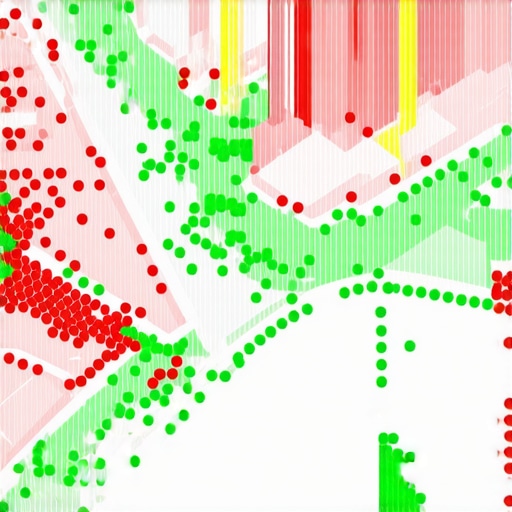
Avoid the Service Area Business Trap
Many entrepreneurs working from home try to game the system by setting a massive service radius. They think that by selecting a 50-mile area, they will appear in searches across three different counties. This is a fatal ‘oops’ factor. In reality, why your map ranking disappears when you cross city lines is often due to Google’s distrust of businesses without a physical, verified storefront in those distant areas. If you haven’t properly handled the proximity lie why distance isnt the only thing google tracks, you’re basically making your business invisible to the very people you want to reach. Instead of casting a wide, thin net, you should be focused on innovative local mapping strategies for top google rankings that emphasize local authority. Another common mistake is neglecting your technical foundation. You can have the best photos and the most reviews, but the hidden link between website speed and map pack success means a slow-loading site will eventually drag your map ranking into the dirt. If you’re struggling with inconsistent data, you might need to learn how to fix messy citations without spending a fortune to ensure Google sees a unified, trustworthy brand across the entire web.
Keep Your Winning Streak Without Spending Every Weekend at Your Desk
Once you’ve broken into that top three, the real fight begins. It’s a lot like fitness; getting the six-pack is hard, but keeping it requires a routine that doesn’t burn you out. I personally rely on grid-tracking tools like Local Falcon or BrightLocal to see my google my business rank across the entire city, not just from my front door. If you aren’t looking at a geo-grid, you’re essentially flying a plane without a radar. You might think you’re winning, but two blocks over, a competitor is eating your lunch. This data-driven approach is a pillar of mastering local maps domination proven strategies for 2025 success because it tells you exactly where your ‘relevance’ shield is weakening.
How do I keep my map rank steady over the long haul?
Maintenance isn’t about massive overhauls; it’s about micro-adjustments. I spend fifteen minutes every Monday morning checking my ‘Review Velocity.’ As I’ve mentioned before, the review frequency secret for long term map dominance isn’t about getting 100 reviews today; it’s about getting two or three every single week like clockwork. I also make it a point to audit my categories. For instance, why your business categories should change with the seasons is a tactic I use for my HVAC clients—switching from ‘Heating Contractor’ to ‘Air Conditioning Repair’ the moment the first heatwave hits. 
The Automation Trap That Kills Your Credibility
I see too many owners trying to automate their way to the top using cheap, AI-generated responses for every review. Don’t do it. Google’s spam detection is getting scarily good at identifying ‘synthetic’ engagement. According to the latest Google Search Quality Evaluator Guidelines, the ‘Experience, Expertise, Authoritativeness, and Trustworthiness’ (E-E-A-T) of a profile is heavily weighed by the authenticity of the interaction. If your responses look like they were written by a robot from 1995, you’re failing the ‘Trust’ test. This is why why automated citations might be doing more harm than good is a lesson most people learn too late. I predict that by 2026, Google’s Gemini AI will be able to cross-reference your review photos with your listed services to verify you actually did the work. If you want to how to outsmart competition in local map listings in 2025, you need to start treating your profile like a living, breathing social media page, not a static yellow-pages ad. My best advice? Take one ‘behind the scenes’ photo every day and upload it. It takes ten seconds but builds a wall of authority your competitors can’t climb. If you’re still feeling stuck, you can always contact us to see how we can help sharpen your strategy.
What Nobody Tells You About Fighting for the Local Snack Pack
After years of trial and error, I’ve realized that local mapping strategy isn’t just about checking boxes; it’s about relentless consistency. One major lightbulb moment was discovering that your website’s backend health directly dictates your map success. I used to ignore the technical details until I saw the hidden link between website speed and map pack success in action. Another harsh truth is that a single unoptimized update can be the real reason your profile ranking stalled last month. I’ve also learned that while proximity is a factor you cannot change, the level of detail in your business description is a lever you can pull every single day to outshine the competition.
My Go-To Toolbox for Sustaining Your Rank
If you want to stay on top, you need the right gear to monitor your progress. I personally rely on these resources to keep my visibility high:
- Local Falcon: This is my preferred way to see true visibility across the city using a geo-grid. It stops the guesswork and starts the winning.
- Google Search Console: You must understand the relationship between google search console and map performance to see which keywords are actually driving your phone calls.
- The 2025 Roadmap: I keep a copy of mastering local maps domination proven strategies for 2025 success bookmarked because the algorithm moves faster than most local guides can keep up with.
Your Path to Local Maps Domination
The “fuzz” in your photos and the fluctuations in your rank are just hurdles, not stop signs. Every small adjustment you make—from resizing a photo to a 1:1 ratio to responding to a review with genuine gratitude—adds another layer of trust to your profile. You now have the blueprint for local maps domination. Don’t let your profile sit stagnant while your competitors are active and engaging. If the technical side feels overwhelming or you just aren’t seeing the movement you expect, don’t hesitate to contact us for a deep dive into your specific situation. Which of these ranking tweaks or photo fixes are you going to implement first this afternoon? Let me know in the comments below!
About the Author
Umar Latif
Brand & Marketing Expert · Dubai, UAE
Umar Latif is a seasoned Brand and Marketing Expert based in Dubai, UAE, with a specialized focus on Local SEO and international digital strategy. With extensive experience managing and optimizing websites for a diverse range of international clients, including those in the United States, Umar has developed a deep understanding of the nuances required to dominate local search results. His technical proficiency encompasses comprehensive keyword research and the implementation of advanced Google-centric strategies designed to enhance visibility and drive organic traffic. As a contributor to dominateyourlocalmaps.com, Umar leverages his background in global marketing to provide actionable insights for businesses looking to improve their local map rankings and digital footprint. His approach combines data-driven tactics with a strategic brand perspective, ensuring that local businesses not only rank higher but also resonate with their target audience. Throughout his career, Umar has remained dedicated to staying ahead of search engine algorithm changes to deliver consistent results for his clients. He is deeply passionate about empowering business owners and marketing professionals with the tools and knowledge they need to achieve sustainable growth.