
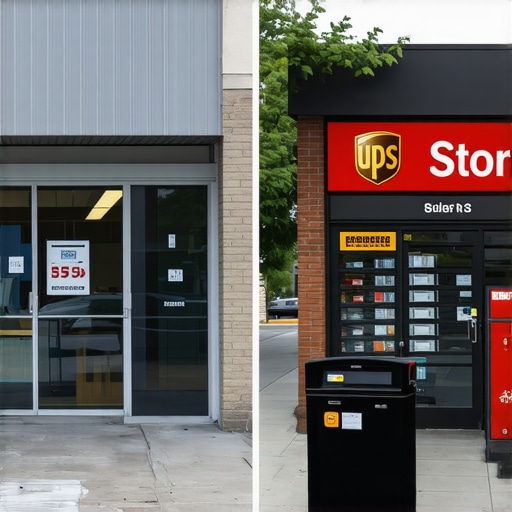
I spent three years building my reputation, only to wake up on a Tuesday and find myself pushed to page two by a “company” that was actually just a UPS Store mailbox. It stung. My phone stopped ringing. My local visibility evaporated overnight because someone decided to cheat the system with a keyword-stuffed title and a fake office. I was furious, but more than that, I was confused. How could Google let this happen? I tried the polite route. I clicked “Suggest an edit” and waited. Nothing changed. That was my first big mistake: thinking the system is self-cleaning. It isn’t. You have to be the janitor. Today, I’m going to give you the exact playbook I used to clear the trash and outsmart the competition who think they can hide behind fake addresses. [IMAGE_PLACEHOLDER]
Stop Letting Ghost Businesses Steal Your Local Leads
It’s a hard pill to swallow when you realize that competitors with fewer reviews are beating you simply because they’re spamming the map. It’s not just annoying; it’s a direct hit to your bank account. Every fake listing above you is a lead stolen from your family and your employees. But here is the good news: Google actually hates these guys as much as you do; they just need a nudge (or a shove) to see them.
Is fighting fake listings actually worth your time?
Absolutely. When you remove a lead-gen site masquerading as a local pro, you don’t just move up one spot—you often trigger a massive shift in how Google views your entire neighborhood. According to research from industry experts at Sterling Sky, roughly 40% of listings in high-competition niches are fraudulent, and clearing them is the fastest way to force your competitors off the page. Have you ever felt like you were shadow-boxing with a business that doesn’t even have a front door?
Spotting the Red Flags Before They Bury You
Early in my career, I ignored the “too good to be true” names. I figured the algorithm would catch the spammers eventually. It didn’t. I learned that manual intervention is the only way to protect your territory. We aren’t just talking about a slightly optimized name; we’re looking for the structural lies that keep your Google My Business rank suppressed. It starts with a suspicious address, but it ends with you taking back your rightful place at the top.
Think of the Google Map Pack like a digital storefront on the busiest street in town. When a fake business sets up a ‘mailbox office,’ they aren’t just taking up space; they are essentially putting a cardboard cutout in front of your actual door. To reclaim your territory, you need to move beyond being a passive observer and start acting like a digital investigator. The first step in a real local mapping strategy isn’t adding more keywords; it’s auditing the validity of the businesses currently outranking you.
Expose the Trojan Horse Businesses in Your City
Spammers love ‘virtual offices’ because they are cheap and effective—until someone notices. I remember working with a locksmith in Phoenix who couldn’t break into the top three no matter how many reviews he got. We did a deep dive and found that the #1 spot was held by a ‘business’ located at a 24-hour self-storage facility. The listing was literally a ghost. We didn’t just ‘suggest an edit’; we took a screenshot of the storage unit’s gate and submitted it through the official Redressal Form. Three days later, the ghost vanished, and my client jumped straight to the top. This is the core of mastering local maps domination: you have to prove to Google that the competition doesn’t physically exist where they say they do.
Stop Using the Suggest an Edit Button for Big Problems
If you only click ‘Suggest an edit’ and select ‘Does not exist,’ you’re likely shouting into a void. Google’s automated systems are overwhelmed. Instead, you need to use the Business Redressal Complaint Form. This is the ‘heavy artillery’ of local SEO. It allows you to upload evidence—like photos of a residential house where a commercial office is claimed to be, or links to a website that shows a completely different address. This is how you how to spot and fix NAP inconsistencies at a level the algorithm can’t ignore. When you provide a human reviewer with undeniable proof, the spam listing is usually scrubbed within 72 hours.
The Five Minute Fix for Stalled Rankings
Sometimes the problem isn’t a fake competitor, but a signal jam in your own profile. I’ve seen dozens of business owners get frustrated because they have more reviews and better photos, yet they remain stuck at #4. Often, the 5-minute fix that restarts it involves checking for overlapping categories that are confusing the bot. If you are a ‘Plumber’ but also listed as a ‘Home Improvement Contractor,’ you might be diluting your authority. Focus your primary category on exactly what the customer is searching for, and move the rest to secondary slots. It’s about being the most relevant answer, not the broadest one.
Why Your Professional Address Might Be Flagged
Google has become incredibly aggressive at identifying co-working spaces and virtual suites. If you are sharing an office with 50 other businesses, Google might think you’re just another spammer. This is why your professional office address is being flagged even if you are 100% legitimate. To fix this, ensure your suite number is clearly listed in your profile and that your address citations across the web match that specific suite exactly. Consistency is the only thing that separates a real business from a spam bot in the eyes of the algorithm.
The most dangerous myth in local search is that more reviews always equals higher rankings. I’ve spent years watching business owners burn out chasing 5-star ratings while their Google My Business rank stays stubbornly flat. The reality is that Google’s algorithm has evolved into a behavior-tracking machine. They aren’t just looking at what people say; they are looking at what people do. A study by Whitespark recently highlighted that while reviews are a top-tier factor, behavioral signals like click-through rates and direction requests are becoming the ultimate tie-breakers for map pack domination. If your profile is a look-but-dont-touch museum, you’re going to lose to the active shop down the street every single time.
The Proximity Trap That Shrinks Your Territory
There’s a common belief that your physical address is the only thing that determines your reach. It’s frustrating when you realize the proximity truth: your ranking radius isn’t a fixed circle; it’s a breathing entity. I once consulted for a law firm that was invisible just two blocks away. They thought they needed more backlinks, but the real issue was a lack of local engagement data from that specific neighborhood. To truly dominate maps, you have to convince the algorithm that people from all over the city—not just your lobby—are interested in you. 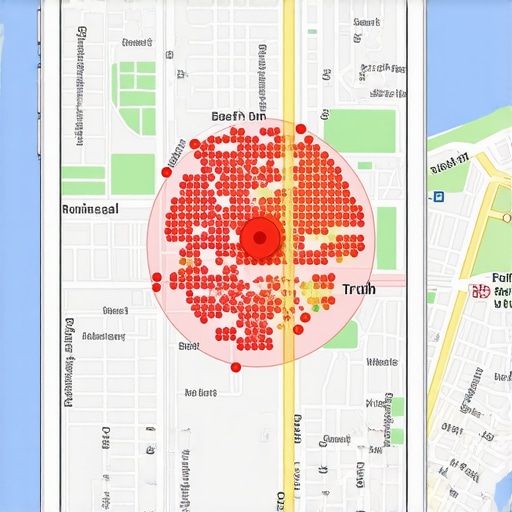
Why is your profile stuck at #4 despite having the best reputation?
This is the glass ceiling of local SEO. Often, the culprit is what I call category cannibalization. If you’ve selected too many services, your business categories might be fighting each other for dominance. Google gets confused about your primary expertise and ends up ranking a specialist over your generalist profile. It’s a classic mistake: trying to be everything to everyone and ending up being nothing to the algorithm.
Avoid the Reinstatement Nightmare
Here is a massive oops factor I see weekly: making small changes to your name or address during a peak season. One minor tweak to match a keyword can trigger an immediate manual review. This is the real reason your profile was suspended after an edit. Google’s trust is hard-earned and easily lost. Before you change a single character, you need a local mapping strategy that prioritizes stability over hacky optimizations. Have you ever fallen into this trap and watched your leads vanish overnight? Let me know in the comments. If you’re feeling stuck, don’t hesitate to contact us to see where the signals are crossing.
The Tech Stack That Keeps Me at the Top
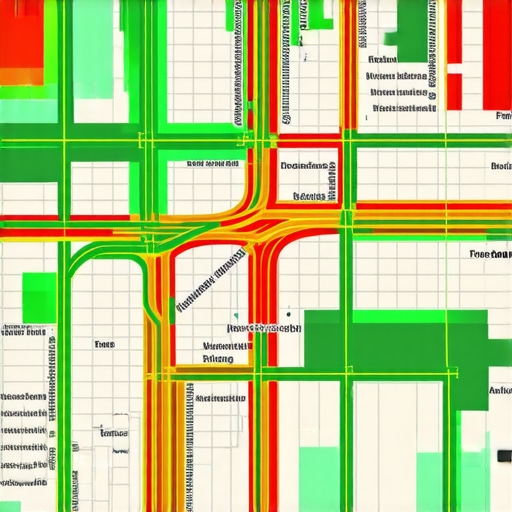
I don’t trust the basic insights Google provides in the dashboard. If you’ve spent any time looking at them, you already know that your profile insights are often lying to you about where your calls actually come from. To truly win, I use grid-tracking tools like Local Falcon. These aren’t just fancy charts; they show me exactly where my ranking bubble bursts. If I am number one at my front door but number ten three blocks away, I know I have a proximity issue, not a reputation issue. This level of detail is vital because 7 maps keyword tracking flaws can easily trick you into thinking you’re winning when you’re actually losing ground in the next zip code over.
How do I maintain map dominance month after month?
Maintenance is where most people fail. They set it and forget it and then wonder why a new competitor leaps over them. I treat my profile like a living digital storefront. This means uploading at least one geotagged photo a week—not just of the building, but of the work being done. I’ve found that the power of regular profile updates acts as a heartbeat signal to Google’s algorithm, proving the business is still active and relevant. Don’t just do it yourself; you should leverage user generated content by asking customers to upload their own photos. Google trusts their metadata more than yours. According to technical analysis by Joy Hawkins at Sterling Sky, even small details like your ‘Open Now’ status or specific attributes can cause your rank to fluctuate based on searcher intent at specific hours of the day.
The 2026 Shift You Need to Prep For Now
Looking ahead, the game is moving away from keywords and toward real-world behavior. We are already seeing how real foot traffic data overpowers on-page SEO. Google is using anonymized mobile location history to see if people who search for you actually show up at your physical location. If you want to outperform massive competitors in 2026, you need to focus on offline signals as much as online ones. The algorithm is becoming a mirror of reality. To stay ahead, start by implementing a strategy to increase your map radius by encouraging check-ins and interaction from customers outside your immediate neighborhood. Try this today: Pick one high-value service you offer and find a past customer who lives five miles away. Ask them specifically to mention their neighborhood in a new review. You’ll be shocked at how fast your visibility expands toward their specific location.
Stop Chasing the Algorithm and Start Owning Your Data
After years of managing profiles, I’ve realized that Google doesn’t necessarily reward the ‘best’ business in the real world; it rewards the business that provides the most reliable and active data stream. I used to think a perfect profile was enough, but I learned that behavioral signals are the real secret sauce. If people click your call button but immediately hang up, or if they get directions but never arrive, Google notices. This is often why most local SEO audits fail to catch profile errors that are actually behavioral in nature. My lightbulb moment was realizing that my profile wasn’t just a business card—it was a real-time conversation with the local community. Another hard lesson? The Redressal Form is your best friend. Don’t be afraid to use it to clear out the junk. If you aren’t the janitor of your own local map area, no one else will be.
#IMAGE_PLACEHOLDER_E#
Gear That Keeps You Ahead of the Pack
To keep my edge, I rely on a very specific set of tools that go beyond the basic Google dashboard. First, I use grid-tracking software like Local Falcon to see exactly where my ranking ‘bubble’ ends; without it, you’re flying blind. For managing consistency across the web, I recommend BrightLocal, but be careful not to over-invest in junk. You should stop wasting cash on low-quality citations that never show up in maps and focus only on the high-authority ones that Google actually crawls. Finally, for those who find the technical side overwhelming, I always suggest looking into why hiring a Google Business Profile consultant can often be more cost-effective than making a single mistake that triggers a suspension.
Your Roadmap to Local Maps Domination Starts Now
The map is yours for the taking, but it requires more than a one-time setup. It requires a commitment to being the most active, most honest, and most engaged business in your zip code. Local search is no longer a ‘set it and forget it’ game—it is a race that never truly ends. By focusing on real human interactions and weeding out the fraudulent ‘ghost’ businesses that steal your leads, you can achieve true local maps domination and keep your phone ringing for years to come. Don’t wait for the competition to move first; take control of your territory today. If you need a hand navigating the nuances of a complex suspension or a ranking stall, feel free to contact us. Which part of the map pack strategy do you find the most frustrating to manage? Let me know in the comments below!
About the Author
Umar Latif
Brand & Marketing Expert · Dubai, UAE
Umar Latif is a seasoned Brand and Marketing Expert based in Dubai, UAE, with a specialized focus on Local SEO and international digital strategy. With extensive experience managing and optimizing websites for a diverse range of international clients, including those in the United States, Umar has developed a deep understanding of the nuances required to dominate local search results. His technical proficiency encompasses comprehensive keyword research and the implementation of advanced Google-centric strategies designed to enhance visibility and drive organic traffic. As a contributor to dominateyourlocalmaps.com, Umar leverages his background in global marketing to provide actionable insights for businesses looking to improve their local map rankings and digital footprint. His approach combines data-driven tactics with a strategic brand perspective, ensuring that local businesses not only rank higher but also resonate with their target audience. Throughout his career, Umar has remained dedicated to staying ahead of search engine algorithm changes to deliver consistent results for his clients. He is deeply passionate about empowering business owners and marketing professionals with the tools and knowledge they need to achieve sustainable growth.