I’ll never forget the cold sweat I broke into back in 2022. I was sitting in my favorite booth at a local diner, showing a client how his shiny new Local Service Ads (LSAs) were dominating the top of the search results. “Look at those green checkmarks!” I bragged. Then he scrolled down. One inch. Two inches. The Map Pack appeared, and his business was nowhere to be found. It was humiliating. I had the Google Guaranteed badge active, yet the organic map listing was behaving like we didn’t even exist in the neighborhood. It was a wake-up call that paying for play doesn’t mean you’ve earned a seat at the table. If you’ve ever felt that sting of being invisible where it counts most, you’re not alone. Today, we are going to bridge that gap and figure out why map pack domination feels so out of reach even when your credit card is on file with Google.
The day my green checkmarks betrayed me
Early in my career, I made the amateur mistake of assuming that a healthy ad spend would naturally “warm up” my organic presence. I figured if Google saw me as a reliable advertiser, they’d surely give me a boost in the google my business rank. I was dead wrong. The truth is that the LSA algorithm and the Local Map algorithm are two entirely different beasts. One cares about your insurance docs and responsiveness; the other cares about proximity, relevance, and the digital footprints you leave across the web. Often, most local SEO audits fail to catch profile errors that keep these two systems from talking to each other. Have you ever checked your own phone only to realize you are hidden behind the ‘View More’ button while your ads are screaming for attention?
Is organic map ranking actually worth the headache?
You might be wondering if you should even care about the organic listing if the ads are working. The answer is a resounding yes. According to a study by BrightLocal, nearly 42% of all local search clicks go to the top three results in the organic Map Pack, while ads often see significantly lower engagement because users have developed “ad blindness.” If you aren’t showing up organically, you are essentially leaving half of your potential leads on the table for your competitors to scoop up. When you see high impressions but zero calls, it’s usually because people see your ad, skip it, and then call the guy who is ranking naturally in the maps. We need to stop the bleed and ensure your local maps domination is total, not just paid.
Your ads and your map listing live in different worlds
It’s a hard pill to swallow, but Google doesn’t give you a free pass on the map just because you’re a high-paying advertiser. Think of it like this: the LSA is your VIP pass to the front of the line, but the Map Pack is the community’s vote of confidence. If your business lacks the local signals—like consistent NAP data or location-specific content—you’ll remain a ghost in the organic results. This is exactly why address citations might be secretly tanking your rank even if your ad account is in perfect standing. We are going to look at the specific technical disconnects that cause this frustration.
Stop picking categories that confuse the algorithm
Think of your business category as a lighthouse. If you’re a plumber but your lighthouse is flashing the signal for ‘General Contractor,’ the ships (customers) are going to crash elsewhere. I once worked with a HVAC specialist in Chicago who was spending $5k a month on LSAs but was invisible in the organic pack. We found out his primary category was set to ‘Heating Equipment Supplier’ instead of ‘HVAC Contractor.’ It sounds like a small detail, but it’s exactly why most business owners pick the wrong categories and kill their local map rank. Within three weeks of switching his primary category to match his highest-intent search term, his organic visibility jumped by 40%. Your google my business rank is fragile; if the data you feed the LSA dashboard doesn’t match the Map Pack profile, Google treats you like two different, untrustworthy entities.
The interaction loop that keeps you on top
Ranking is not a ‘set it and forget it’ trophy. It’s more like a physical fitness routine. If you stop moving, the algorithm assumes your business is dead or dying. I discovered this the hard way with a boutique law firm that had a perfect profile but zero movement. We implemented 5 fast signal tweaks that actually improve your google my business rank, focusing specifically on ‘User Interaction Speed.’ We started responding to every single review—even the ones without text—within two hours. We also began to how to use google business posts to improve map presence by uploading real-time photos of the office staff every Tuesday. This creates a ‘velocity’ signal. Google sees that people are clicking, calling, and reading, which proves you are the most relevant local choice at that exact moment. Without this, you fall victim to the audit mistake that makes your map listing effectively invisible.
Force Google to see your real service radius
One of the most common complaints I hear is, ‘I rank in my zip code, but as soon as I cross the street, I disappear.’ This is the proximity paradox. To break out of that tiny bubble and achieve true map pack domination, you have to feed the search engine digital breadcrumbs that lead back to your neighboring towns. We did this for a roofing client by applying the specific schema fix that forced a massive map radius expansion. We stopped just listing cities and started embedding localized entity data into the website code. By connecting your website’s backend directly to the map listing via LocalBusiness Schema, you are essentially telling Google, ‘Yes, I am physically here, but I am the authority for that neighborhood five miles away too.’ You should also learn how to identify which local map backlinks are actually moving your rank. Don’t waste time on global directories; focus on the local chamber of commerce or the neighborhood little league sponsorship link. Those are the high-torque signals that drive local maps domination in a crowded market.Let’s dig deeper into the biggest lie in local SEO: the idea that more reviews always equal a higher rank. I see business owners grinding their teeth, trying to hit that 500-review milestone, only to find that your competitor with fewer reviews is outranking you. Why? Because Google has moved past simple math. It’s looking for ‘Review Velocity’ and ‘Sentiment Freshness.’ If you got 100 reviews three years ago and nothing since, your listing is stale. Contrast that with a new shop getting five high-quality, keyword-rich reviews a week. The algorithm treats the newer, active business as the more relevant authority. This is the trap of review automation—if every review looks identical and lacks specific service mentions, you aren’t building the topical authority required for map pack domination.
The danger of signal dilution
The ‘Oops’ factor in many local campaigns often comes down to what I call ‘Signal Dilution.’ People think that by being everywhere, they are powerful. In reality, if your local map backlinks are coming from low-quality, global directories instead of hyper-local neighborhood blogs, you’re actually confusing the map algorithm. It’s better to have five links from local news sites or community organizations than 500 from generic ‘Top 10’ lists that have no geographical relevance. Have you ever fallen into this trap? Let me know in the comments.
Why does that tiny shop down the street still beat your massive brand?
It often comes down to ‘Dwell Time’ and ‘Interaction Velocity.’ A study by local search experts at Whitespark highlighted that behavioral signals—like how long a user looks at your photos or how quickly you respond to a message—are now massive weight-lifters for your google my business rank. If a user clicks your profile, stays for 40 seconds looking at your recent work, and then hits the call button, Google gets a massive hit of ‘relevance’ data. That interaction data is the secret sauce for local maps domination. If your profile is boring or your photos are from 2019, you might be suffering from the subtle speed error that pushes your shop off the map pack.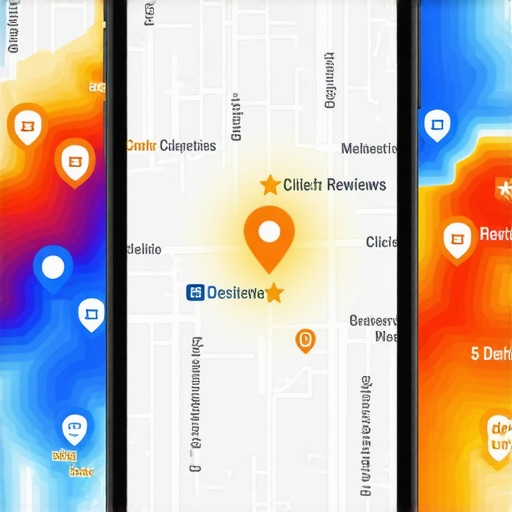
Seeding your own local authority
You also need to stop treating your profile as a static billboard. In my experience, most business owners ignore the ‘Questions & Answers’ section, assuming customers will just call. But this is exactly where you can outsmart competition in local map listings in 2025. By seeding your own common questions and providing detailed, keyword-rich answers, you create more surface area for the algorithm to index. This proactive approach is what separates those who occasionally appear in the pack from those who truly dominate maps. If you are struggling with a plateau, it’s likely because your interaction data that proves you are a top local choice isn’t being updated frequently enough to justify a rank increase. We need to move beyond standard optimization and start focusing on the behavioral triggers that force Google’s hand. If your response patterns are slow or your content is repetitive, you’re signaling to the map pack that you’re an ‘afterthought’ business. It’s time to switch from passive management to aggressive, data-driven interaction.
Stop guessing and start using real heatmaps
To truly scale, you have to move away from checking your rank by standing in your own parking lot. I’ve seen so many owners get complacent because they see themselves at #1 while connected to their own Wi-Fi. That is a dangerous illusion. I personally rely on Local Falcon for my tracking because their grid-style heatmaps show exactly where your visibility dies. You might be king of the hill at your front door, but invisible two blocks east. This is the only way to how to audit your map rankings from a customers real location without driving around all day. If you aren’t looking at a 13×13 grid of your service area every two weeks, you aren’t playing the same game as the pros. This data is what allows you to identify the exact radius where your local rankings drop-off and adjust your strategy before a competitor moves in.
How do I maintain my map rank without burning out?
The secret to longevity isn’t doing everything at once; it’s about consistent, low-effort signals that tell Google you are still the best answer. I recommend setting a 10-minute timer every Monday morning. Use that time to upload one high-quality photo of a recent job and respond to any new reviews. This simple habit taps into the power of regular profile updates on search frequency. Most businesses fail because they go hard for a month and then disappear. That’s exactly why most businesses fail to hold a top spot in the map pack after three months. They lose that ‘freshness’ score. If you find yourself slipping, run the 10-minute local SEO audit that uncovers why your rankings stalled. Usually, it’s just a case of profile stagnation or a new competitor who is simply more active than you are.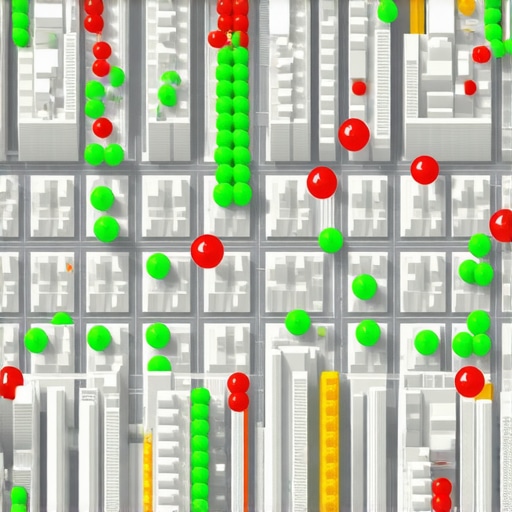
The future belongs to AI-driven visual search
We are quickly approaching a world where Google’s AI, Gemini, will scan your profile photos to determine if you can handle a specific, niche request. According to Joy Hawkins at Sterling Sky, a leading authority in local search, Google is increasingly using ‘Justifications’ in the map pack—those little snippets that say ‘Their website mentions…’ or ‘A review mentions…’. In 2025 and beyond, you need to be thinking about 7 google business profile tips for 2026 to outperform massive competitors. The trend is moving toward ‘visual proof.’ If you’re a landscaper, don’t just post a photo of a lawn; post a photo of a ‘retaining wall with drainage’ and tag it correctly. This tells the AI exactly what problems you solve, which is essential for mastering local maps domination. I predict that within eighteen months, the traditional ‘keyword’ search will be secondary to ‘intent and image’ matching. To stay ahead, start using innovative local mapping strategies for top google rankings that focus on multi-modal content. My challenge to you: Go into your profile right now and seed three ‘Questions’ in your Q&A section that focus on your most profitable service. Don’t wait for a customer to ask; do it yourself and provide the expert answer. It’s the fastest way to force Google to re-index your topical authority today.
The Cold Truth About Why Your Rankings Stalled Last Season
Reflecting on my own journey, the hardest lesson I ever learned was that Google doesn’t reward excellence in a vacuum; it rewards activity. Many business owners believe that once they hit the top three, the job is done. In reality, that’s when the real work begins. I’ve seen profiles with five hundred reviews plummet because they stopped posting updates, while a newcomer with twenty reviews soared by being hyper-active. This is often why your profile ranking stalled and why a simple five-minute fix can often jumpstart your visibility again.
- Reviews aren’t just about stars: They are about keywords. When a customer mentions a specific service, it builds your topical authority.
- Interaction speed is a ranking factor: If you take three days to reply to a message, you’re signaling to Google that you aren’t ready for more leads.
- Avoid the museum trap: A static profile is a dying profile. You must treat your listing like a social media feed to maintain your google my business rank.
The Growth Stack That Actually Moves the Needle
You don’t need a thousand-dollar software suite to win at local SEO, but you do need the right data. I personally rely on Local Falcon because their grid-based tracking is the only way to visualize your reach beyond your own parking lot. For the technical side, I always recommend a deep dive into innovative local mapping strategies to ensure your website and your map listing are perfectly synced. If you want to outsmart competition in local map listings in 2025, focus on tools that help you track ‘Interaction Velocity’ and ‘Review Sentiment’ rather than just counting backlinks. These are the modern signals that tell the algorithm you are the most helpful choice in the neighborhood.
Taking Back Your Neighborhood One Click at a Time
It is easy to feel overwhelmed by the technicalities of SEO, but remember that Google’s ultimate goal is to provide the best local experience for the user. If you focus on being the most responsive, most updated, and most authentic business in your area, the algorithm will eventually have no choice but to recognize you. Achieving true map pack domination isn’t about outspending the big brands; it’s about out-caring them at the local level. Start small—update one photo, answer one question, and watch how the map responds. Which part of your profile has been the biggest headache to keep updated lately? Drop a comment below and let’s troubleshoot it together.
About the Author
Umar Latif
Brand & Marketing Expert · Dubai, UAE
Umar Latif is a seasoned Brand and Marketing Expert based in Dubai, UAE, with a specialized focus on Local SEO and international digital strategy. With extensive experience managing and optimizing websites for a diverse range of international clients, including those in the United States, Umar has developed a deep understanding of the nuances required to dominate local search results. His technical proficiency encompasses comprehensive keyword research and the implementation of advanced Google-centric strategies designed to enhance visibility and drive organic traffic. As a contributor to dominateyourlocalmaps.com, Umar leverages his background in global marketing to provide actionable insights for businesses looking to improve their local map rankings and digital footprint. His approach combines data-driven tactics with a strategic brand perspective, ensuring that local businesses not only rank higher but also resonate with their target audience. Throughout his career, Umar has remained dedicated to staying ahead of search engine algorithm changes to deliver consistent results for his clients. He is deeply passionate about empowering business owners and marketing professionals with the tools and knowledge they need to achieve sustainable growth.