
I remember sitting in ‘The Rusty Bean,’ a tiny hole-in-the-wall with mismatched chairs and a slightly eccentric barista, watching a line of cars wrap around the Starbucks across the street. It was pouring rain, and I pulled out my phone to find a place for a quick meeting. I typed in ‘best espresso nearby’ and saw something that completely changed my perspective on digital marketing. This little shop—the one without a multi-million dollar marketing budget or a global loyalty app—was sitting comfortably at the #1 spot, while the green siren was buried down at #4. It felt like a glitch in the Matrix, but it was actually a masterclass in local relevance.
The Day I Realized Big Budgets Do Not Own the Map Pack
I used to be convinced that map pack domination was a game only the corporate giants could play. In my early days as a consultant, I made a massive mistake: I told a local bakery they just needed to out-spend the regional chain on ads and out-review them by sheer volume. I was dead wrong. I watched that client struggle for months because I didn’t understand why the shop next door outranks you with fewer reviews. It turns out, Google isn’t looking for the biggest bank account; it is looking for the most authentic local answer to a user’s question. We are going to solve that mystery for your business today, moving past the generic advice and into the specific hidden moves that secure map pack domination for the little guys.
Does local SEO really work against massive corporations?
You might be skeptical. I get it. How can a mom-and-pop shop stand a chance against a brand that has a dedicated SEO team in every timezone? The secret lies in the fact that Google’s algorithm for local search is fundamentally different from traditional web search. It prioritizes hyper-local signals that big chains often automate or ignore. According to research by BrightLocal, things like the ‘human’ interaction with a profile and specific local engagement often carry more weight than raw brand authority. Have you ever looked at your local map and felt a surge of frustration because a smaller, seemingly ‘worse’ business is sitting above you? If you’ve faced that specific roadblock, you aren’t alone—and it is actually a sign that the door is open for you to do the same to your biggest competitors. Let’s look at how we can flip that script using a smarter local mapping strategy that targets the gaps in their corporate armor.
How to Turn Your Business into a Local Lighthouse
To stop being a ghost on the map, you have to think of your Google Business Profile (GBP) as a digital lighthouse. If the bulb is flickering or the lens is dirty, the ships—your customers—will simply sail past to the next brightest light. Achieving map pack domination isn’t about one giant leap; it’s about fine-tuning the signals that tell Google you are the most relevant, reliable, and physical presence in the neighborhood. We are moving away from the ‘set it and forget it’ mindset and into active local mapping strategy execution.
Pick the One Category That Actually Brings Leads
Early in my career, I worked with a high-end landscaper who couldn’t understand why his phone wasn’t ringing despite a beautiful website. When I looked at his profile, he had ‘General Contractor’ as his primary category. He was competing with home builders and kitchen remodelers instead of people looking for gardens. We swapped his primary to ‘Landscape Designer,’ and within forty-eight hours, he popped into the top three for his most profitable keywords. This is a classic case of why most business owners pick the wrong categories and kill their local map rank. Your primary category is the strongest signal you have; don’t dilute it by trying to be everything to everyone.
Force Google to See Your Real Foot Traffic
Google’s algorithm is obsessed with the physical world. It tracks anonymous location data from mobile devices to see if people actually visit your storefront. If you have a physical location but nobody ever stays there for more than two minutes, Google assumes you aren’t a high-value destination. I once advised a small boutique to offer free ‘styling sessions’ that lasted 20 minutes. As people spent more time in the shop with their phones in their pockets, their google my business rank began to climb. They weren’t just getting more customers; they were proving to the algorithm that they were a local hub. Understanding how real foot traffic signals push your business to the top of maps is the secret sauce that national chains, with their sterile environments, often miss. 
The Photo Update That Rescues Ghost-Town Profiles
Stop using stock photos of smiling people in headsets. Google can ‘read’ images using AI, and it knows when you are using a generic file from a database. I remember a roofing client who was stuck at rank #8. We had him take ten raw, unedited photos of his crew on actual job sites in his target zip code every week. We didn’t even use a professional camera—just a standard smartphone. Those authentic, geo-tagged images acted as a flare to Google’s bots. It’s a proven fact that the specific photo update that doubled local clicks for roofing contractors works because it provides ‘proof of work’ in a specific location.
Stop Ignoring the Way You Talk Back to Customers
Reviews are great, but the way you respond to them is a direct ranking signal. Most people just say ‘Thanks for the review!’ and move on. To truly dominate maps, you need to use those responses to reinforce your local authority. Mention specific neighborhoods or services in your replies. If a customer mentions your coffee, reply with, ‘So glad you enjoyed the latte at our downtown location near the park!’ This creates a web of local keywords and engagement. You can find more about this in our guide on how specific review response patterns actually boost map engagement. These are the 5 fast map pack domination fixes that rely on real human signals rather than just backend coding.Most SEO ‘gurus’ will tell you that the secret to a high **google my business rank** is building hundreds of citations. I am here to tell you that is a legacy tactic that might actually be slowing you down. In my years of testing, I have seen profiles with zero directory backlinks outrank local veterans because they focused on ‘entity health’ rather than volume. You need to stop wasting cash on low-quality citations that never show up in maps because Google’s AI has gotten incredibly good at ignoring noise. If your data is not consistent, or worse, if it is sitting on a site no one visits, it is a dead signal. This is exactly why your google my business rank tanked despite perfect citations—the algorithm is looking for relevance, not just repetition. 
Why Your 5-Star Rating Might Be Triggering a Spam Filter
Then there is the ‘Proximity Paradox.’ Everyone assumes that if you are not the closest business to the user, you cannot win. But according to the Whitespark Local Search Ranking Factors study, local organic signals—like how often your brand name is searched alongside a city name—can actually pull your pin into the top 3 from miles away. This is how you truly dominate maps without having to open a second office. However, many owners try to force this by keyword-stuffing their business name. That is the quickest way to get a manual review and a hard ban. I have seen businesses disappear overnight because they added ‘Emergency Plumber’ to their title. If you have been hit, you need to understand what to do the second your google business profile gets suspended before you touch any other settings.
Can You Force Google to Show Your Shop in the Next Town Over?
The short answer is yes, but it is not about keywords; it is about ‘dwell time’ and engagement. If a user clicks your listing and immediately bounces back to the map, Google records that as a failure for that specific search intent. We often see that the hidden reason your google business profile posts get zero traction is because the content does not give the user a reason to stay on the page. You want people to linger on your photos, read your FAQs, and interact with your ‘Updates.’ This human behavior is a stronger ranking signal than any technical tweak you can perform on the backend. Have you ever fallen into this trap of over-optimizing the tech but ignoring the human? Let me know in the comments.
Stop Chasing Artificial Signals and Start Building Dwell Time
Let’s look at one more nuance: the ‘Review Velocity’ trap. Everyone wants dozens of 5-star reviews as fast as possible. But if a business that usually gets one review a month suddenly gets twenty in forty-eight hours, Google’s filter flags it as manipulation. It is much better to have a slow, steady stream of honest feedback than a suspicious spike that triggers an investigation. This is a common audit mistake that makes your map listing effectively invisible to the very people you are trying to reach. Mastering a local mapping strategy requires looking past the surface level and respecting the algorithm’s desire for natural, human-led data points.Once you break into that coveted top three, the real work begins. I’ve seen countless owners celebrate a week at the top, only to stop doing what got them there and vanish by the next month. You have to realize that map pack domination isn’t a trophy you win once; it is a territory you must actively defend. I personally use a ‘Grid-Tracking’ method to see my visibility in a 5×5 mile radius. If I see a single red dot appearing in a neighborhood where I was previously green, I know a competitor is making a move. This is why most businesses fail to hold a top spot in the map pack after three months—they treat it like a sprint instead of a recurring subscription to relevance.
The Tech Stack That Actually Keeps You in the Top Three
I am often asked what software I use to manage this. I don’t believe in ‘all-in-one’ tools that do everything poorly. Instead, I rely on specific tools like BrightLocal for their ‘Local Search Grid’ because it visualizes the proximity drop-off that standard reports miss. If your reports only show one ranking number, you are flying blind. You need to identify 7 maps keyword tracking flaws that hide your true store performance before you can fix them. According to Joy Hawkins, a leading authority at Sterling Sky, even small changes to a competitor’s business name or categories can ripple through the entire local ecosystem. This is why I perform a weekly ‘Competitor Audit’ to see if anyone is trying to game the system with fake addresses or keyword-stuffed titles. 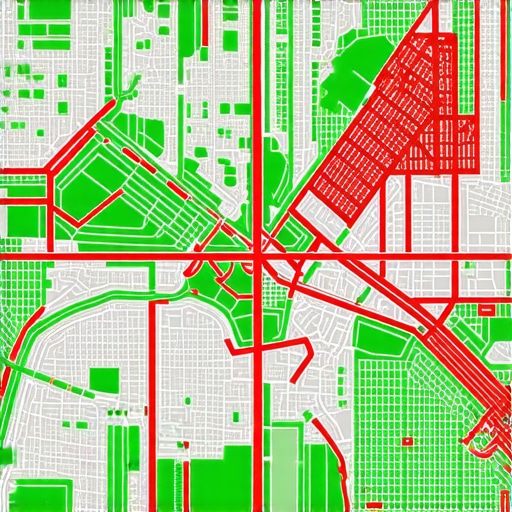
How do I maintain my map pack domination over time?
The secret is what I call ‘Signal Maintenance.’ Every month, I look for 5 fast signal tweaks that actually improve your google my business rank, such as updating your business hours for upcoming holidays or refreshing your ‘From the Business’ description with a new seasonal offer. If Google sees a profile that hasn’t been touched in 30 days, it starts to wonder if the lights are still on. Maintenance is also about identifying the ‘silent killers.’ I once found a client whose rank was tanking because their website’s footer had an old phone number that didn’t match their GBP. That tiny inconsistency was enough to shake Google’s trust. You should run a 10-minute local seo audit that uncovers why your rankings stalled at least once a quarter to catch these errors.
The Future Involves Eyes Not Just Typing
Looking ahead, I predict that local maps domination will shift heavily toward ‘Visual and Augmented Reality Search.’ We are already seeing Google Lens integrate with local listings. Soon, a customer won’t just type ‘coffee near me’; they will point their camera down a street, and your google my business rank will determine if your shop’s digital sign appears over the sidewalk. This is why I am urging all my clients to look into 4 local mapping strategy fixes for 2026 camera search right now. If your photos aren’t high-resolution and your storefront isn’t clearly identified by AI, you will be invisible in the next era of search. My best advice? Try this today: go into your profile and add one ‘Update’ post that includes a high-quality video of your front door and interior. It bridges the gap between digital data and physical reality.
The Hardest Realities I Learned While Fighting for Rank
After years of trying to outsmart the algorithm, I realized that map pack domination isn’t a math problem; it is a trust exercise. One of my biggest ‘lightbulb moments’ was discovering that Google values a slow, steady pulse over a frantic surge of activity. If you try to do everything in one weekend, you look like a bot. If you do one small thing every Tuesday, you look like a pillar of the community. I also learned the hard way that proximity is not destiny. You can actually ‘stretch’ your reach if you focus on your entity health rather than just your physical address.
Another harsh lesson? Don’t let your data get stale. I have seen businesses lose their #1 spot simply because they didn’t update their holiday hours. It seems trivial, but to an AI looking for the most reliable answer, it is a red flag. If you are seeing a dip right now, you might need to stop the rank drop with these specific fixes before the gap becomes too wide to bridge. Remember, the algorithm rewards the business that stays present, not just the one that is loudest. #IMAGE_PLACEHOLDER_E#
My Reliable Toolkit for Sustained Visibility
I don’t believe in chasing every new shiny tool, but there are a few resources that have earned my total trust. For tracking, I swear by the local search grids from BrightLocal because they show you the messy reality of how your rank fluctuates street by street. If you only look at one average number, you are missing the local nuances that actually drive phone calls. I also keep a close eye on the Sterling Sky blog by Joy Hawkins. They do the deep testing that saves the rest of us from making expensive mistakes.
For those who want a structured path to the top, I highly recommend diving into the ultimate guide to google my business rank elevation. It covers the foundational elements that tools alone can’t fix. Lastly, I always recommend a simple stopwatch. If you can’t complete a 10-minute local seo audit once a month, you are leaving your territory open for a competitor to swoop in and take it. It is exactly why most businesses fail to hold a top spot in the map pack after three months—they stop auditing once they hit the top.
Claim Your Spot in the Neighborhood Spotlight
The map isn’t just a directory anymore; it is the heartbeat of your local economy. While the big corporations are busy automating their responses and using generic stock photos, you have the opportunity to be the human choice. You can provide the authentic, local answers that Google’s users are actually looking for. It takes effort, but the reward is a consistent stream of customers who already trust you before they even walk through the door. Your map pack domination is within your reach if you treat your profile with the same care you treat your physical storefront. Now, I want to hear from you. Have you ever noticed your ranking drop suddenly after changing a single word or category in your profile? Let me know in the comments below so we can troubleshoot it together!
About the Author
Umar Latif
Brand & Marketing Expert · Dubai, UAE
Umar Latif is a seasoned Brand and Marketing Expert based in Dubai, UAE, with a specialized focus on Local SEO and international digital strategy. With extensive experience managing and optimizing websites for a diverse range of international clients, including those in the United States, Umar has developed a deep understanding of the nuances required to dominate local search results. His technical proficiency encompasses comprehensive keyword research and the implementation of advanced Google-centric strategies designed to enhance visibility and drive organic traffic. As a contributor to dominateyourlocalmaps.com, Umar leverages his background in global marketing to provide actionable insights for businesses looking to improve their local map rankings and digital footprint. His approach combines data-driven tactics with a strategic brand perspective, ensuring that local businesses not only rank higher but also resonate with their target audience. Throughout his career, Umar has remained dedicated to staying ahead of search engine algorithm changes to deliver consistent results for his clients. He is deeply passionate about empowering business owners and marketing professionals with the tools and knowledge they need to achieve sustainable growth.