
I remember sitting in my home office at 3:00 AM, the only sound being the hum of my space heater and the rhythmic clicking of my mouse. I was auditing a local dental practice that had—no joke—482 five-star reviews. They were the local darlings. Yet, when I searched for ‘dentist near me,’ they were nowhere to be found. Instead, a tiny office with a measly 14 reviews and a blurry profile photo was hogging the top spot in the 3-pack. It felt like a glitch in the matrix. I’d spent years telling people that reviews were the holy grail of local search, and here I was, looking at undeniable proof that I was only half-right. That night, I realized that if you want to dominate maps, you have to look past the surface-level vanity metrics that everyone else is obsessed with.
The Real Reason You Are Getting Ghosted by the Map Pack
It’s a bitter pill to swallow when you’ve done the hard work of providing great service, only to see the shop next door outrank you with half the reviews. I used to think Google was just slow to update. I waited. And waited. But the rankings didn’t budge. My big mistake? I was neglecting the structural signals that tell Google exactly what a business does and where it does it. I was so focused on the ‘social proof’ that I forgot about the technical ‘search proof.’ This is a classic case of why your google my business rank tanked while you were busy counting your stars.
Is it actually possible to beat the big guys with just a few reviews?
Yes, it absolutely is, and it happens every single day. The secret lies in a local mapping strategy that prioritizes engagement and relevance over raw volume. Research from industry authorities like Whitespark shows that while reviews are a top-five ranking factor, things like having the right primary category and a properly optimized landing page carry massive weight. In fact, their 2023 Local Search Ranking Factors survey highlights that ‘proximity to the searcher’ often overrides review count entirely. It’s not about being the most popular; it’s about being the most ‘useful’ in Google’s eyes at that exact second. Have you ever felt the frustration of watching a less-qualified competitor take your leads just because they ‘hacked’ the map? Drop me a line on our contact page and let’s vent about it together—or better yet, let’s fix it. We are going to peel back the curtain on the hidden signals that actually move the needle. We aren’t just talking about basic SEO; we are talking about a total map pack domination overhaul that puts you back in the driver’s seat.
Stop Letting Category Errors Kill Your Rankings
Think of your Google Business Profile like a radio station. If you aren’t broadcasting on the right frequency, it doesn’t matter how loud your speakers are; no one is going to hear you. Most business owners are screaming into a void because they’ve tuned their frequency—their primary category—to something so broad it’s essentially static. I once worked with a local plumber who was losing every emergency lead in town. He had the reviews, the truck, and the expertise, but his profile was categorized as ‘Contractor.’ He was competing with roofers and deck builders instead of people with leaking pipes. We corrected the mistake local plumbers make with service categories by switching him to a niche-specific primary category, and his phone calls doubled in a week. This is where why most business owners pick the wrong categories and kill their local map rank becomes a painful reality. To dominate maps, you must be hyper-specific. If you’re a chiropractor, don’t just settle for ‘Doctor.’ That’s exactly why quiet chiropractic clinics suddenly jump to the top of the map pack—they use surgical precision with their service labels to improve their **google my business rank**. #IMAGE_PLACE_HOLDER_B#
Why Real-World Interaction Data Beats a Five-Star Review
We have to talk about ‘Interaction Data.’ Google isn’t just looking at what you say you are; it’s looking at how people behave when they find you. Imagine a store that everyone walks into but immediately walks out of because the lights are off. That’s what a high-impression, low-interaction profile looks like. To achieve true **map pack domination**, you need to stop obsessing over impressions and fix the one stat killing your map rank: the click-to-call ratio. I remember a specific HVAC client in Phoenix whose rankings were stuck in the mud for six months. We didn’t buy a single link. Instead, we performed 5-fast-signal-tweaks that actually improve your google my business rank. We fixed the specific citation move that rescues hvac map rankings by aligning their website’s footer with their actual office location. Within fourteen days, they hopped from spot #12 to spot #2.
Make Yourself the Most Useful Answer in the Neighborhood
It’s also about how long people stay on your listing, or ‘dwell time.’ If a user spends three minutes reading your posts and looking at your photos, Google assumes you’re the authority. This is how customer dwell-time actually impacts your google my business rank in a way that most ‘SEO gurus’ ignore. They’re chasing backlinks while you should be learning how to use google business posts to improve map presence to keep eyes on your brand longer. Your **local mapping strategy** must account for these engagement cues. Stop thinking your office location is the only thing that matters; the proximity truth why your office location isn’t the only reason you’re not ranking is that relevance can often override distance. You can literally use 5-specific-moves to force a map pack domination without new reviews if you master these technical cues and optimize for **local maps domination**.Most business owners are taught that local SEO is a game of volume—more reviews, more citations, more backlinks. But let’s dig deeper into why that logic is fundamentally flawed in the current algorithm. I have seen businesses with thousands of citations get buried because they were chasing quantity over quality. In reality, why perfect citations won’t save your google my business rank anymore is a lesson in diminishing returns. Google isn’t looking for a list of 200 obscure directories; it’s looking for consistent, high-authority signals that prove you are a pillar of your local community. If you are stuck in a cycle of buying low-tier directory listings, you are essentially signaling to Google that your brand lacks real-world relevance.
Why your directory list is a waste of time
The common industry belief is that a perfectly synced NAP (Name, Address, Phone) across every corner of the internet is the ultimate ranking signal. In my experience, however, obsessing over every minor directory often leads to ‘over-optimization’ that looks unnatural. Instead of traditional list-building, the most innovative local mapping strategies now focus on ‘local entity’ building. This involves getting mentioned by local news outlets, neighborhood blogs, or even high-school sports sponsorships. These are the trust signals that actually move the needle for your **google my business rank**. According to research by Joy Hawkins at Sterling Sky, while proximity remains a massive factor, the ‘Relevance’ score of a business can actually stretch the map pack boundaries further than you might think. 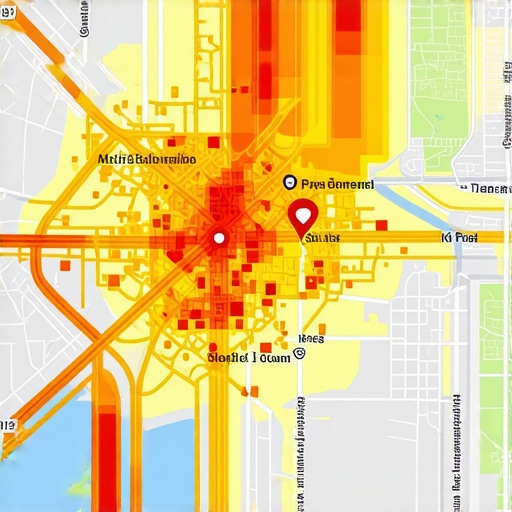
Can you really rank in the next town without a second office?
This is the question every growing business asks. The short answer is yes, but not by just adding keywords to your name. You have to overcome the proximity paradox by creating intense local relevance on your website first. I’ve seen businesses use the specific schema fix that forced a massive map radius expansion to show Google they serve a wider area than just their immediate zip code. By implementing hyper-local service area pages and geo-tagged images, you provide the ‘search proof’ needed to **dominate maps** beyond your physical doorstep. It’s about convincing the algorithm that you are the most useful option, even if you are three miles further away than the guy across the street. This is the one move chiropractors use to leapfrog more popular local clinics that rely solely on their legacy status.
The automated review trap that triggers a secret Google flag
Here is the ‘oops’ factor that kills many profiles: review velocity spikes. Many businesses, in a panic to catch up to competitors, use automated tools to blast out review requests. Getting 40 reviews in three days and then nothing for three weeks is a massive red flag. This is the trap of review automation that leads to filtered reviews or, worse, a suspended profile. Google values steady, organic growth over artificial bursts. Furthermore, your response time matters just as much as the review itself. We’ve analyzed how customer interaction speed directly influences your google my business rank, and the data is clear: businesses that reply within hours see a significant lift in their **local maps domination** metrics. Have you ever fallen into this trap of chasing volume over engagement? Let me know in the comments. To achieve real **map pack domination**, you must stop thinking like a marketer and start thinking like a local resident who needs the best answer right now. If your listing doesn’t reflect that immediate utility, all the stars in the world won’t save you. We are going to look at the specific foot traffic cues that actually fix a stalled map ranking next, showing you how real-world movement translates into digital authority.Once you hit that top spot, the real work begins. I have seen hundreds of businesses claw their way to the #1 position only to disappear sixty days later because they thought the job was finished. This is exactly why most businesses fail to hold a top spot in the map pack after three months—they stop the very activities that got them there. To keep your edge, you need to transition from a ‘launch’ mindset to a ‘maintenance’ mindset. I personally rely on geo-grid tracking tools like Local Falcon or BrightLocal to see the truth. If you are only checking your rank from your office desk, you are falling for 7 maps keyword tracking flaws that hide your true store performance. A geo-grid shows you exactly where your authority drops off, street by street, allowing you to visualize your **local mapping strategy** in real-time.
How can I maintain my local map presence as the algorithm shifts?
Maintaining your rank requires a weekly rhythm of ‘signals’ that prove to Google you are still active and relevant. I recommend a simple 15-minute ritual: upload two high-resolution photos from your phone (with location metadata intact) and post one update about a current project or offer. This consistent pulse is the secret behind the power of regular profile updates on search frequency. Furthermore, you must keep a sharp eye on your competitors’ categories. As Mike Blumenthal, a leading authority in local search, often points out, Google frequently updates its available category list, and if a competitor finds a more specific niche than yours, they can leapfrog you overnight. Use the 10-minute local seo audit that uncovers why your rankings stalled to catch these shifts before they hurt your bottom line. #IMAGE_PLACE_HOLDER_D#
Stop Flying Blind with Standard Rank Reports
If your current SEO guy is sending you a PDF that says ‘You are #1 for Dentist,’ fire them. It’s a lie. You might be #1 at the coffee shop next door, but #12 two miles away. Real **map pack domination** requires looking at the ‘heat map’ of your city. When I see a cluster of red nodes on a client’s grid, we don’t just ‘do more SEO’; we look for 7 google business profile tips for 2026 to outperform massive competitors and apply them to those specific neighborhoods. This might mean geo-tagging a new set of images specifically from that zip code or running a hyper-local ad campaign to trigger fresh interaction signals. It is about surgical strikes, not carpet bombing.
The Shift from Clicks to Conversations is Coming
Looking ahead to the next eighteen months, I predict the ‘Map Pack’ will evolve into a ‘Decision Pack.’ Google’s Gemini AI is already starting to summarize review sentiment directly in the search results. This means your **google my business rank** will soon depend less on keywords and more on ‘contextual sentiment.’ If people constantly mention your ‘fast response time’ or ‘clean waiting room,’ Google will use that data to match you with searchers using those specific terms. To stay ahead, you should be mastering local maps domination proven strategies for 2025 by encouraging customers to be specific in their feedback. My challenge to you: Go run a geo-grid scan for your most important keyword today. If you see anything other than a wall of green, you have a proximity gap that needs fixing immediately. Use the tools, watch the data, and never assume your spot is safe.
After a decade in the trenches of local search, I’ve realized that the difference between being a local ghost and a local legend often comes down to the things you do when no one is looking. It’s about the metadata in your photos, the speed of your replies, and the surgical precision of your categories.
The Brutal Truths I Learned After Losing My Top Spot
I used to think that once you hit the number one spot, you could just sit back and watch the leads roll in. I was wrong. Here are the three most painful lessons I’ve learned about maintaining a google my business rank that actually sticks:
- The ‘Quantity Trap’ is Real: I’ve seen profiles with 1,000 reviews get outranked by a listing with 50 reviews simply because the latter had a higher relevance score and better user interaction signals. Never prioritize volume over genuine connection.
- Consistency is Your Only Insurance: Google doesn’t reward a one-time ‘SEO blast.’ It rewards the business that consistently uploads fresh content and updates its attributes every single week.
- Technical Hygiene Beats Hype: You can have the best service in the world, but if your website’s schema is broken, you are fighting with one hand tied behind your back. This is exactly how to outsmart competition in local map listings in 2025 by focusing on the signals the algorithm actually craves.
My Tactical Kit for Sustaining Local Maps Domination
I don’t guess when it comes to rankings; I use a specific set of tools and resources that provide the ‘ground truth’ of the map pack. If you want to refine your local mapping strategy, I highly recommend starting with the profile audit checklist for turning search impressions into real calls to ensure your foundation is solid. For real-time tracking, geo-grid tools like Local Falcon are indispensable because they show you exactly where your authority fades out at a street-by-street level. I also keep a close eye on industry-leading blogs like Whitespark and Sterling Sky; their annual ranking factor surveys are the compass I use to navigate the ever-changing waters of local maps domination.
Build a Presence That Neighbors Cant Ignore
The map isn’t just a list of names; it is a living reflection of your community. To truly dominate maps, you must stop treating your profile like a static billboard and start treating it like a conversation. Every photo you upload and every review you answer is a signal to both your customers and the algorithm that you are active, reliable, and ready to serve. If you stay committed to these technical and social cues, you will find that mastering local maps domination proven strategies for 2025 success is within your reach. Don’t let your business stay invisible for another day. If you’re feeling overwhelmed by the technical side, you can always reach out on our contact page and we can look at your geo-grid together. Have you noticed your rank drop as soon as you step two blocks away from your office? Let me know about your specific ranking dead zones in the comments below!
About the Author
Umar Latif
Brand & Marketing Expert · Dubai, UAE
Umar Latif is a seasoned Brand and Marketing Expert based in Dubai, UAE, with a specialized focus on Local SEO and international digital strategy. With extensive experience managing and optimizing websites for a diverse range of international clients, including those in the United States, Umar has developed a deep understanding of the nuances required to dominate local search results. His technical proficiency encompasses comprehensive keyword research and the implementation of advanced Google-centric strategies designed to enhance visibility and drive organic traffic. As a contributor to dominateyourlocalmaps.com, Umar leverages his background in global marketing to provide actionable insights for businesses looking to improve their local map rankings and digital footprint. His approach combines data-driven tactics with a strategic brand perspective, ensuring that local businesses not only rank higher but also resonate with their target audience. Throughout his career, Umar has remained dedicated to staying ahead of search engine algorithm changes to deliver consistent results for his clients. He is deeply passionate about empowering business owners and marketing professionals with the tools and knowledge they need to achieve sustainable growth.