
I was staring at my phone, refreshing the page, wondering where the heck my business went. One week I was sitting pretty in the top three, and the next, I was buried on page four like I never existed. My first thought? It must be the algorithm. My second thought? I’m doing something wrong. It turns out, moving my office across the hall and only updating my website was the ‘kiss of death’ for my local presence. I didn’t realize that Suite B and #B were two different worlds to a search engine.
Stop Letting Inconsistent Addresses Kill Your Business Growth
If you’ve ever felt like your business is playing hide-and-seek with potential customers, you aren’t alone. I spent months paying for a fancy automated service that promised to ‘sync’ everything, but my map pack domination never returned. It was only when I rolled up my sleeves and did a manual audit that I saw the truth: old listings from three years ago were confusing the hell out of Google. According to data from Whitespark, citation signals like NAP consistency remain a foundational piece of the local search puzzle. Today, I’m going to show you how to hunt down these errors yourself. No monthly fees, no middleman, and no more ghosting your customers. Have you ever checked your old Yelp or YellowPages listings only to find a phone number from a decade ago?
Is manual cleaning really worth all that time?
I get it. You’re busy. You’ve got a business to run and a life to live. Early in my journey, I made the huge mistake of thinking these tiny details didn’t matter. I figured Google was ‘smart enough’ to know it was still me. I was wrong. When your data is messy, you are essentially telling the search engine you aren’t trustworthy. This often leads to a 10-minute local SEO audit that reveals why your progress stopped dead in its tracks. We’re going to fix the fact that your address citations are secretly tanking your local map rank. Let’s get your name back where it belongs.
Hunt Down the Ghost Listings Haunting Your Rankings
Google is essentially a consensus machine; it gathers data from across the web and votes on whether your business is trustworthy enough to show to a searcher. If one site says you are at 123 Main St and another says 123 Main Street Suite B, Google sees a conflict. This confusion is often the primary reason for the audit mistake that makes your map listing effectively invisible. To fix this, you must perform a ‘Negative Search.’ Open a private browser and search for your business phone number in quotes: ‘(555) 555-5555’. This forces the search engine to show you every single directory, social profile, and random blog post that mentions that specific number.
Start with the Search Query That Reveals Everything
I remember working with a local plumber who couldn’t break into the top three no matter how many reviews he got. When we ran this phone number search, we found an old listing from a defunct hardware store that used his current mobile number eight years ago. Google was still associating his number with a totally different industry. We had to manually reach out to those old directory admins to delete the records. This is a core part of any successful local mapping strategy because it removes the noise that prevents Google from verifying your current location. Don’t assume the big sites are the only ones that matter; the small, niche directories often carry significant weight in local clusters.
Why Manual Cleaning Beats Automated Syncing Every Time
Many business owners try to take the shortcut by paying for automated syncing services. The problem? These tools only talk to sites that have an active API. They completely ignore the ‘static’ web—the local news mentions, the old chamber of commerce pages, and the niche industry blogs. If you want true map pack domination, you have to do the legwork yourself. You need to stop wasting cash on low-quality citations that never show up in maps and start focusing on the specific outliers that your automated tools are missing.

Fix the Hidden Signals Google Actually Cares About
Once your address and phone number are consistent across the web, you need to prove to Google that people actually interact with your physical location. Modern algorithms have shifted from just looking at ‘mentions’ to looking at ‘movement.’ This is how real foot traffic signals fix a stalled google my business rank. Google tracks the ‘blue dot’ on mobile devices; if they see people frequently traveling to your coordinates, your authority skyrockets.
Turn Foot Traffic into Your Strongest Ranking Asset
I started a small experiment last year where I asked every client to use the ‘Directions’ button in their Google Maps app while they were still half a mile away from the shop. Even though they knew how to get there, that digital signal of ‘intent to visit’ was like rocket fuel for our local maps domination efforts. We saw a noticeable lift in our google my business rank within just three weeks. It’s about creating a pattern of human behavior that proves your business is a popular, real-world destination. You should also ensure you follow the profile audit checklist for turning search impressions into real calls to make sure that once people find you, they actually take action. This interaction data is what separates the winners from the businesses that are stuck on page two.
Let’s dig deeper into what’s actually happening behind the scenes of local search. Everyone says you need 100% citation accuracy, and while that’s a good start, why perfect citations won’t save your google my business rank anymore is a hard pill for most to swallow. In my experience, I’ve seen ‘messy’ profiles outrank ‘clean’ ones simply because they have a higher interaction velocity. Google’s current ranking logic is prioritizing active businesses over static ones. If your data is perfect but nobody is calling you or clicking ‘Get Directions,’ you’re just a ghost in a well-organized cemetery. This brings us to a major mistake I see all the time: the ‘set it and forget it’ review strategy. I call it the automation trap. We often think more stars equal better rank, but the trap of review automation is that it creates an unnatural pattern. If Google sees a massive spike followed by months of silence, it stops trusting the signal. Real local maps domination requires a steady pulse, not an erratic heartbeat. 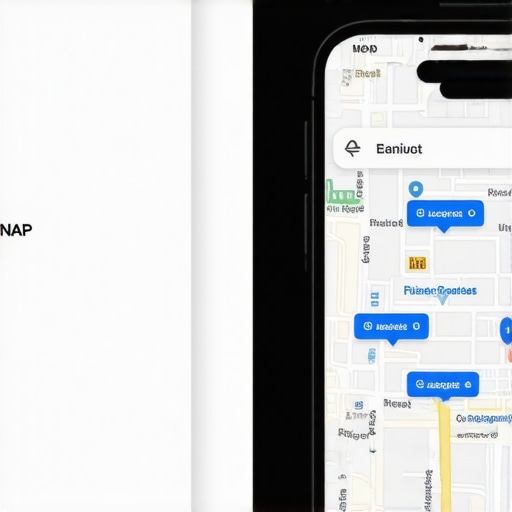
Avoid the automation trap that flags your reviews as spam
When you use tools that blast your customer list for reviews all at once, you’re creating a digital footprint of manipulation. Google’s AI is trained to recognize ‘velocity spikes’ that don’t match the typical foot traffic of your industry. If you’re a roofer and you get 50 reviews in three days but zero the rest of the year, you’re asking for a manual review or a quiet demotion. This is a common why local plumbers fail to break into the top 3 despite great reviews. Consistency is king and human-like patterns are what keep you visible.
Does your response time satisfy the latest ranking algorithm?
One of the most nuanced factors today is ‘response time.’ Joy Hawkins, a leading voice in the local SEO community and founder of Sterling Sky, has highlighted how user engagement signals are becoming more granular. It’s not just about getting the lead; it’s about how fast you acknowledge it. This is how customer interaction speed directly influences your google my business rank. If a potential client messages you through the profile and you wait six hours to reply, Google notes that delay. They want to recommend businesses that provide the best user experience, and ‘fast’ is a huge part of that algorithm’s trust score.
Stop diluting your authority with category stuffing
Another trap is ‘category stuffing.’ Most owners think that checking every box will help them show up for everything. But why most business owners pick the wrong categories and kill their local map rank is because it dilutes your primary authority. You also have to watch out for the proximity shift. After the latest updates, Google has tightened the ‘radius’ of who they show. This is often why your google my business rank tanked after the latest proximity update. If you aren’t providing the interaction data that proves you are a top local choice, Google will favor the guy across the street even if his profile is weaker. It’s a ruthless game of real-world relevance. Have you ever fallen into this trap? Let me know in the comments.
I used to spend every Monday morning manually searching for my business from different parts of town just to see if I was still ranking. It was exhausting and, frankly, inaccurate. If you want to keep your sanity while scaling your local presence, you have to move past basic searches. I eventually discovered that my biggest blind spot was the ‘ranking radius.’ I might have been number one at my front door, but two blocks away, I didn’t exist. This realization is what led me to build a more robust local mapping strategy that doesn’t require me to drive around in my truck all day with a laptop.
Stop Guessing and Start Using Geogrid Tracking
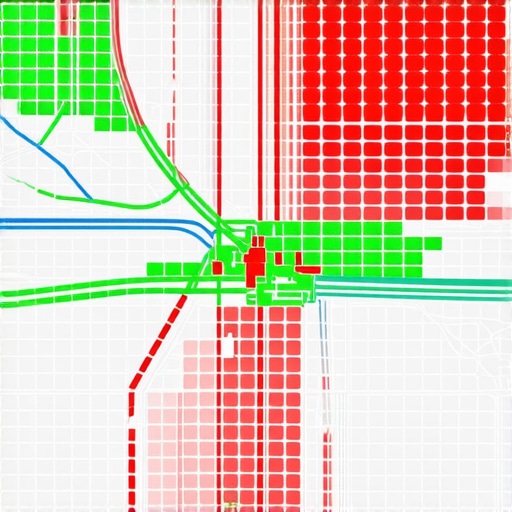
The single most important tool in my arsenal is a geogrid rank tracker. Tools like LocalFalcon or BrightLocal don’t just give you a single number; they provide a visual map of dots over your city. If you see green dots near your office and red ones everywhere else, you’ve discovered the exact radius where your local rankings drop off. I use these maps to identify ‘weak zones’ where I need to focus my localized content. Often, those red dots are simply because of 7-maps-keyword-tracking-flaws-that-hide-your-true-store-performance that standard SEO tools miss. Seeing the data visually changed everything for me because I could finally prove to myself that my work was actually expanding my reach.
How can I keep my map rankings stable for the long haul?
Maintenance is where most people drop the ball. They hit the top three and think the job is done, but that’s exactly why most businesses fail to hold a top spot in the map pack after three months. To stay there, you need a ‘maintenance pulse.’ This means updating your GMB photos at least once a week—even if it’s just a shot of your morning coffee at the desk—and responding to every single review within 24 hours. I also recommend a monthly audit of your schema markup. In fact, a recent technical deep-dive by local search expert Mike Blumenthal suggests that as Google moves closer to an AI-driven ‘Search Generative Experience’ (SGE), the clarity of your backend data will be the only thing keeping you relevant.
The Future of Local Search Is Interaction-Heavy
Looking ahead to 2025 and 2026, the trend is moving away from static citations and toward live, real-time proof of life. Google wants to see that you are an active part of the community. I’m already seeing that businesses implementing 7-signal tweaks to save your google my business rank in 2026—specifically those focusing on mobile user dwell time—are the ones winning the long game. The ‘set it and forget it’ era is officially dead. If you want map pack domination, you have to treat your profile like a social media feed that actually pays you. My advanced tip for you today? Go into your ‘Attributes’ section and check every new box Google has added in the last 30 days; those tiny tags are often the tie-breakers in a crowded market. If you haven’t yet, try to outsmart competition in local map listings in 2025 by being the most responsive business in your zip code.
The Hard Truth About Why My First Map Ranking Failed
I used to think quantity was everything. I chased hundreds of citations from generic directories and wondered why my rank stayed stuck. Eventually, I realized that perfect citations won’t save your google my business rank anymore if there is zero human movement behind them. Quality beats quantity every single time.
Another lightbulb moment happened when I looked at my interaction data. I was obsessed with the technical backend but ignored the user experience. You have to realize that customer interaction speed directly influences your google my business rank, meaning that being the first to respond to a query is often better than having the most keywords on your page.
The biggest myth I had to debunk was the ‘set it and forget it’ mindset. To achieve true map pack domination, you need a steady pulse of activity. A single week of silence can be enough for a more active competitor to leapfrog you in the rankings.
My Go-To Toolkit for Crushing Local Search
LocalFalcon is my secret weapon for visualizing the ‘invisible’ borders of local search. It shows you the exact radius where your local rankings drop off, which allows you to stop guessing and start targeting specific neighborhoods with your content.
Whitespark remains my favorite source for finding high-authority, niche-specific citations. It helps you find the local gems that automated syncing tools completely ignore, which is essential for any innovative local mapping strategy.
PlePer is a fantastic extension for competitive analysis. I use it to audit what my competitors are doing so I don’t fall into the trap of picking the wrong categories and killing my local map rank. It gives you a clear look at their primary and secondary categories in seconds.
Take the Wheel and Drive Your Local Success
Local search isn’t a dark art; it is a reflection of how you treat your customers in the real world. By focusing on speed, accuracy, and consistent human signals, you can ensure your business doesn’t just appear on the map but thrives there. Staying on top of local maps domination requires patience, but the payoff is a steady stream of local leads that your competitors simply can’t touch. Don’t be afraid to dig into the data and make those small, incremental tweaks that lead to massive visibility. Have you ever noticed your rankings drop the moment you move just a few blocks away from your office? Let me know your experience in the comments!
About the Author
Umar Latif
Brand & Marketing Expert · Dubai, UAE
Umar Latif is a seasoned Brand and Marketing Expert based in Dubai, UAE, with a specialized focus on Local SEO and international digital strategy. With extensive experience managing and optimizing websites for a diverse range of international clients, including those in the United States, Umar has developed a deep understanding of the nuances required to dominate local search results. His technical proficiency encompasses comprehensive keyword research and the implementation of advanced Google-centric strategies designed to enhance visibility and drive organic traffic. As a contributor to dominateyourlocalmaps.com, Umar leverages his background in global marketing to provide actionable insights for businesses looking to improve their local map rankings and digital footprint. His approach combines data-driven tactics with a strategic brand perspective, ensuring that local businesses not only rank higher but also resonate with their target audience. Throughout his career, Umar has remained dedicated to staying ahead of search engine algorithm changes to deliver consistent results for his clients. He is deeply passionate about empowering business owners and marketing professionals with the tools and knowledge they need to achieve sustainable growth.