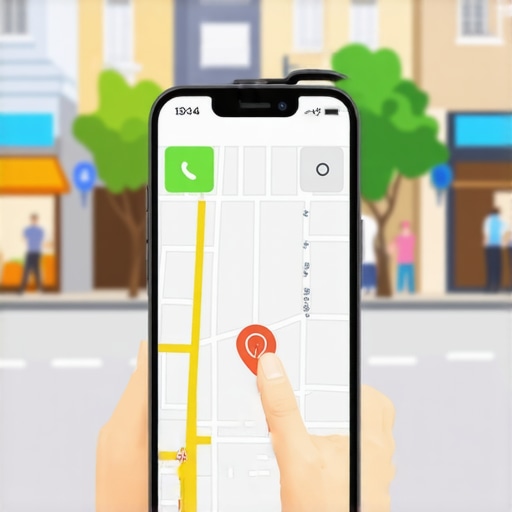
The Call-Button Gap: How to Turn Map Views into Real Customers
By Pallavi Pathak – Local SEO Strategist | Google Business Profile Expert
I. Introduction: The Silent Phone Syndrome
It is the nightmare of every local business owner: you open your dashboard, and the numbers look spectacular. Your impressions are up by 40%, your business is appearing in thousands of searches, and you are finally winning the battle for visibility. But then, you look at your desk. The phone isn’t ringing. The “Silent Phone Syndrome” is a growing epidemic in the world of local marketing, where high-ranking listings fail to generate actual revenue. This disconnect is what I call the “Call-Button Gap.”
Effective google business profile seo is no longer just about showing up; it is about bridging the psychological and functional distance between a user seeing your name on a map and that same user deciding you are the only professional worth calling. I recently encountered a remodeling company in a high-intensity “Blue Collar Millionaire” Facebook group that was spending upwards of $10,000 a month on local ads and SEO. Their impressions were through the roof, yet their lead intake was stagnant. They had visibility, but they lacked conversion authority. They were victims of the gap.
To survive in the modern landscape, you must realize that a “view” is a vanity metric. If those views don’t translate into clicks, messages, or calls, your google business profile seo strategy is essentially a digital billboard in the middle of a desert. This guide will break down why this gap exists and how you can close it to ensure every map view has a fighting chance of becoming a loyal customer.
II. The 2026 Shift: Why Map Views Are No Longer Enough
The local search landscape is undergoing its most significant transformation since the introduction of the “three-pack.” As we approach 2026, Google is reportedly testing UI shifts that deprioritize the traditional, prominent “Call” button in favor of a more “Engagement-First” interface. This “2026 Call Button Update” suggests that Google wants users to interact more deeply with a profile – viewing photos, reading recent updates, and checking real-time availability – before the contact option becomes the primary focus.
In this new environment, simply appearing at the top of the results is the bare minimum. If your competitors have more “engagement signals” – such as high dwell time on their photo gallery or active Q&A sections – Google’s AI-driven algorithm will likely favor them, even if your technical citations are superior. We are moving toward a world of “Verified Visits” and “Offline Intent Signals.” Google can now track when a user looks at your profile and subsequently walks into your store, even if they never clicked a single button.
This shift means that Why Your Local SEO Agency Fails is often due to an obsession with 2018-era ranking factors while ignoring 2026-era conversion factors. You need to prepare your profile to be more than a contact card; it must be a conversion engine. For a deeper look at these upcoming changes, check out my guide on 7 Google Business Profile Tips for 2026 to Outperform Massive Competitors.
III. Bridging the Gap: 4 Pillars of Map Conversion
To turn those stagnant impressions into active leads, you must optimize for the human brain, not just the Google bot. Here are the four pillars of bridging the Call-Button Gap.
1. The Visual Hook (Photos & Dwell Time)
When a user scrolls through the Map Pack, their eyes are drawn to images before they read a single word of your business name. If your photos are generic stock images or low-quality snapshots of a messy office, the user will scroll right past you. Increasing dwell time – the amount of time a user spends looking at your listing – is a massive ranking and conversion signal. I recommend implementing 4 Image Tweaks That Stop Searchers From Scrolling Past Your Listing, which includes using “point-of-service” photos that show your team in action, creating a sense of immediate trust.
2. Review Response Patterns
Most businesses know they need reviews, but few understand that how you respond to them is a conversion trigger. Prospective customers read your responses to see how you handle conflict and how much you value your clients. Strategic response patterns can also signal relevance to Google’s algorithm. You can learn more about How Specific Review Response Patterns Actually Boost Map Engagement to see how to weave keywords into your gratitude without sounding like a robot.
3. Secondary Action Optimization
As the primary call button becomes more buried in the UI, you must optimize for secondary actions. This includes setting up Google Messages, adding a direct “Booking” link, and utilizing the “Products” and “Services” menus to provide instant pricing or package information. If a user can’t find the call button immediately, they should find three other ways to start a conversation with you.
4. Local Authority
Authority is the final bridge. You need to prove to both Google and the user that you are a pillar of the local community. This involves more than just having a physical address; it requires localized content and high-quality backlinks that rank google business profile listings higher by association. When your business is mentioned on local news sites, blogs, and chamber of commerce pages, your “Prominence” score skyrockets, making the “Call” button feel like the natural next step for the searcher.
IV. Technical Optimization: Tracking What Matters
One of the biggest hurdles in local SEO is attribution. Many business owners rely solely on the “Performance” tab in their Google Business Profile dashboard, but these numbers can be misleading. To truly bridge the Call-Button Gap, you must distinguish between a “view” and a “unique lead.”
If a user views your profile five times before calling, Google might count that as five impressions but only one call. Conversely, many users see your number on the map and dial it manually from a landline or a different device – this is a “hidden conversion.” To get a clear picture, you should use GA4 (Google Analytics 4) event tracking in conjunction with UTM parameters on your website link. However, even these methods struggle with “Google Hosted” conversions – actions that happen entirely on the Google platform.
This is why utilizing professional local seo tools is non-negotiable for serious growth. These tools allow you to track “Click to Call” events with higher precision and monitor your “Share of Voice” across different geographic coordinates. Without this data, you are flying blind. For more on why your current data might be skewed, read Why Your Profile Insights Are Lying to You About Real Phone Calls.
V. Case Studies: From Impressions to ROI
The difference between a “ranked” profile and a “converting” profile is best seen in the data. Consider the case of HawkSEM, a digital agency that managed to achieve a 4x increase in traffic for a client while simultaneously doubling their conversion rate. They didn’t just focus on getting the client into the top three; they focused on the content within the listing – ensuring that every service was clearly defined and every FAQ was answered. This is the essence of true google business profile optimization.
Contrast this with the “Blue Collar Millionaire” example mentioned earlier. That remodeling company had the budget to dominate the “google maps ranking service” market, but they treated their GBP like a static yellow-pages ad. They had thousands of impressions from people looking for “kitchen remodeling,” but because their profile lacked recent posts, had unanswered questions, and featured outdated photos, users felt no “click-to-call” urgency. They were winning the ranking war but losing the conversion battle. By shifting their focus to engagement signals and “conversion-centric” content, they were able to turn that $10k/month spend from a loss into a lead-generating machine.
VI. Conclusion & The 2026 Checklist
Bridging the Call-Button Gap is the only way to ensure your google business profile seo efforts result in bankable revenue. As Google continues to evolve into an “AI-first” search engine, the businesses that provide the most value, engagement, and clarity directly within the search results will be the ones that capture the lead. Impressions are just the beginning; the call is the goal.
The 2026 Call-Button Gap Audit
- Audit Your Categories: Ensure your primary category is hyper-specific and your secondary categories cover all service facets.
- Refresh Your Visuals: Replace any stock photos with high-resolution, real-world images of your team and completed projects.
- Refine Your CTAs: Use the “Update” post feature to create weekly “Call Now” or “Book Today” offers.
- Track Everything: Use UTM codes and specialized google maps lead generation tools to see which parts of your profile actually drive calls.
- Hire Experts: If you aren’t seeing the results you need, consider a professional google maps ranking service to handle the technical heavy lifting.
Don’t let your business be a “ghost listing” that people see but never call. Take control of your local presence today. For a step-by-step walkthrough, download The Profile Audit Checklist for Turning Search Impressions Into Real Calls and start closing the gap.
About the Author
Umar Latif
Brand & Marketing Expert · Dubai, UAE
Umar Latif is a seasoned Brand and Marketing Expert based in Dubai, UAE, with a specialized focus on Local SEO and international digital strategy. With extensive experience managing and optimizing websites for a diverse range of international clients, including those in the United States, Umar has developed a deep understanding of the nuances required to dominate local search results. His technical proficiency encompasses comprehensive keyword research and the implementation of advanced Google-centric strategies designed to enhance visibility and drive organic traffic. As a contributor to dominateyourlocalmaps.com, Umar leverages his background in global marketing to provide actionable insights for businesses looking to improve their local map rankings and digital footprint. His approach combines data-driven tactics with a strategic brand perspective, ensuring that local businesses not only rank higher but also resonate with their target audience. Throughout his career, Umar has remained dedicated to staying ahead of search engine algorithm changes to deliver consistent results for his clients. He is deeply passionate about empowering business owners and marketing professionals with the tools and knowledge they need to achieve sustainable growth.