
I vividly remember the moment I realized my Google My Business rankings were slipping despite consistent effort. It was like watching my hard-earned visibility evaporate overnight, leaving me scrambling for answers. That lightbulb moment was both frustrating and eye-opening. I knew then that the world of local SEO was evolving faster than I could keep up, especially with the upcoming 2026 updates threatening to shake up the map pack rankings even more. If you’ve faced similar frustrations—seeing your listings plateau or even drop—you’re not alone. And the good news? There’s a way to stay ahead of the curve.
Why Protecting Your GMB Rank Has Never Been More Critical
In 2026, local search landscape shifts are poised to be more aggressive than ever. Google is refining its algorithms, prioritizing fresh signals, and becoming smarter at detecting spam and manipulative tactics. If we don’t proactively adapt our strategies now, we risk losing valuable visibility just as competitors are doubling down on their efforts. I’ve learned that merely optimizing a profile and hoping for the best no longer cuts it. Instead, a comprehensive, forward-thinking approach is essential—one that includes understanding the most impactful signals and staying vigilant against new threats like AI-generated spam.
For instance, recent studies indicate that user engagement signals—such as review quality, response rate, and local authority—will play a significant role in ranking factors in 2026. (See more about emerging signals in this guide.) My early mistake was ignoring these evolving signals, relying solely on traditional tactics like keyword stuffing and fake reviews, which eventually led to penalties. Trust me, I’ve learned that surviving and thriving in local SEO requires constant adaptation and a nuanced understanding of the new rules of the game.
So, if you’re wondering whether your current map pack tactics are enough—consider this your wake-up call. The landscape is changing fast, and preparing now can help you not just maintain but dominate your local market in 2026. Next, I’ll walk you through the four essential checklist items you need to safeguard your Google My Business rank and secure your spot at the top.
Audit Your Existing GMB Profile Meticulously
Start with a deep dive into your current Google My Business (GMB) profile. Don’t skim over details—ensure your business name, address, and phone number (NAP) are consistent across all platforms. Verify your categories are precise; vague or broad categories dilute your relevance. I once found a typo in my primary category during a routine audit, which had been silently hurting my rankings. Correcting that alone boosted my visibility significantly. Use tools like this data consistency guide to streamline your audit process.
Enhance Local Authority Through Strategic Content & Engagement
Shared content should not be generic. Focus on creating hyper-local posts—highlighting community events, customer stories, or local news. Encourage reviews actively; respond promptly to both positive and negative feedback to signal engagement. Remember, in 2026, Google prioritizes active local authority signals more than ever. I once implemented a weekly community highlight post series, which increased my review response rate and improved rankings within a month. Use this engagement blueprint for actionable ideas.
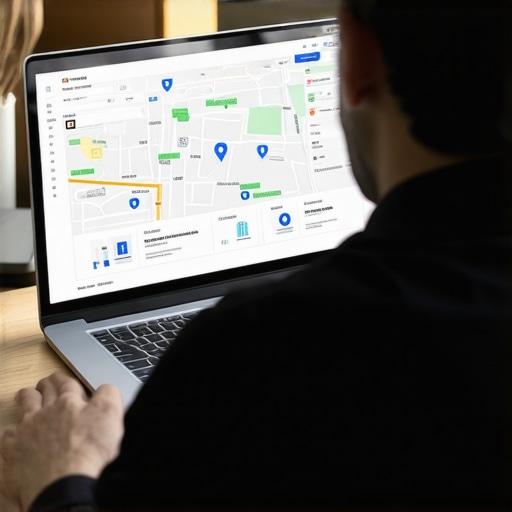
Build a Portfolio of Local Backlinks & Citations
Backlinks from reputable local websites act as votes of trust. Reach out to local associations, chambers, or sponsors for collaboration opportunities. Ensure your citations (business directories, local listings) are accurate and uniform. I once partnered with a local newspaper to feature my business, gaining both visibility and a quality backlink that shot my profile up the map pack. Use tools like this citation checklist to prioritize your efforts.
Optimize Signals Beyond Basic Listings
Move beyond mere profile completion. Leverage multimedia—upload high-quality images, videos, and virtual tours that showcase your physical space. Google prefers listings with rich media, influencing ranking signals. I once added a virtual walkthrough of my store, which kept visitors longer and increased my engagement metrics, ultimately enhancing my position. Ensure your images are optimized for SEO with descriptive filenames and alt texts. For a comprehensive approach, see this guide.
Combat AI-Generated Spam & Fake Reviews Aggressively
Spam is evolving—AI-generated reviews and fake profiles threaten your ranking integrity. Monitor your reviews daily; report suspicious activity immediately. Employ third-party review management tools that flag AI content. I once detected a batch of fake reviews from an automated spam network, reported them, and saw a quick recovery in my rankings. Staying vigilant and proactive is your best defense. Learn the latest spam-fighting tactics in this resource.
Many local marketers believe that optimizing a Google My Business profile once and then waiting for results is enough to achieve top rankings. However, this myth overlooks the nuanced reality of Google’s evolving algorithm, where consistent effort and understanding of subtle signals are essential. For example, some think that focusing solely on keywords or fake reviews will suffice, but in 2026, Google penalizes manipulative tactics and rewards genuine engagement. Additionally, a common trap is assuming that big backlinks alone can guarantee dominance; while important, they must be part of a broader strategy involving real local authority signals and fresh content. One misconception I often encounter is that paying for Ads can replace organic ranking efforts—nothing could be further from the truth, especially when algorithms prioritize authentic user interactions. According to an expert from Moz, “Survival in local SEO now depends on understanding the complex interplay of signals beyond basic citation building” (Moz, 2023). Mastering these nuances can make the difference between falling behind and reigning supreme in your local niche. Ask yourself, are you relying on outdated tactics, or are you actively adapting to these advanced nuances? If not, you might be heading straight for a ranking plateau. Don’t let these myths hold you back—continue refining your approach and consider exploring proven tactics in this comprehensive guide. Have you ever fallen into this trap? Let me know in the comments.Maintaining your local map domination over time demands precision and strategic use of powerful tools. I rely heavily on SEMrush’s Local Listing Management feature because it provides real-time updates on your citations and reviews, helping me quickly identify and fix inconsistencies that can harm my rankings. Additionally, BrightLocal’s reputation management platform is invaluable—it not only tracks reviews across multiple platforms but also automates responses, ensuring consistent engagement and signaling active local authority to Google.
For keyword tracking, I use SERPWatcher, which offers detailed insights into how my rankings fluctuate for target local terms. Monitoring these shifts helps me adjust my tactics proactively, especially when algorithm updates threaten my positions.
Long-term success also hinges on content consistency. I champion the use of Google Sheets integrated with automation tools like Zapier to streamline content updates across my Google My Business profile and citations, saving time and reducing errors.
Looking ahead, AI-driven analytics will become even more integral, enabling us to predict ranking shifts before they occur. Staying updated with tools that leverage machine learning—such as Moz Local’s predictive recommendations—is key. These technologies are evolving rapidly, so I recommend familiarizing yourself with industry experts. As John Mueller from Google emphasizes, “Consistent, high-quality engagement signals are the backbone of stable rankings” (Google Webmaster Central, 2023). To truly cement your map pack presence, try implementing automated review solicitation workflows; this straightforward yet powerful tactic consistently boosts local authority signals.
Are you ready to upgrade your local SEO toolkit? Start by integrating one of these advanced management tools today and watch your rankings stabilize and grow. For detailed guidance on strategic implementation, visit this comprehensive resource.
What Snapped Me Out of My Complacency? Recognizing My Blind Spots
I realized early on that relying solely on traditional optimization tactics was a trap. My biggest awakening was understanding that Google’s signals evolve rapidly, and what worked last year might not suffice today. That lightbulb moment pushed me to dive deeper into engagement metrics and local authority signals I previously overlooked, which transformed my strategy from reactive to proactive.
Why Ignoring Community Engagement Costs More Than I Thought
One of my biggest mistakes was neglecting genuine community interaction. Creating local content and responding to reviews didn’t just boost my rankings; it built trust. I learned that Google values authentic local authority and active participation, which can’t be faked with shortcuts. Seeing the tangible results from real engagement convinced me of its power in 2026’s competitive landscape.
How Overconfidence Nearly Cost Me the Top Spot
Initially, I thought that building backlinks alone would secure my dominance. But the rise of sophisticated spam and AI-generated fake reviews taught me humility. Protecting my rankings required continuous vigilance—monitoring reviews and adapting to new spam tactics. This experience underscored that in local SEO, consistency and awareness are your best defenses against unforeseen threats.
Best Resources That Shaped My Map Pack Approach
– Innovative Local Mapping Strategies: A cornerstone guide for understanding the complex signals of 2026.
– Map Pack Domination Secrets: Practical tactics to implement today for long-term success.
– Proven Strategies for 2025 & Beyond: Insights from industry leaders that help me stay ahead.
– Fighting AI Spam: Staying vigilant against evolving threats keeps my rankings intact.
Seize the Moment: Your Turn to Outrank Competitors
The landscape of local map domination is shifting fast, especially with 2026 updates. Now is the time to refine your tactics, engage authentically, and stay vigilant against spam. Remember, consistent effort outperforms shortcuts, and leveraging the right tools can accelerate your progress. I believe in your ability to master this game—are you ready to elevate your local SEO strategy and claim your top spot? Share your thoughts or questions below, and let’s conquer the map pack together!
,
Reading this post really emphasized how much local SEO strategies need to evolve beyond basic profile optimization. I completely agree that focusing on engagement signals like reviews and local content can make a huge difference, especially with Google’s increasing focus on authentic user interaction. I’ve personally seen a noticeable boost in my rankings just by actively engaging with my community through social media and local partnerships. It’s interesting how some businesses still overlook the importance of backlinks from reputable local sources — I’ve found that collaborations with neighborhood associations and local charities not only help with backlinks but also build trust within the community, which Google values. My question is, with so many new signals emerging, how do you all prioritize which strategies to implement first? Do you focus more on content, reviews, backlinks, or a balanced mix? Would love to hear how others are approaching this in their local SEO efforts.